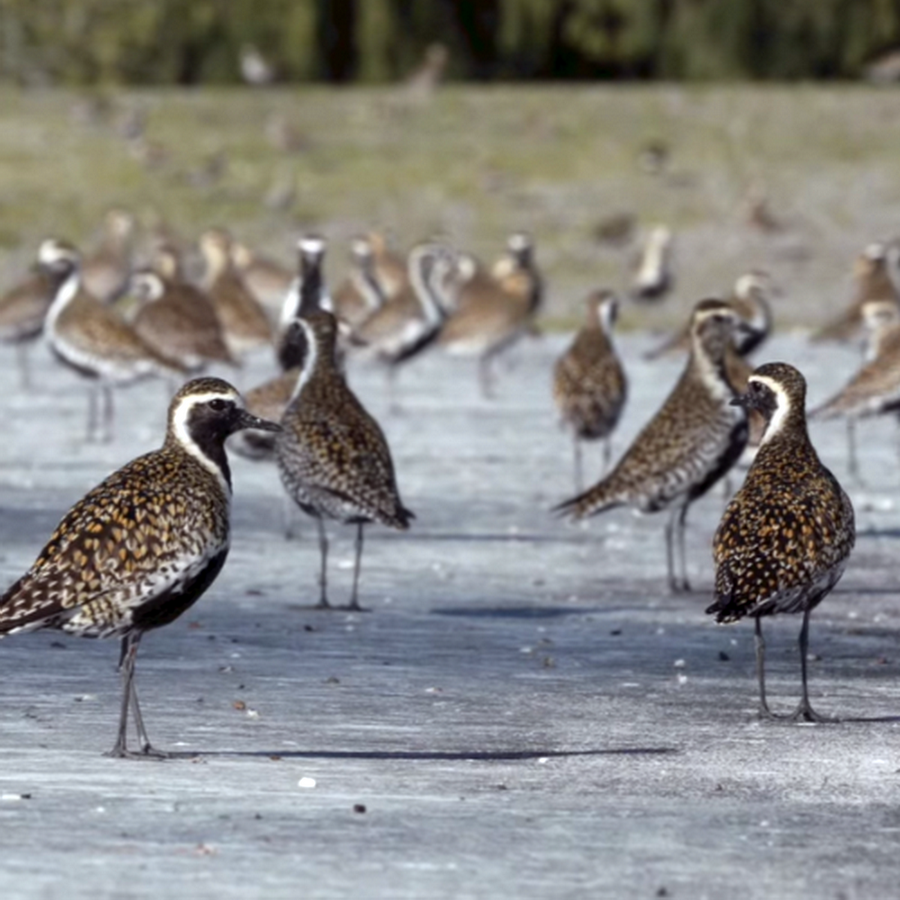
Midway Atoll, April, 2025. © USFWS volunteer Dan Rapp
April 25, 2026
Some kolea watchers who’ve been missing their backyard kōlea since mid April are wondering if the birds left for Alaska early this year. The short answer is probably not. If the birds arrive in their breeding grounds when snow still covers the ground, they could starve.
But when a plover we’ve watched all winter disappears on, say, April 12th, where did it go?
It’s a good question. We know that come April, the birds start gathering in large or small numbers in Hawaiʻi’s fields and grasslands. Over the last few years, we’ve seen groups of 50 or 60 plovers from mid-to-late April forging and resting together in grassy expanses of Ford Island and around Tripler Army Medical Center.
Not this year. Kolea fan, Roger Kobayashi, (retired with military access) has been monitoring the areas and hasn’t seen the usual gatherings. On Thursday, Roger kindly drove three of us to those locations. We saw only 11 birds at Tripler and a few scattered widely on Ford Island. (Roger’s update today: Zero at Tripler, 18 on Ford Island)
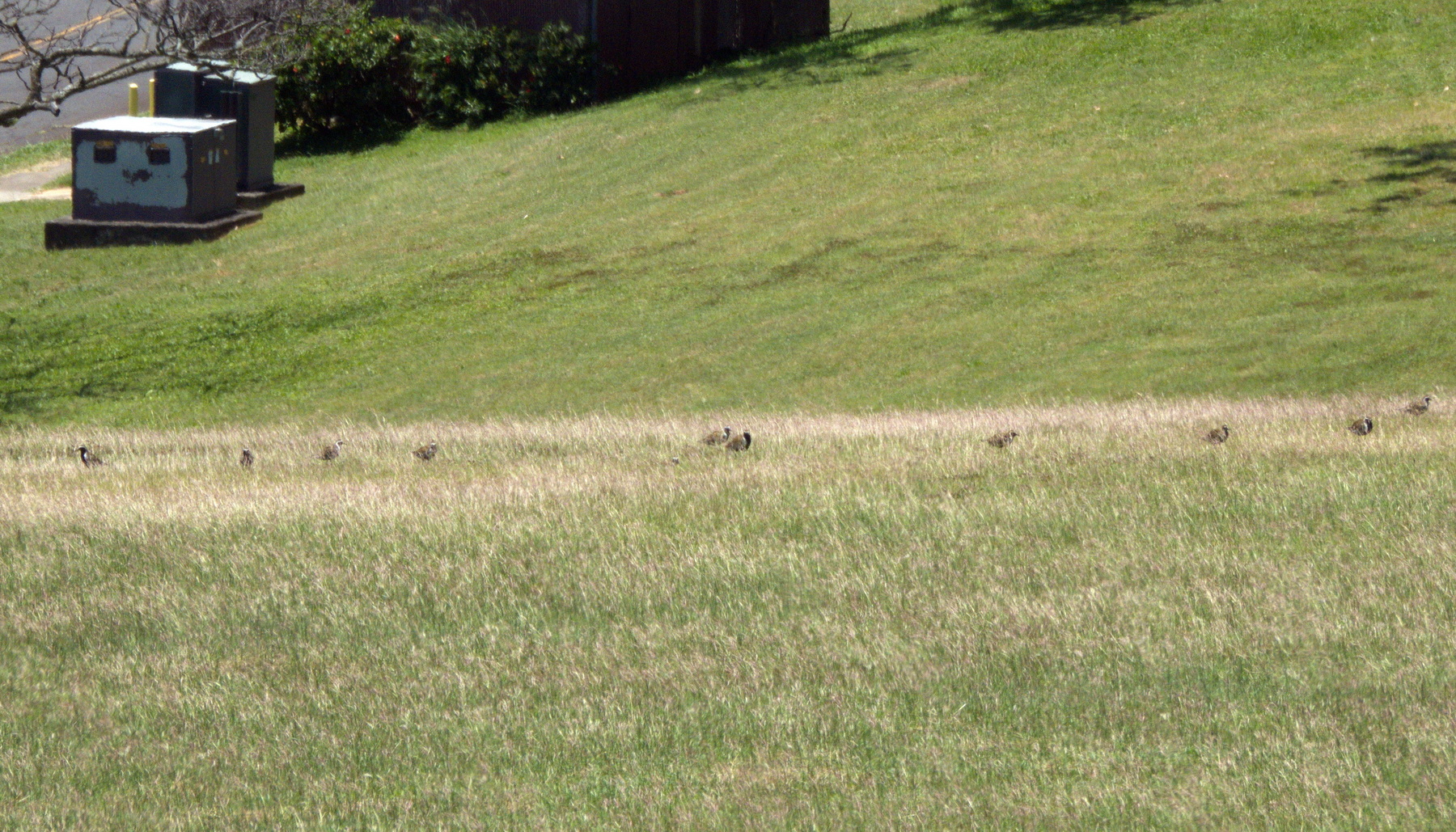
The 10 birds we saw at the Tripler Army Medical Center lawn on April 24, 2026. ©Roger Kobayashi
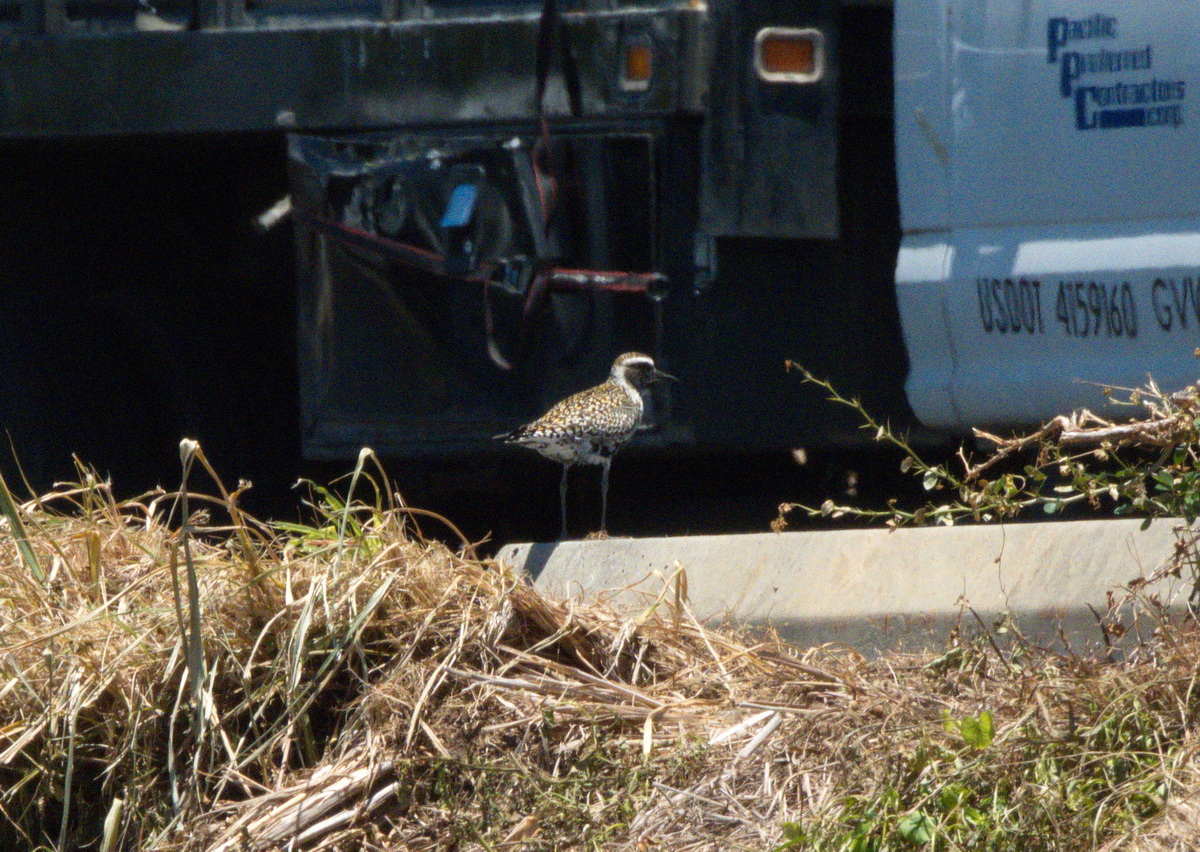
One lone male kōlea stood near some heavy equipment at Tripler Army Medical Center on April 24th. ©Roger Kobayashi
But the kōlea I follow (our Jake in particular, and others in Kailua Beach Park) are still in their usual winter sites as of this writing. So where did the missing birds go?
“We may never figure this out,” said plover expert Wally Johnson when I called him with the question. Without tracking devices on the birds, we don’t know where they go, where individuals in a flock come from, or when they leave for their Arctic breeding grounds. When a single plover or flock flies away, the birds may be relocating somewhere else in Hawaiʻi. Or not. The liftoff could be the Big One, meaning north to Alaska.
Researchers believe that the trigger to migrate comes from a biological clock in each bird’s brain that tracks the length of light, or photoperiod, of each day. Light change causes the production of hormones responsible for molting, weight gain, breeding behavior, and the urge to take flight.
It’s possible that stormy weather, such as our recent Kona winds and flooding, affects departures, but that’s just a guess. Migratory birds are mostly on autopilot, driven by chemical messengers that evolved to give them the best chance of survival.
Some birds are more adaptable than others. One lucky Kailua resident has one kōlea, named Ernie, in the front yard, and one in the backyard, named Bert. Ernie is human-shy. Not Bert, though. Bert comes to the lanai first thing in the morning for the mealworms the homeowners offer. Recently, the bird walked through the open door for his snack. Bert has been gone since Tuesday. With this photo, the bird’s host emailed, “I wish I could speak Kolea so I could have wished him Bon Voyage. I miss him already.” 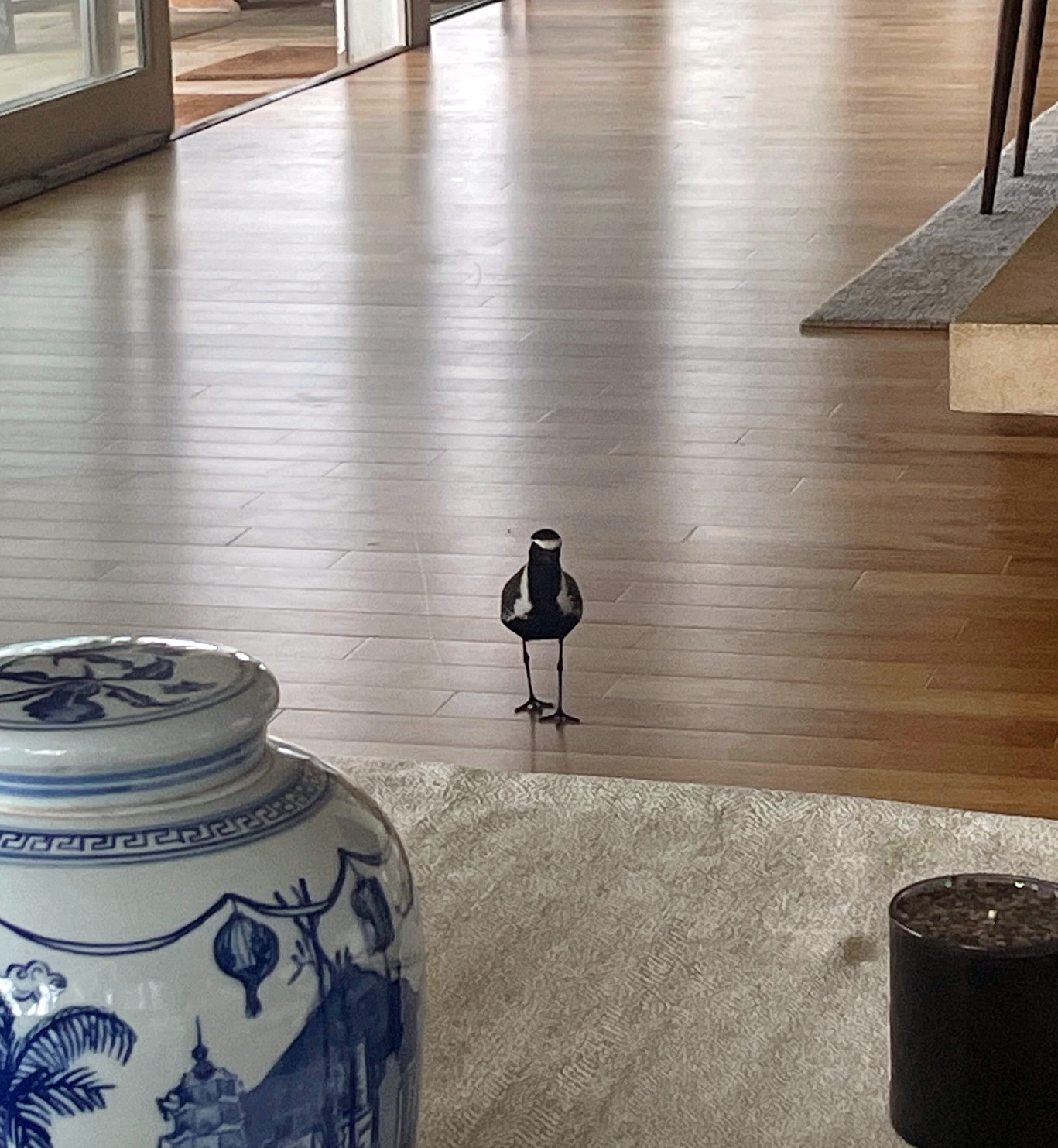
Bert knows who his friends are. ©Jennifer Carver
You can help us learn more about kōlea departure patterns by entering your observations in the REPORT tab under Departure Date. Record either the last time you saw your bird or sightings of April gatherings.
Let me know in the CONTACT tab if you have pictures to share, and I’ll send an email address.
Wally says that in Hawaiʻi, the spring departure date for most plovers is the end of April with about a week variation. Some robust birds may leave a little earlier, and some a little later, perhaps knowing they need to gain more body fat to survive the 3,000-mile journey.
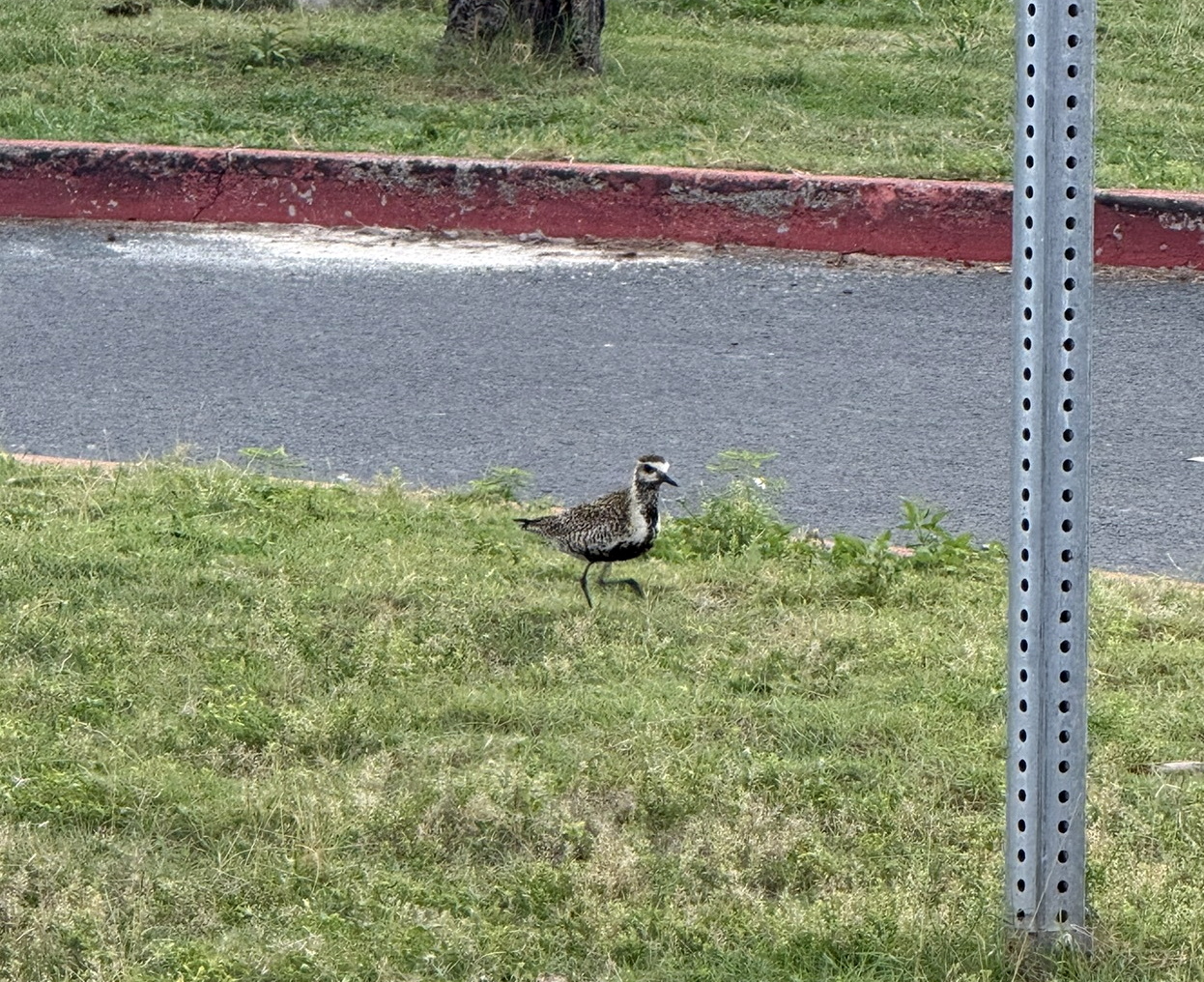
Last year, one of the kōlea Craig and I follow, nick-named Roundy because she often forages in the park’s roundabout, was still here on May 2nd (above photo) She left on May 3rd and returned to the roundabout in early August. ©Susan Scott
Birds know if they’re not in good enough shape to make the migration. We see these homebodies in Hawaiʻi in June. Please report any June sightings.
Thank you, fellow plover lovers for your questions, photos, stories, and for helping us learn more about our amazing kōlea.
To get notified of our September “Welcome Home Kōlea Festival,” and help us carry on this Citizen Science project, please join the Hawaiʻi Audubon Society
Thanks, and aloha,
Susan
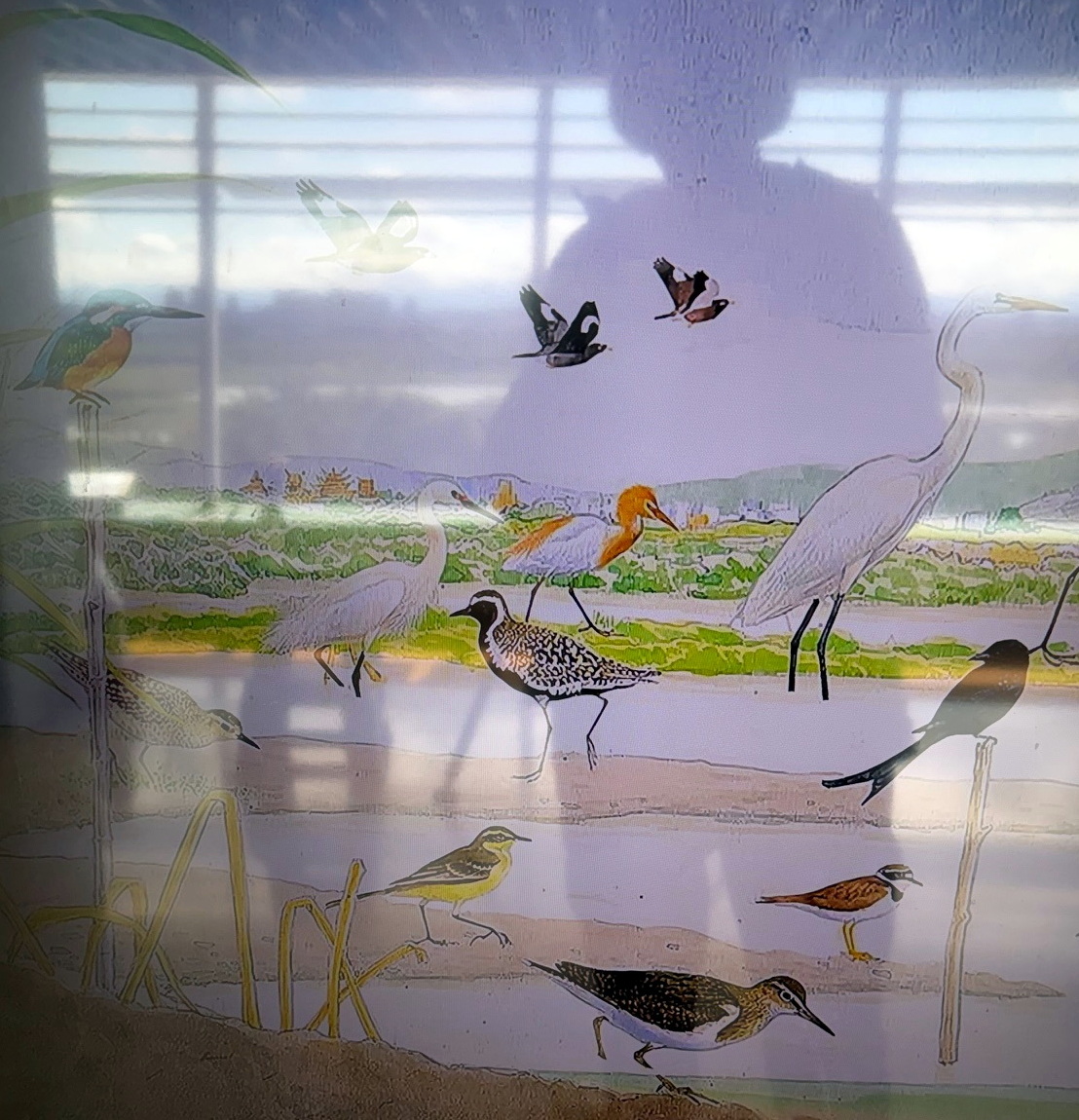
P.S. During a January visit to Taipei’s Guandu Nature Park, a Pacific Golden Plover image in the center of the facility’s display made my day. The city’s reclaimed wetland (and me) are reflected in the glass-framed exhibit.