A bird in the hand, and band through a lens
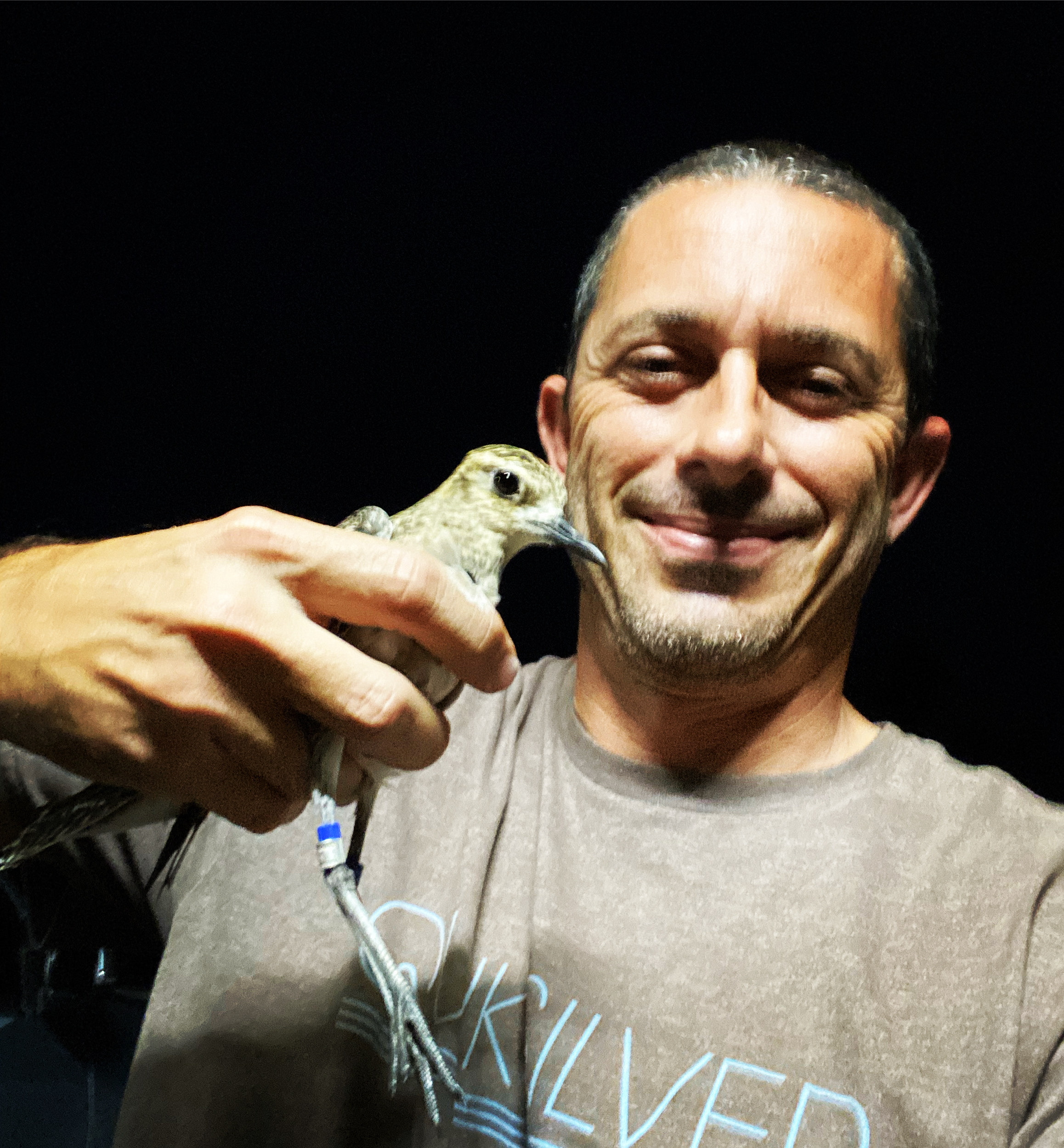 A happy Joshua Fisher, USFWS Invasive Species Biologist, holds the elusive kōlea he finally caught with a netgun. Wally Johnson photo
December 13, 2023
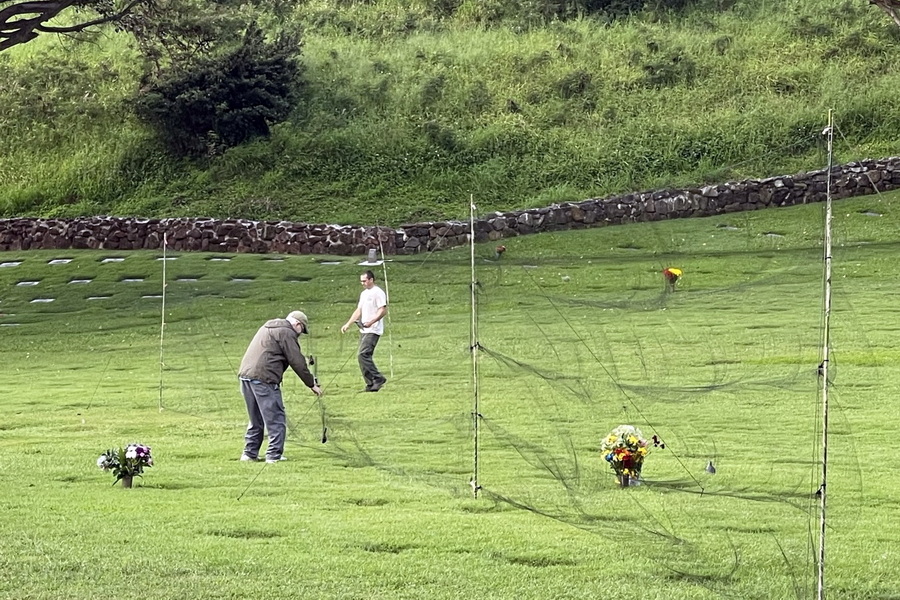
Two years after researcher Wally Johnson and countless volunteers fitted 20 Punchbowl kōlea with satellite tracking tags, four birds still carried their tiny backpacks. Time after time, Wally and helpers arrived in the cemetery with headlamps, cameras, mist nets, and netguns to recapture the birds. Besides relieving the kōlea of their no-longer-functioning tags, Wally wanted to see how they had fared physically. Each of the four have flown two round-trips to Alaska and back, or about 12,000 miles, carrying the tags.
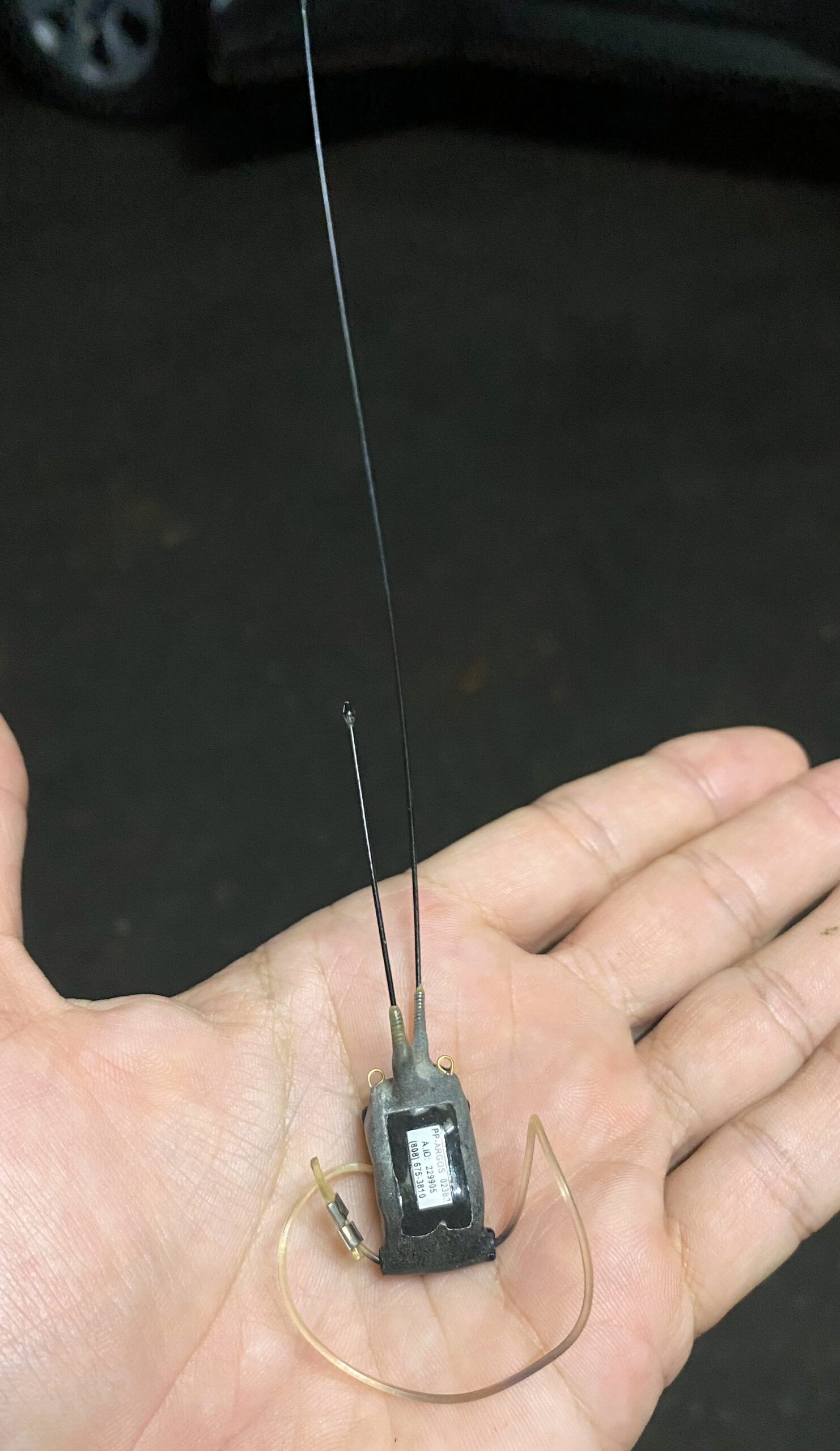 Unfortunately, the batteries in these satellite-signaling devices only have enough charge for one season. Total weight of the device and harness is a bit less than one U.S. nickle. Wally Johnson photo
But those kōlea were geniuses at staying just out of reach, dodging nets with such precision we joked that they could read our cars’ license plate numbers. Finally, persistence paid off. On November 29th, Joshua Fisher, a USFWS biologist and netgun expert, caught one of the four. And good news: After removing the tag and examining the bird, Wally saw no evidence that the device and its harness had caused the bird any harm.
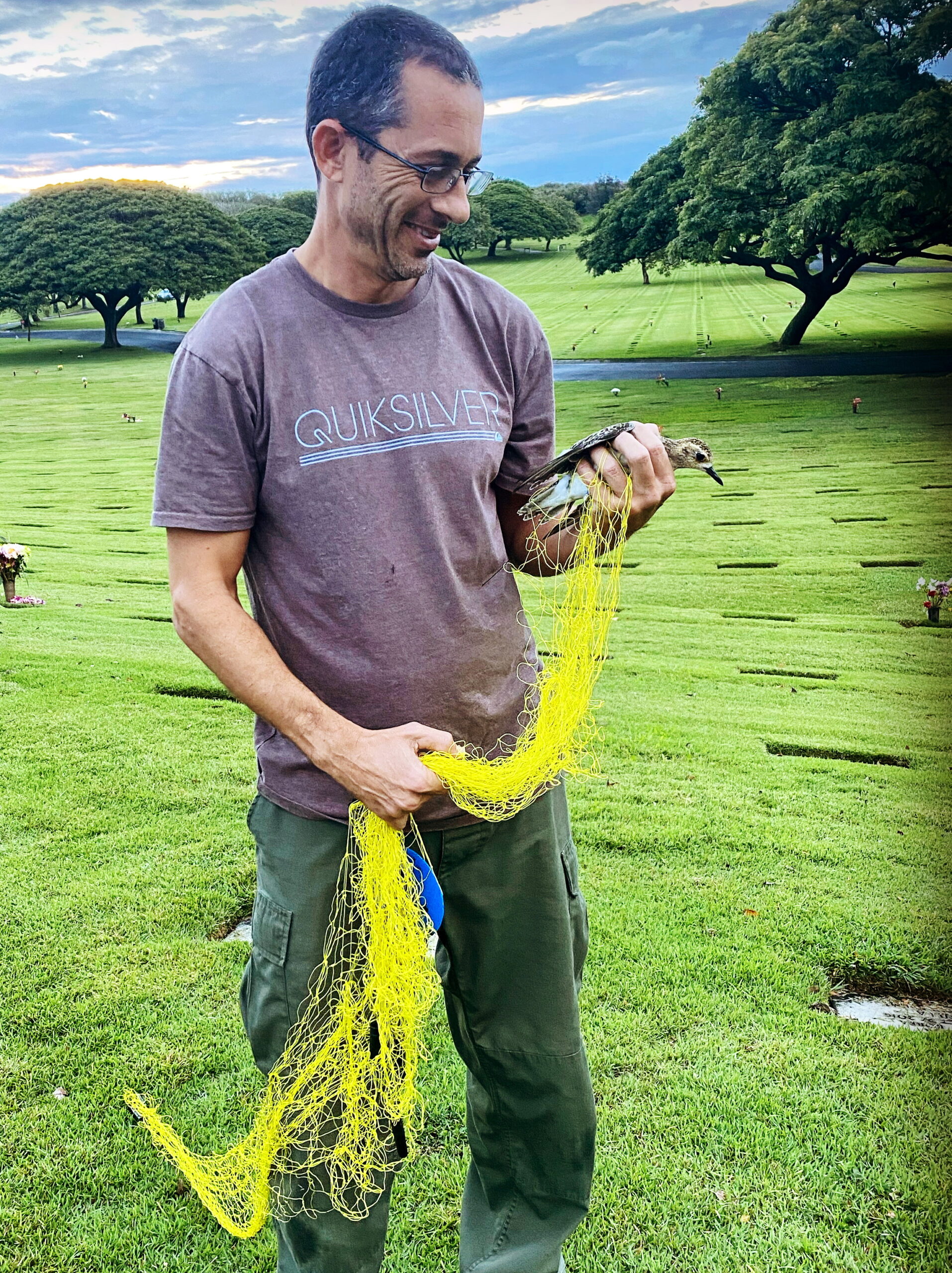 Josh with his hard-earned prize kōlea, November 29, 2023. Wally Johnson photo
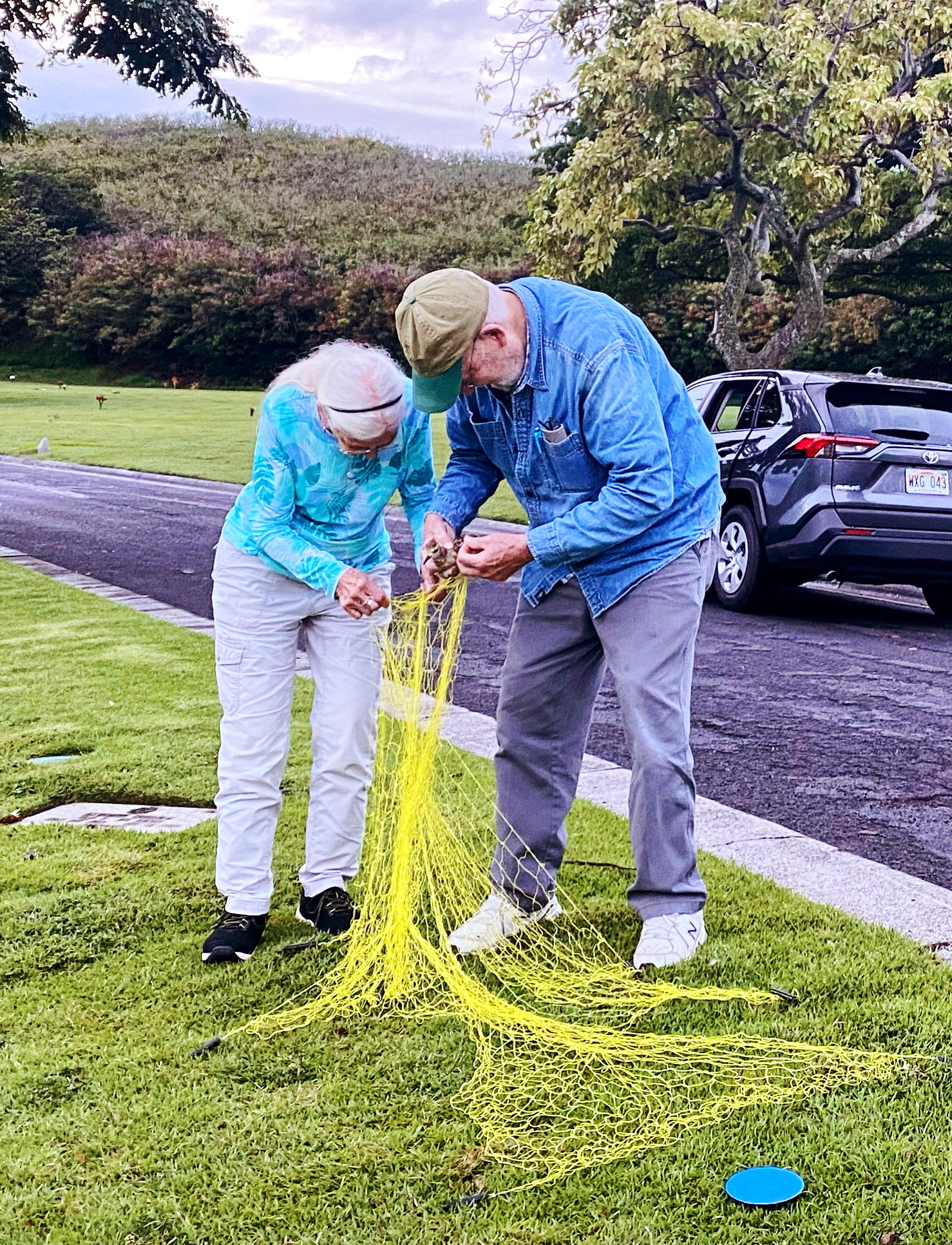 Wally Johnson and partner Diane Smith untangle the kōlea from the net. Josh Fisher photo
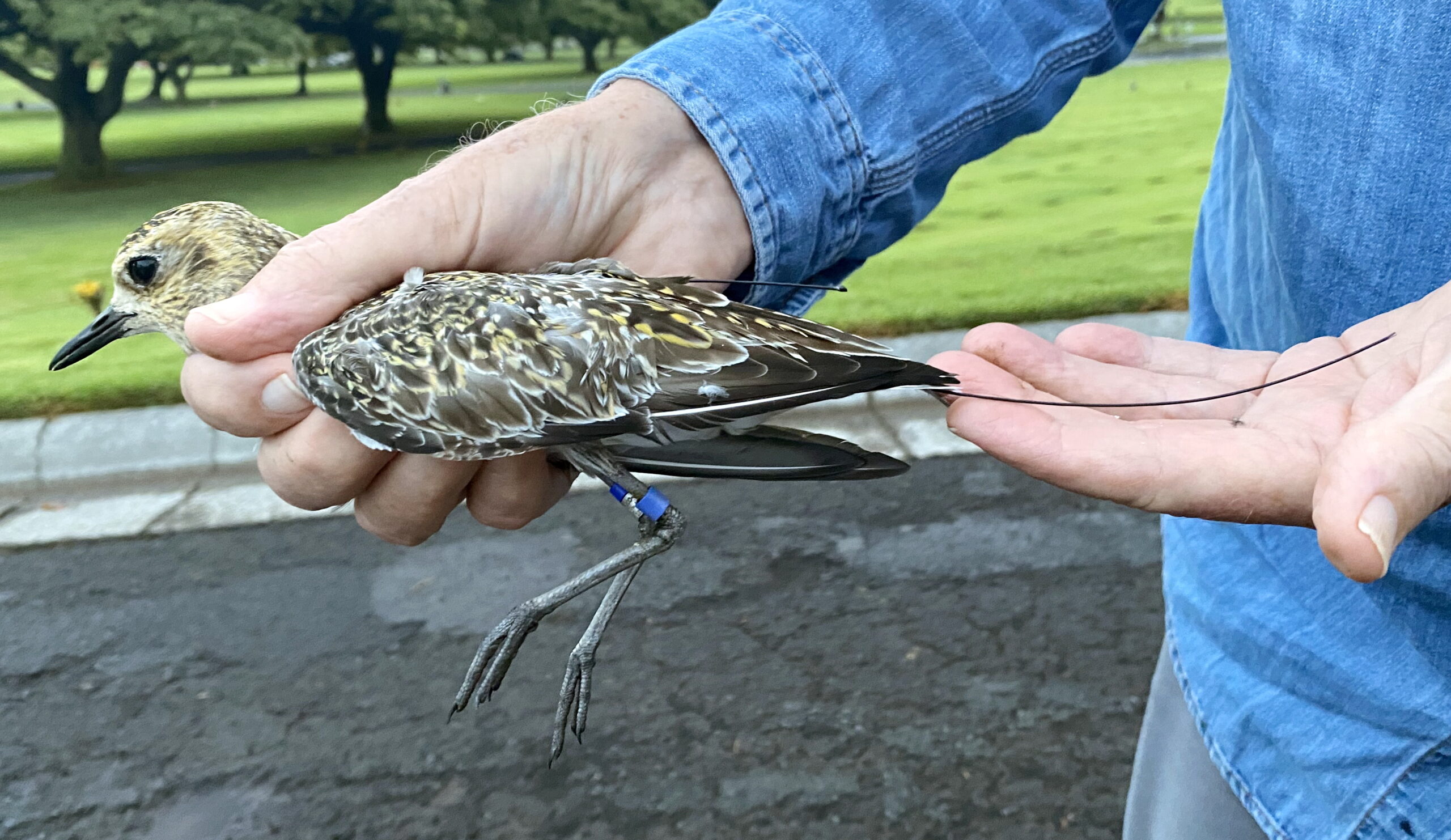
Leg bands and tracking tags are the only way to learn about Pacific Golden-Plovers’ age and travels. Such “jewelry” seems a lot for a little bird to carry, but apparently it doesn’t phase the hardy kōlea. Wally found no feather, body, or leg damage to this bird after two round-trip migrations. Josh Fisher photo
Tom Fake and Mr. X win a photo finish
Wally and his team of volunteers recently celebrated another achievement in Punchbowl Cemetery. A kōlea named Mr. X, named after its chosen wintering site in section X, has exceeded the kōlea longevity record. Wally was thrilled to announce with confidence that Mr. X is at least 21 years, 5 months old.
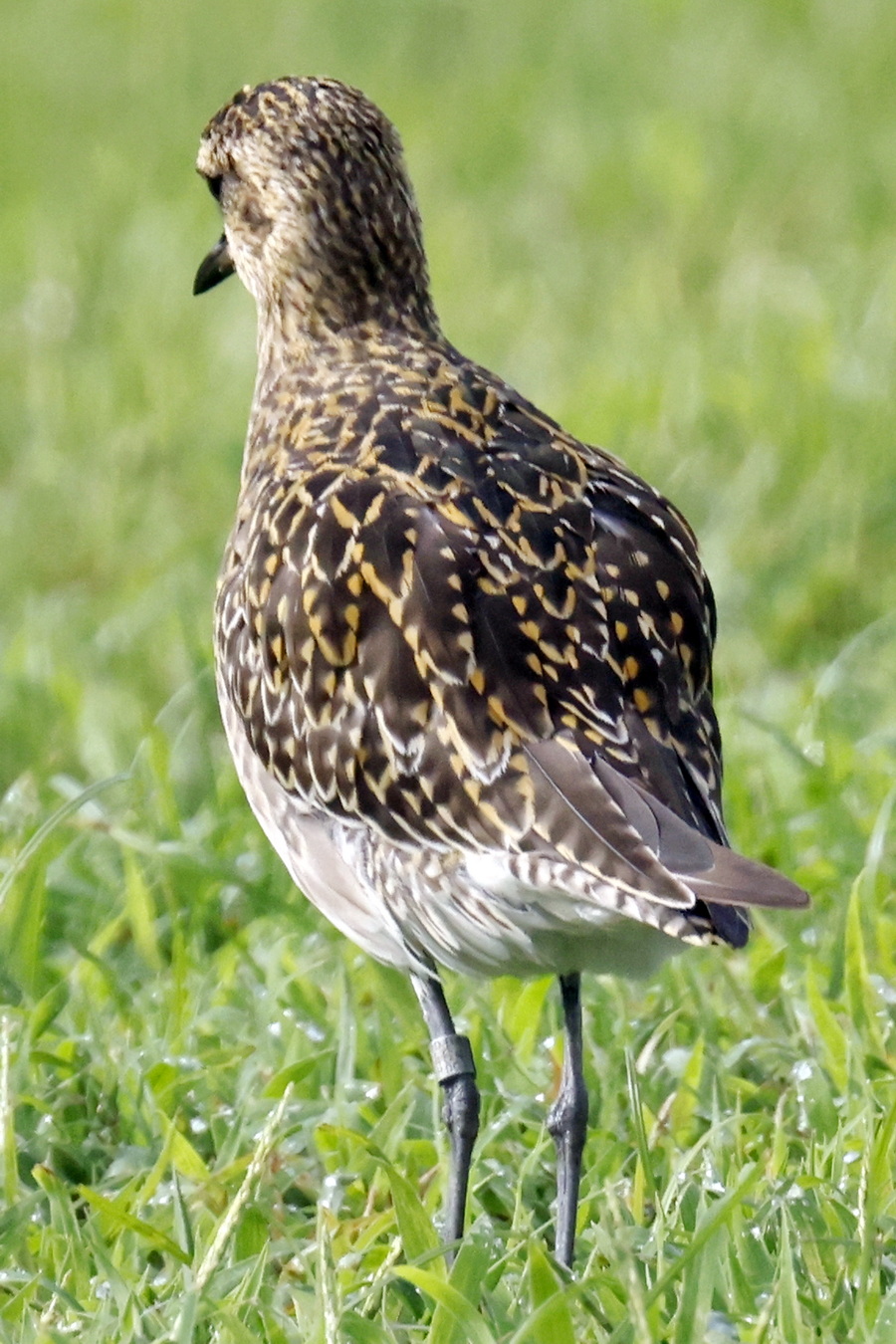 Mr. X with his 21-year-old aluminum band. Tom Fake photo
The former plover to hold the longevity title was a Bellows Air Force Station bird, also banded by Wally, that lived for at least 21 years 3 months.
Before Mr. X could be officially declared the oldest plover on record, Wally needed proof. This was no easy task. The bird had lost his three colored plastic bands that Wally added with the metal band for ID purposes. Last year, plover counters noticed that only one red plastic band remained. This year, only the metal band remains.
In order to be sure that this is Mr. …
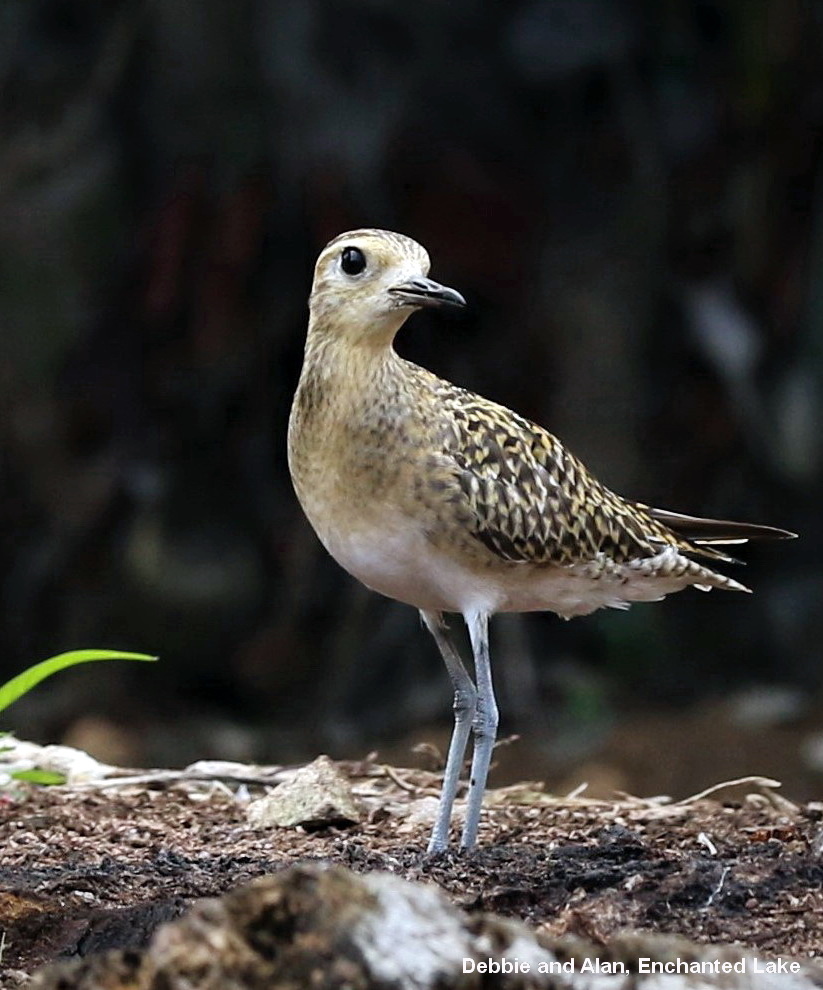
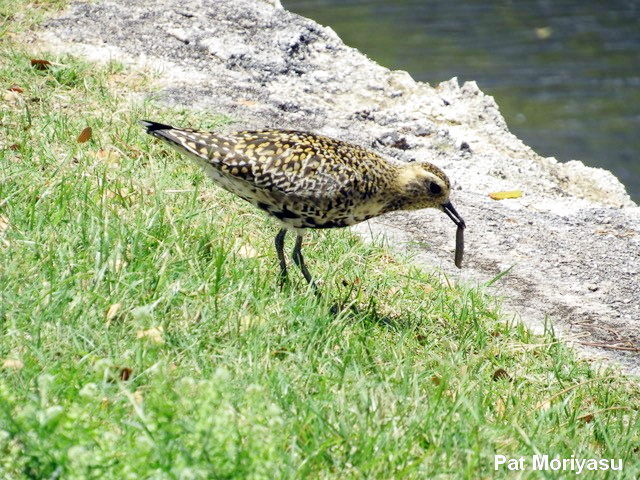 Once a plover survives its first year in Hawaiʻi, the bird returns to that precise place year after year. Foraging patches range in size from about one acre to a football field, depending on the abundance of crawly things in the patch. Kolea eat anything they can catch and swallow, including slugs (above), cockroaches, centipedes, and spiders. ©Pat Moriyasu
 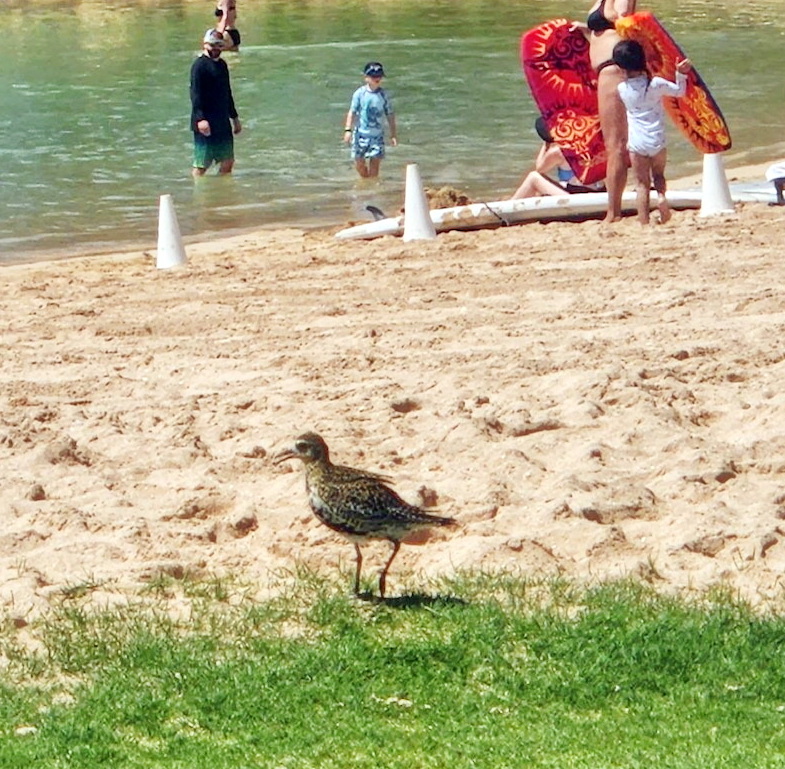 When a disturbance passes, a plover returns to its chosen patch, such as this bird at popular Ko Olina Lagoon 3, January 2023. ©Susan Scott
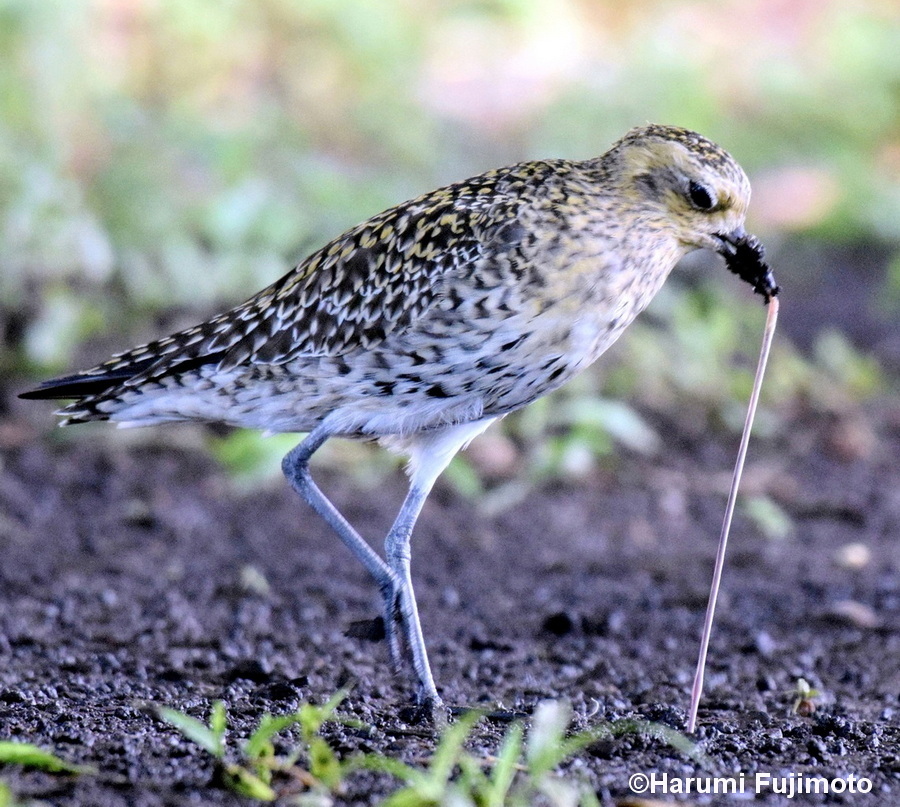
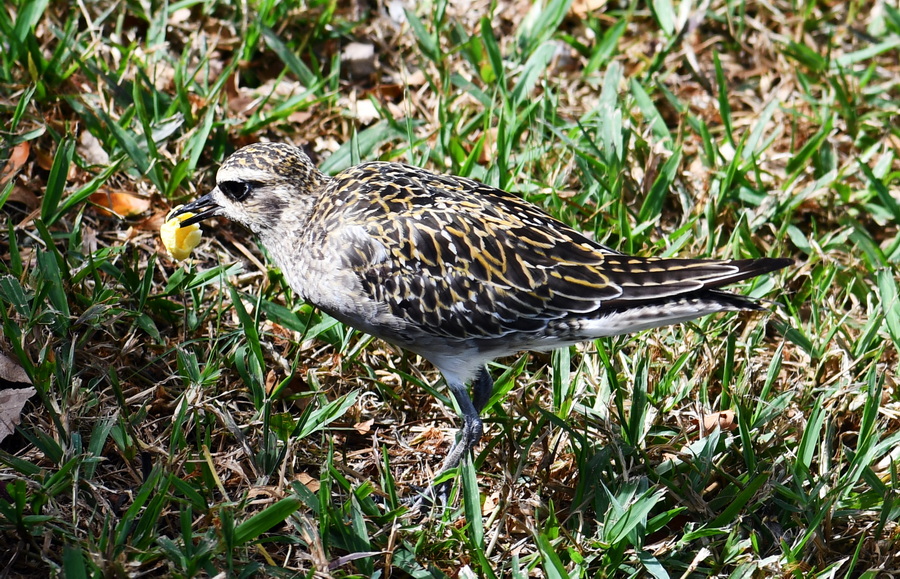 Jake arrived August 11th this year. Here he is this morning eating scrambled egg, rich in fat and protein, and just what he needs. ©Susan Scott
 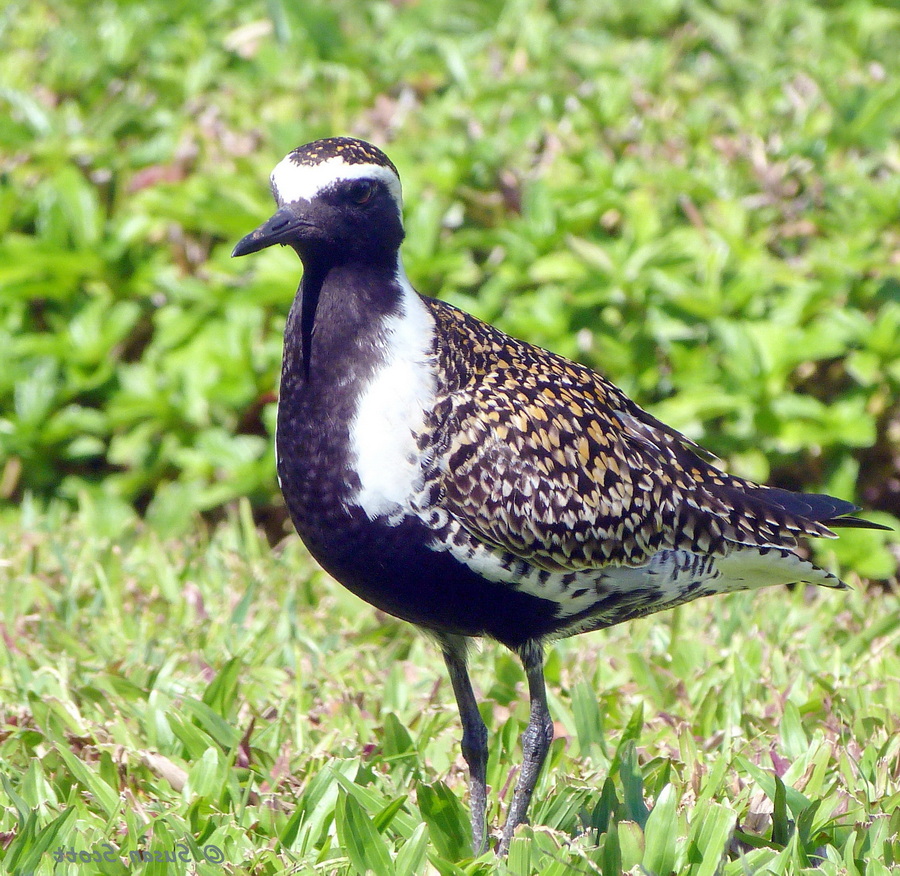 Our Jake, April 25th, plump and dressed to the nines. ©Susan Scott
 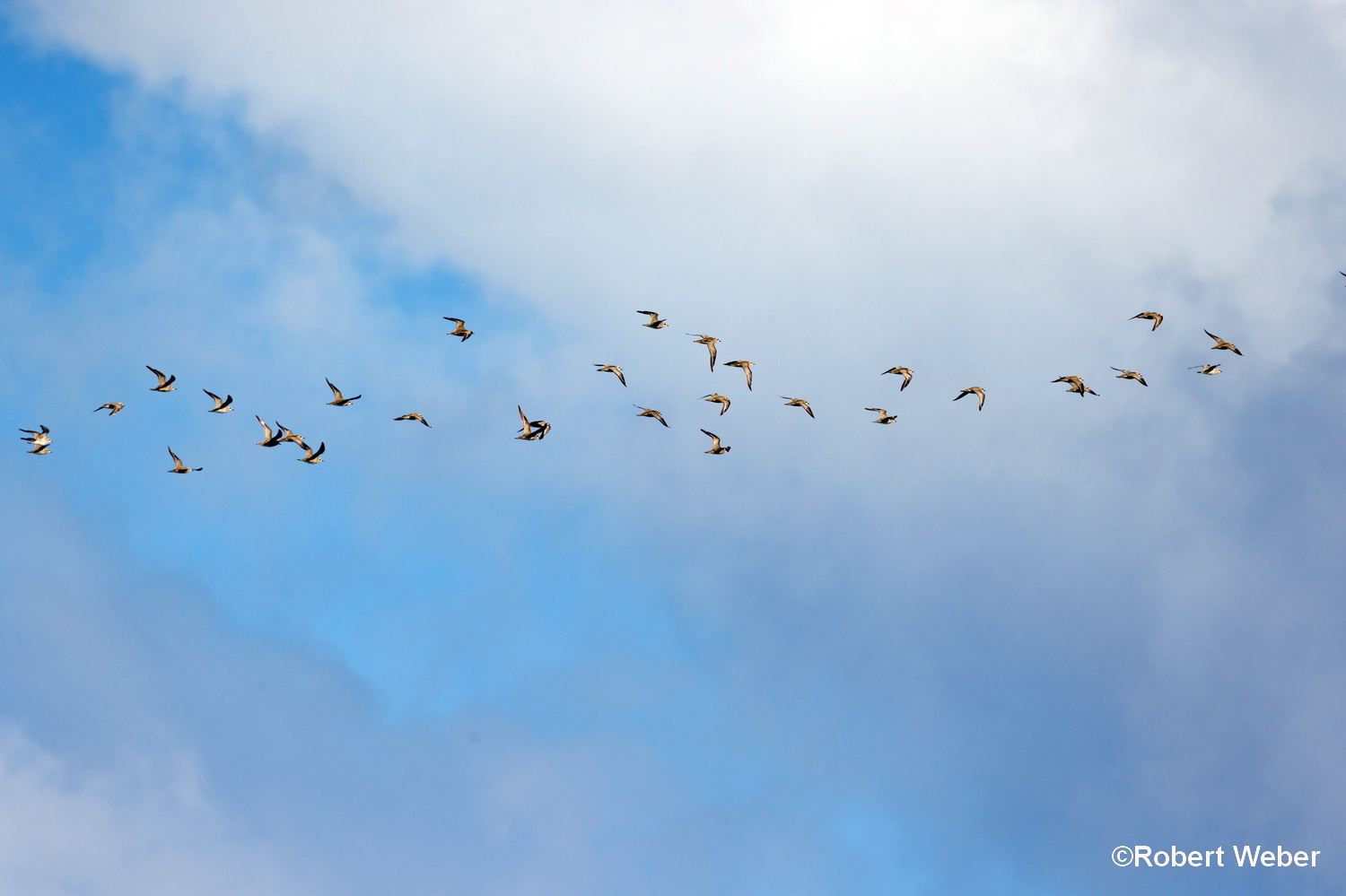 Photographer and kōlea fan, Robert Weber, shared this photo he took of a kōlea flock near Kahuku on October 13. These birds may be summer offspring that made it from Alaska to Hawaiʻi. Plover youngsters, have no adult guidance. Navigation is by instinct.
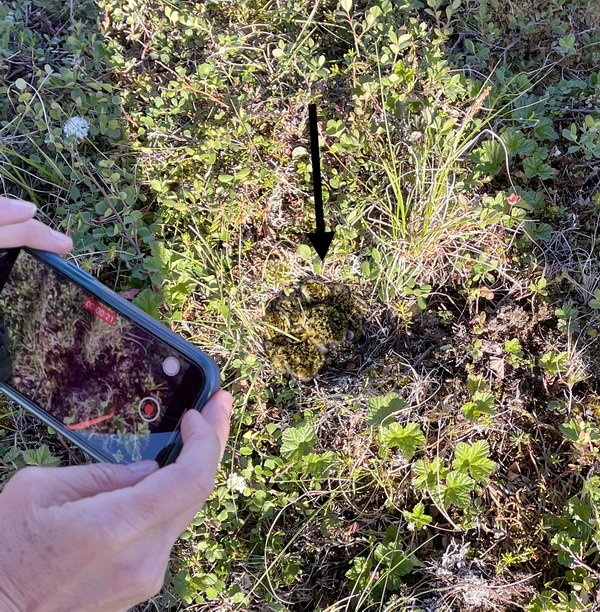
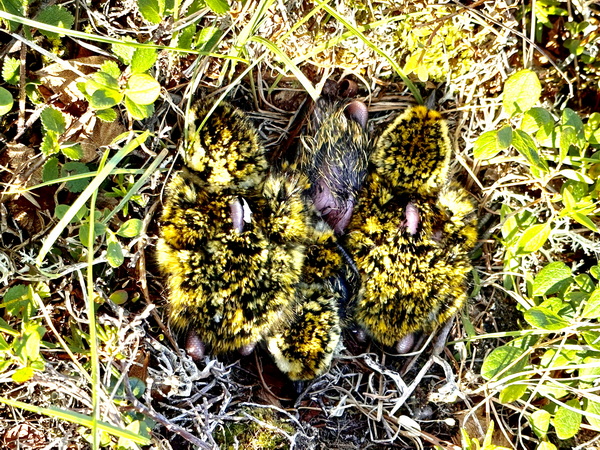
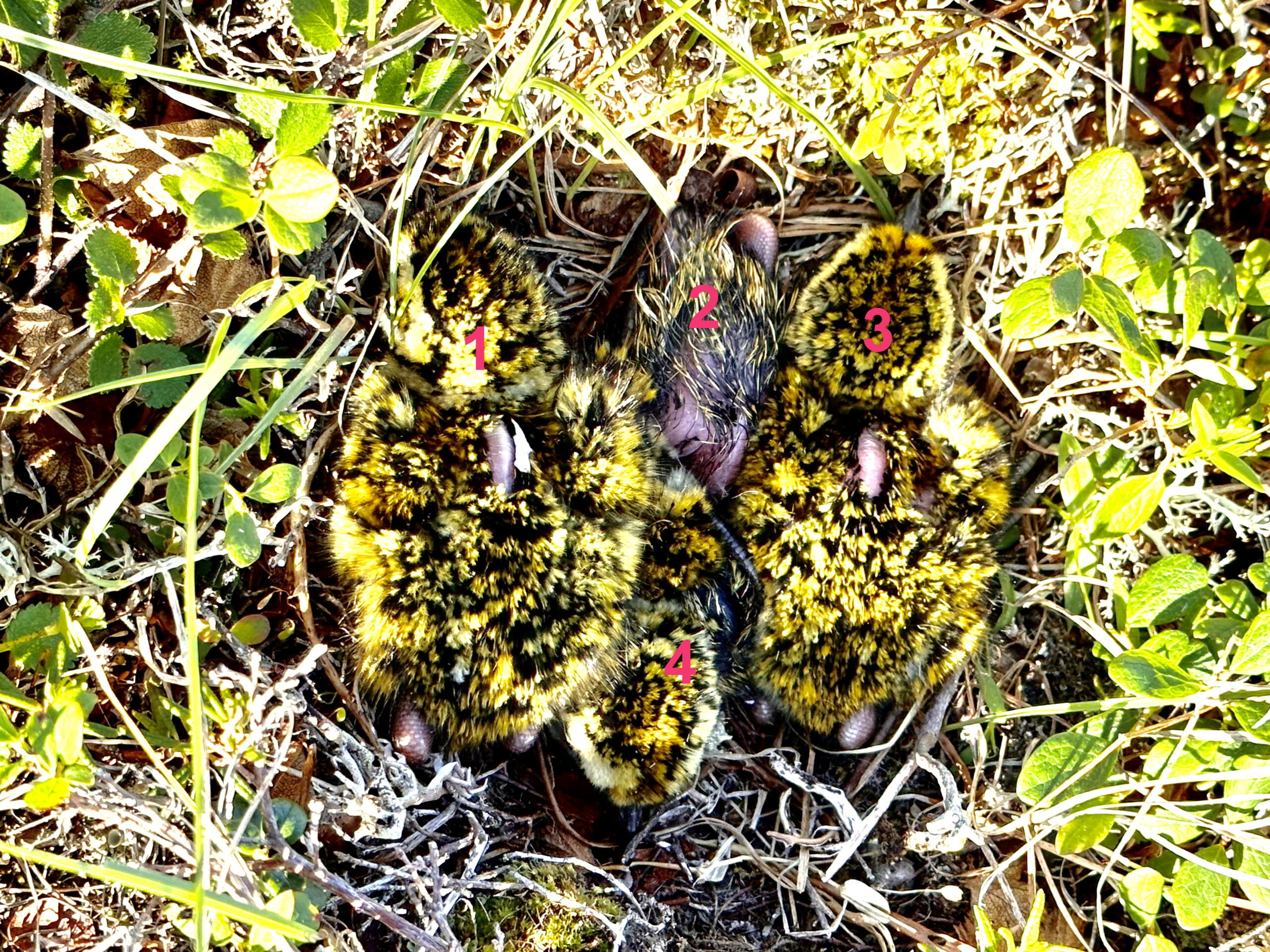 Chicks hatch in the order the female laid the eggs. The top center chick, still wet, was the last to hatch. The parents immediately pick up the empty eggshells and drop them far from the nest, since the white shell interiors are a visible clue to predators. The flesh-colored bumps are the chicks’ long, adult-size legs folded beneath them. ©Susan Scott
 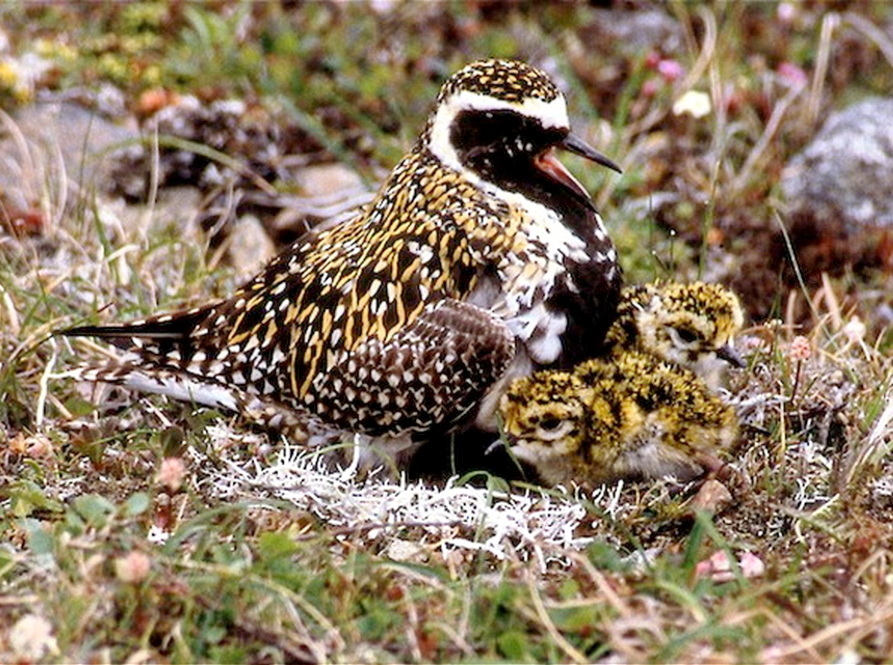 This photo from one of Wally’s past trips shows a male parent protecting his newly hatched offspring. © O.W. Johnson
 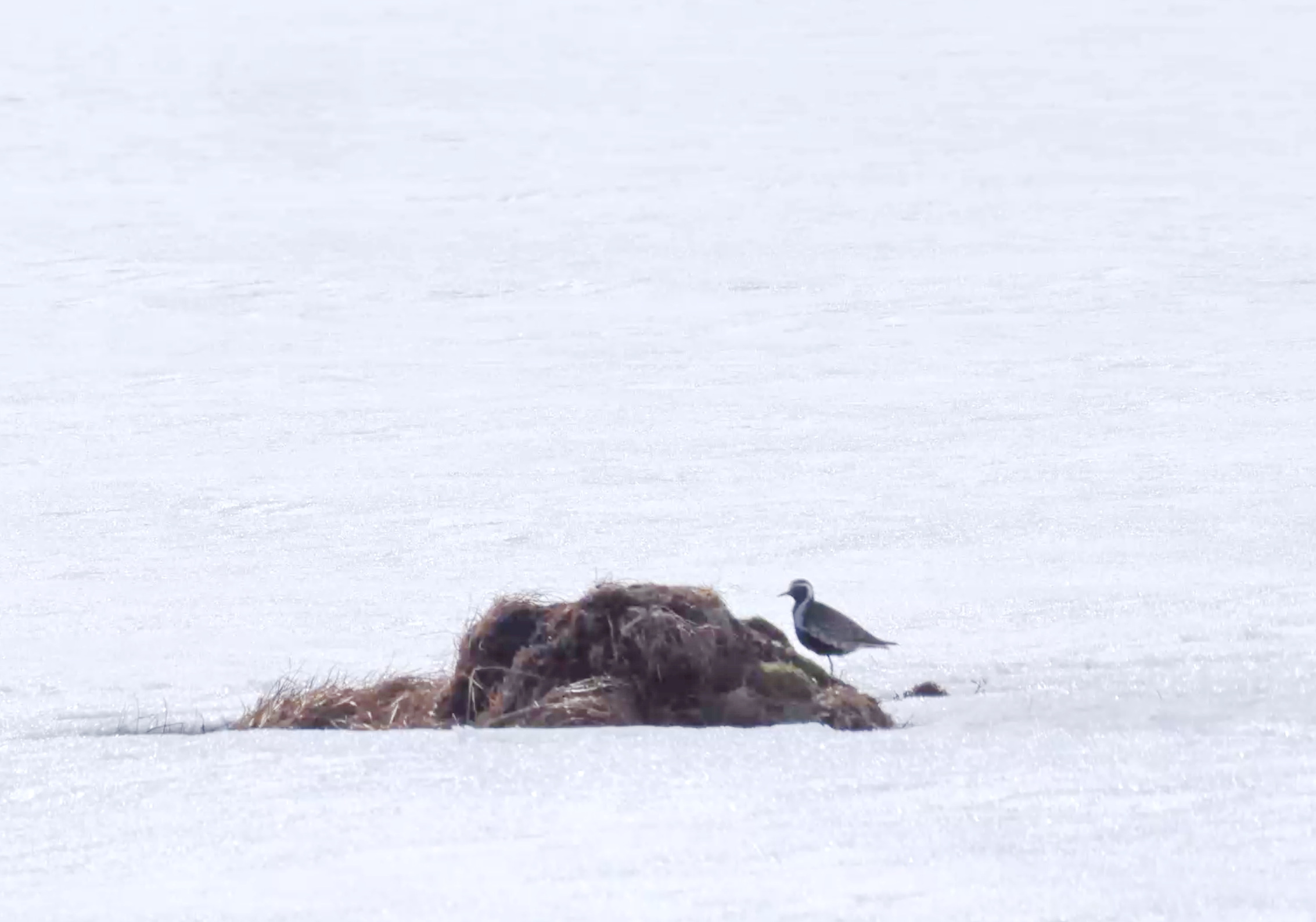 Late snowfall leaves little for newly arrived kōlea to eat. © Jim Dory
 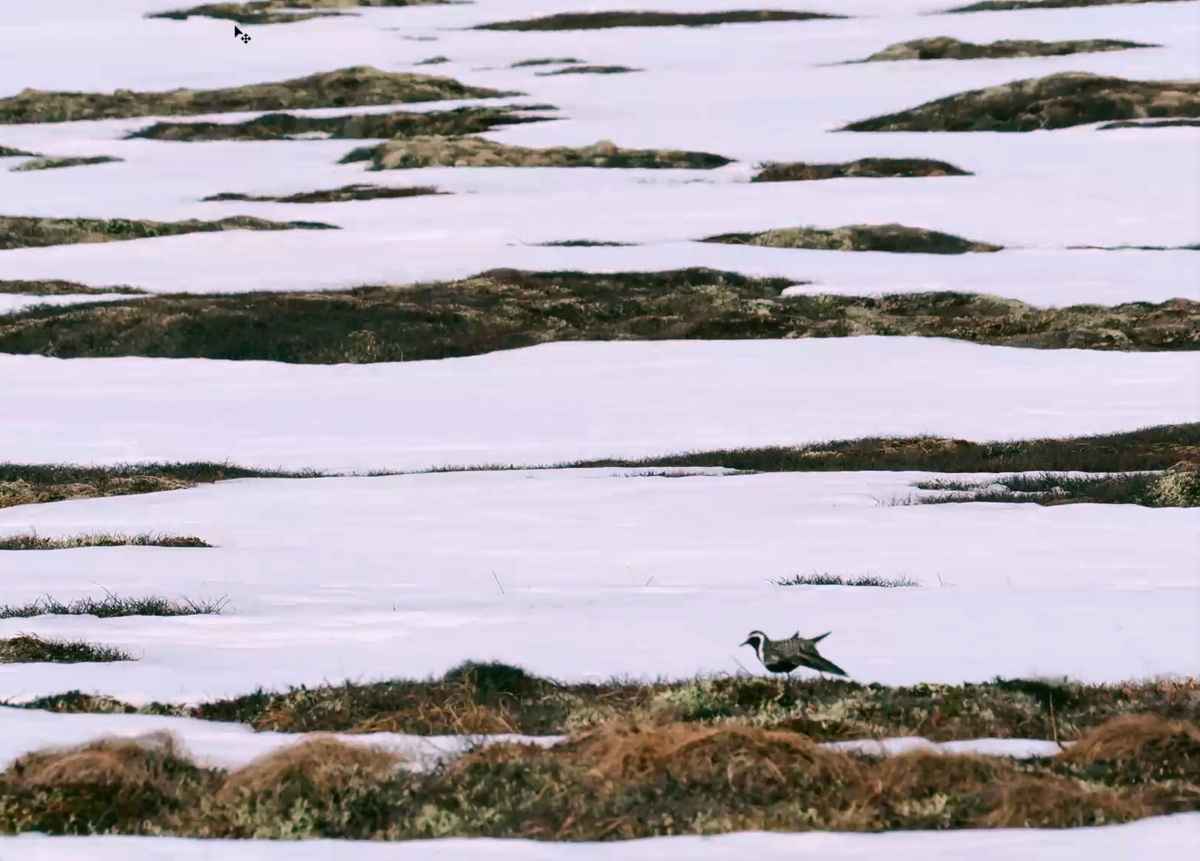 After their 3,000-mile nonstop flight, kōlea need nourishment fast. When mosquitoes and other insects hatch late due to cold weather, kōlea eat freeze-dried berries from the previous fall. © Jim Dory.
 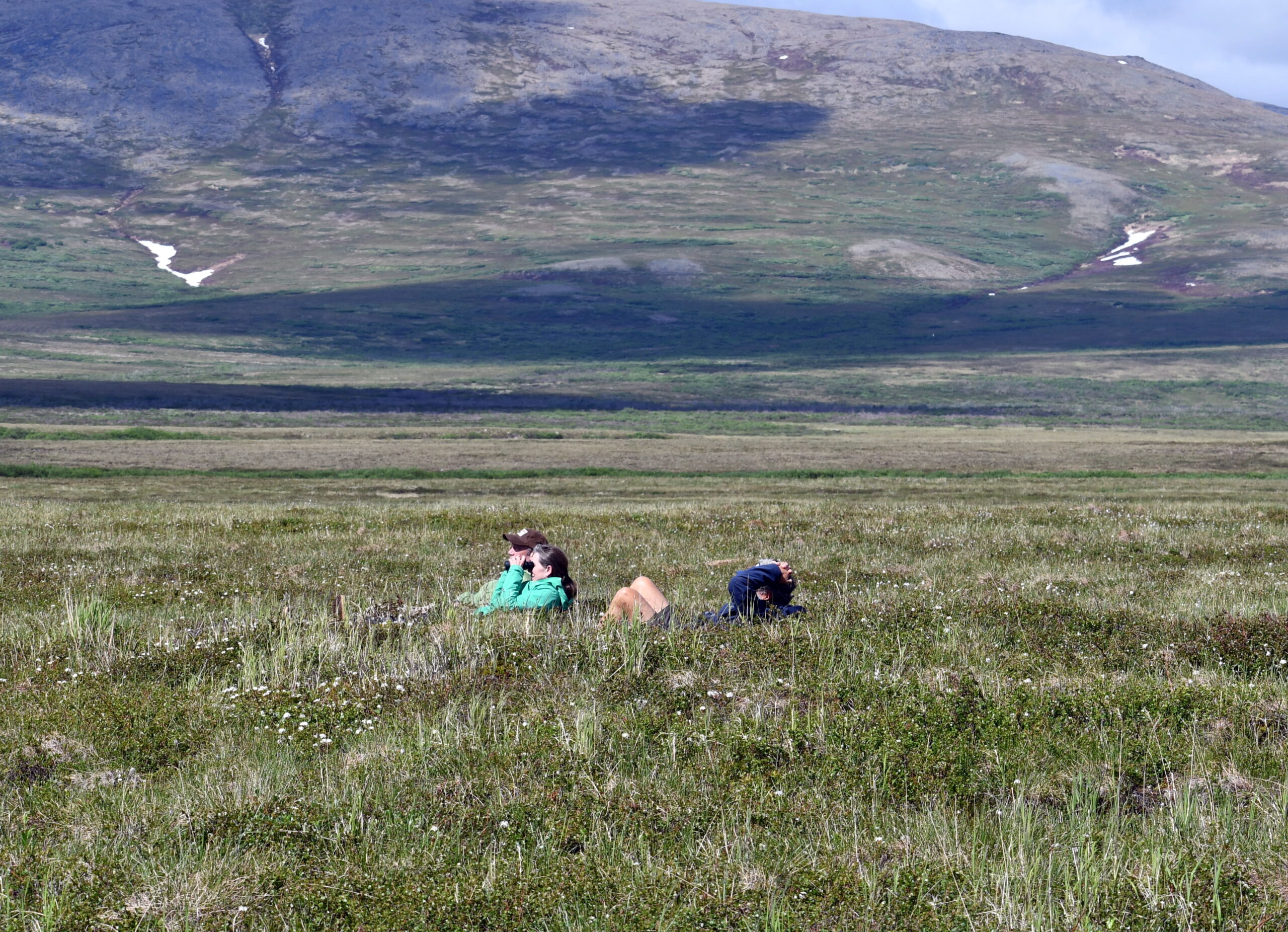 To find a nest in the vast tundra, Alaska researchers, Nancy and Paul Brusseau, watch where a flying kōlea landed. Craig Thomas (my husband) in shorts, works hard here supervising. ©Susan Scott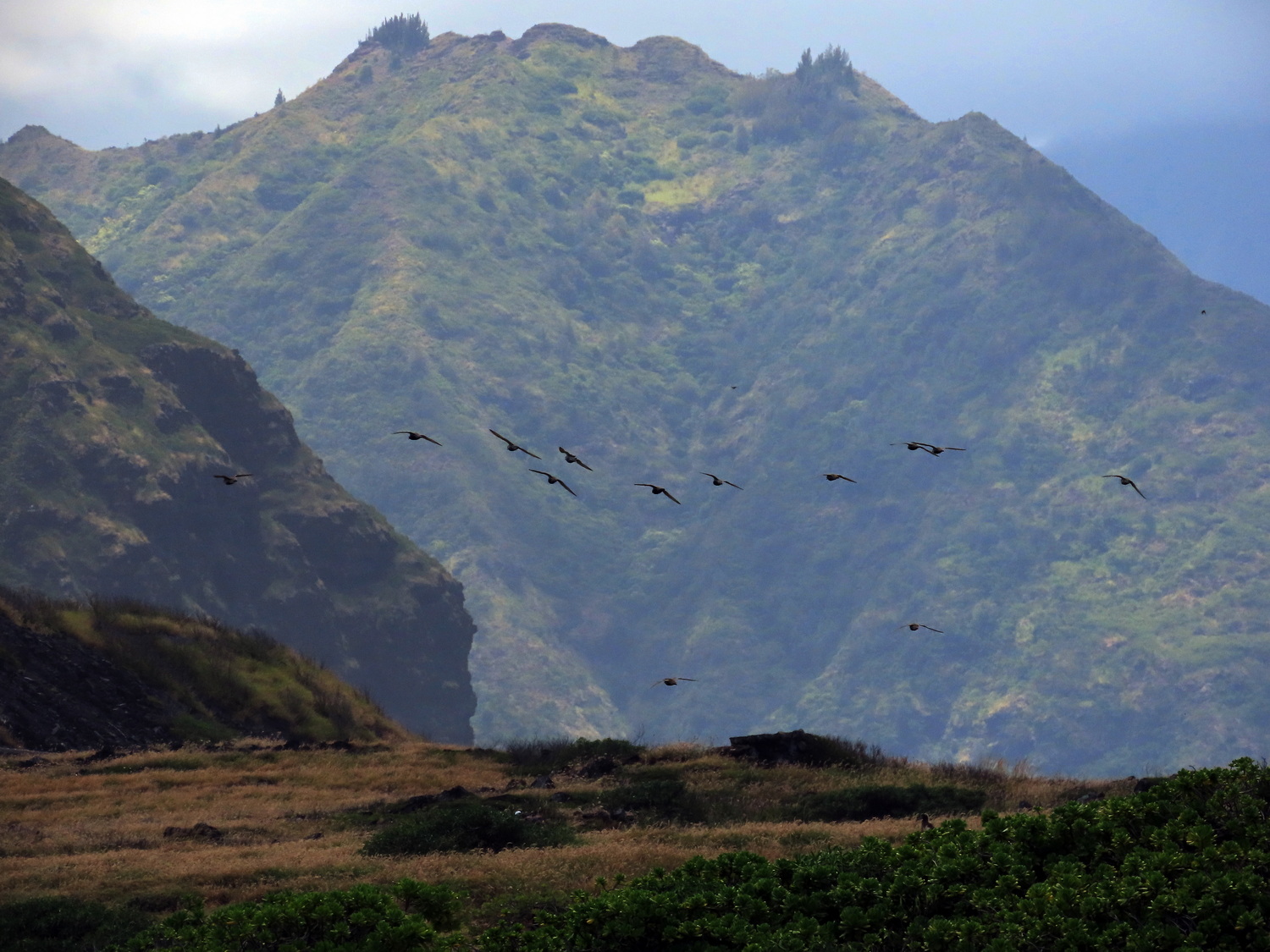
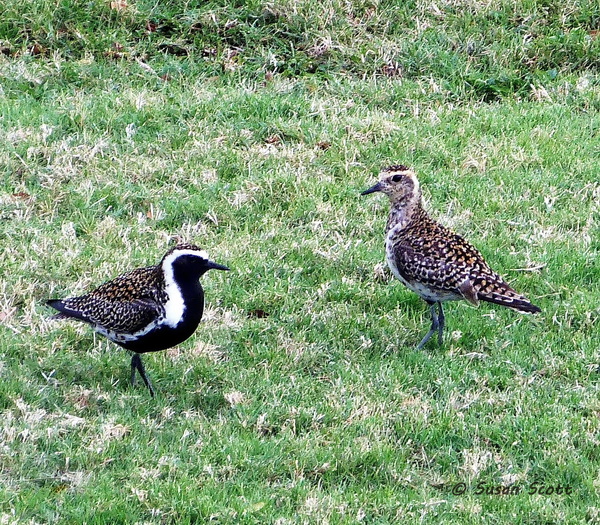 Our male, Jake, (left) usually defends his foraging territory from other birds but come April, he tolerates company, such as this attractive female. ©Susan Scott
 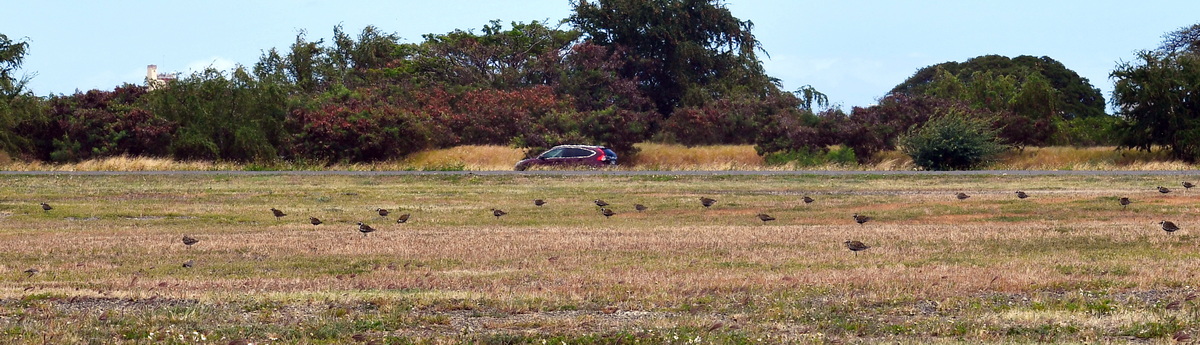 Plover fan, Roger Kobayashi, escorted me onto Ford Island (military ID required) to see the gathering near the NOAA building. ©Susan Scott
 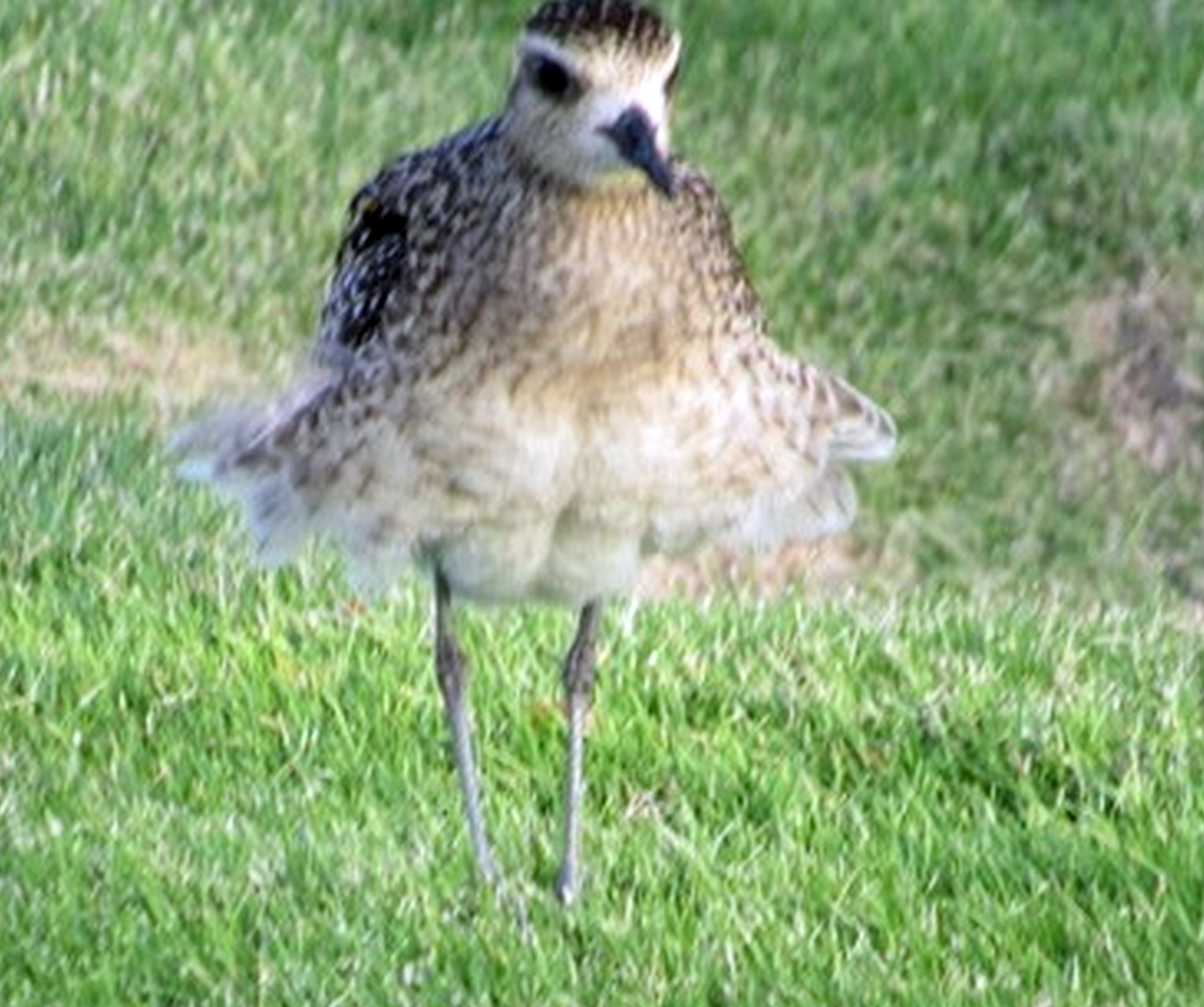 Hawaiʻi Audubon board member and kōlea fan, Pat Moriyasu, shot this funny photo of a kōleaʻs “skirt” during one of our blustery days in early March.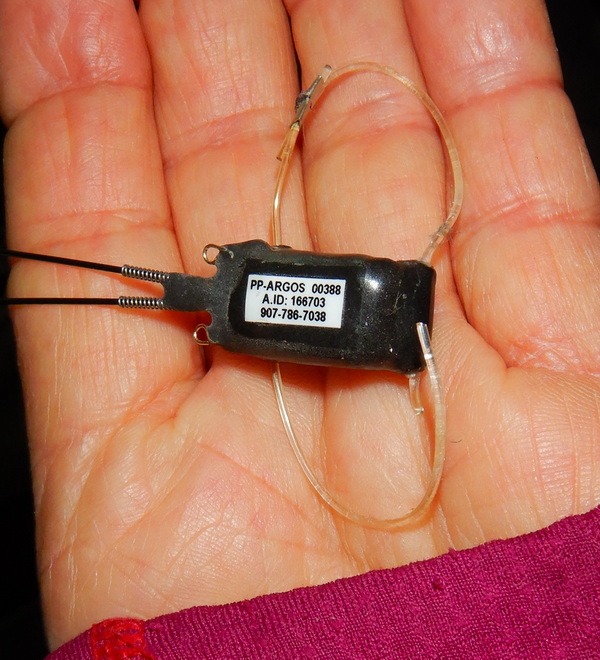
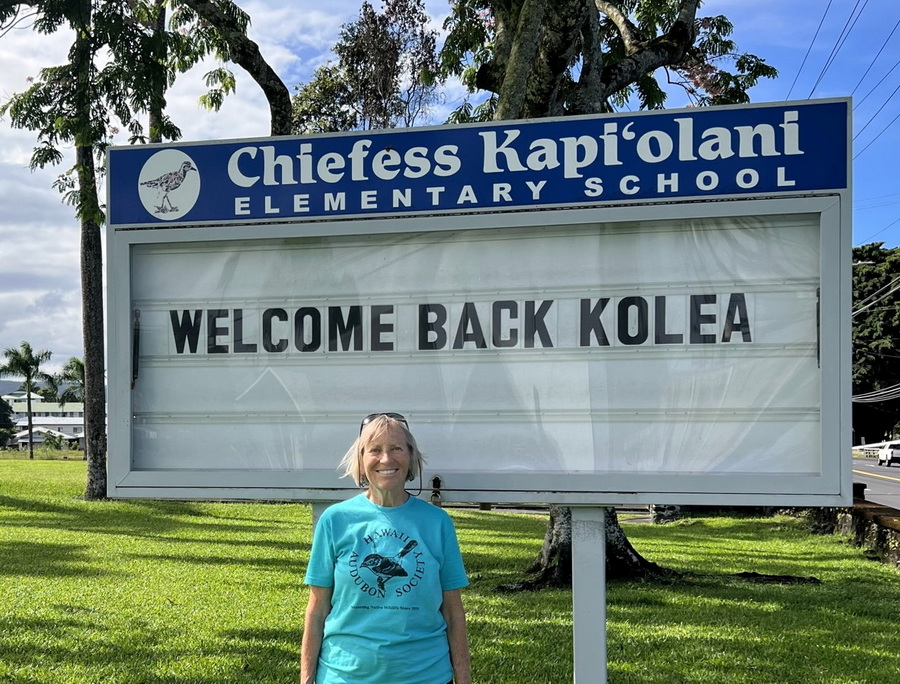
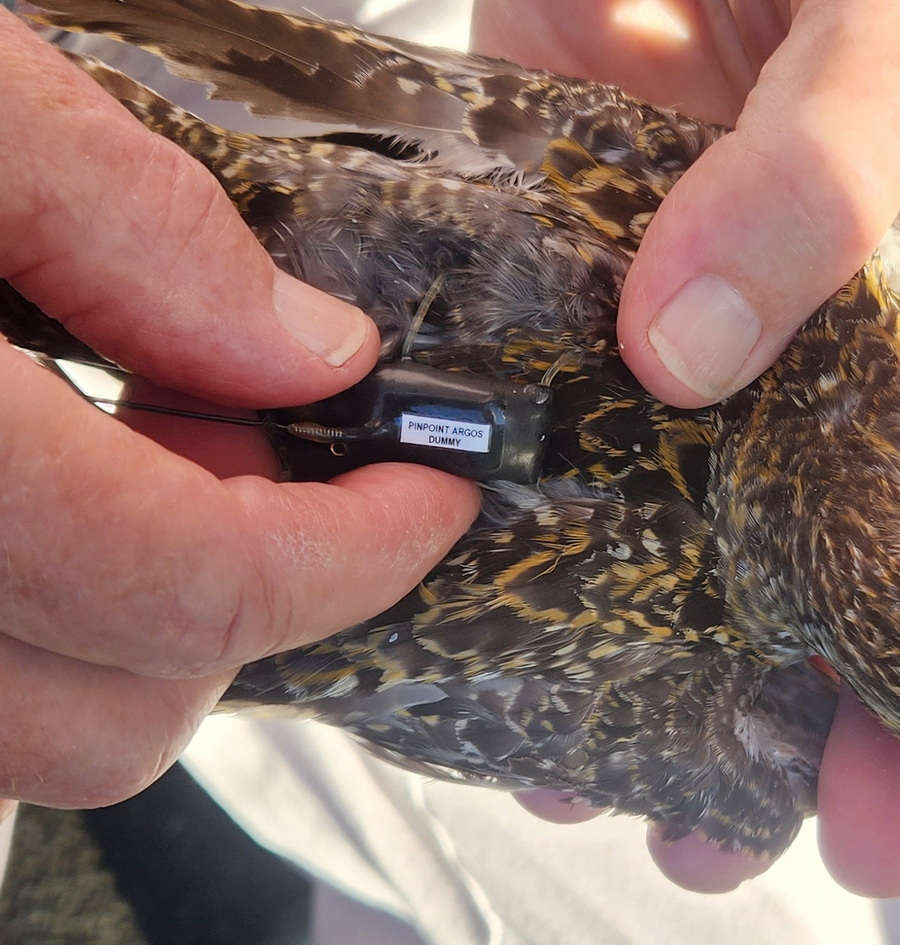 This bird carried, round trip, a GPS tag labeled DUMMY. It was the same weight and size as the live tags, but did not transmit a signal. ©Susan Scott
 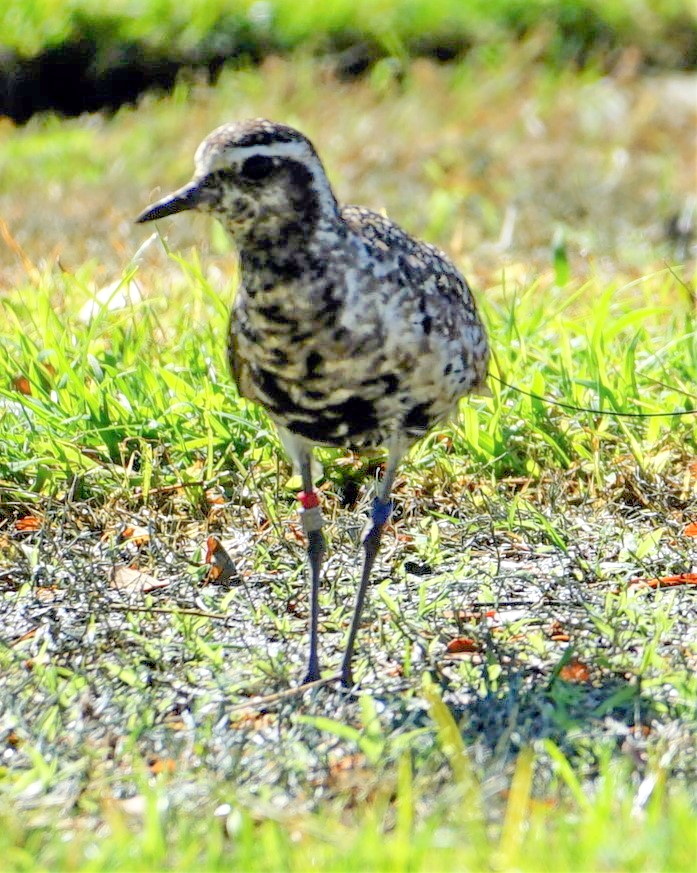 This male, nicknamed Mr. Necker, flew to Alaska, then Russia, then to Necker Island in the Papahanaumokuakea Marine National Monument where his signal stopped. The team was surprised and delighted to recapture him in Punchbowl Cemetery on October 10th in the exact spot he was tagged in March. We know the bird’s sex from his springtime feather colors, not his above October colors. ©Susan Scott
 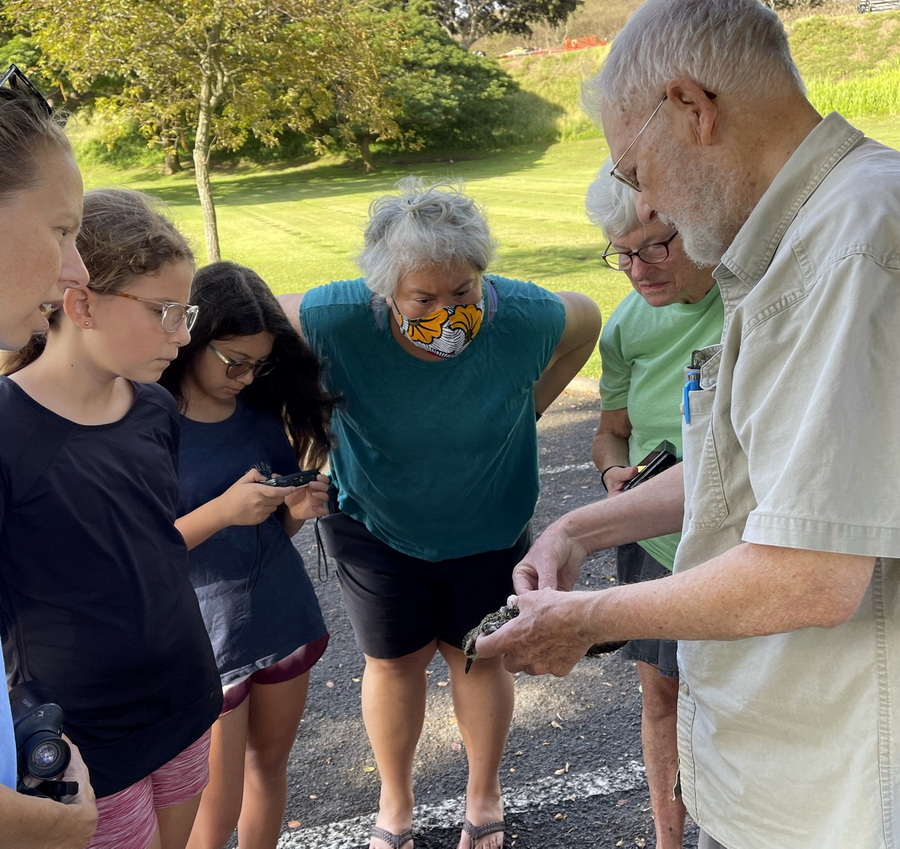 A large part, and purpose, of Kōlea research is teaching. Here’s Wally shows volunteers and students a recaptured plover’s flight feathers. ©Susan Scott
 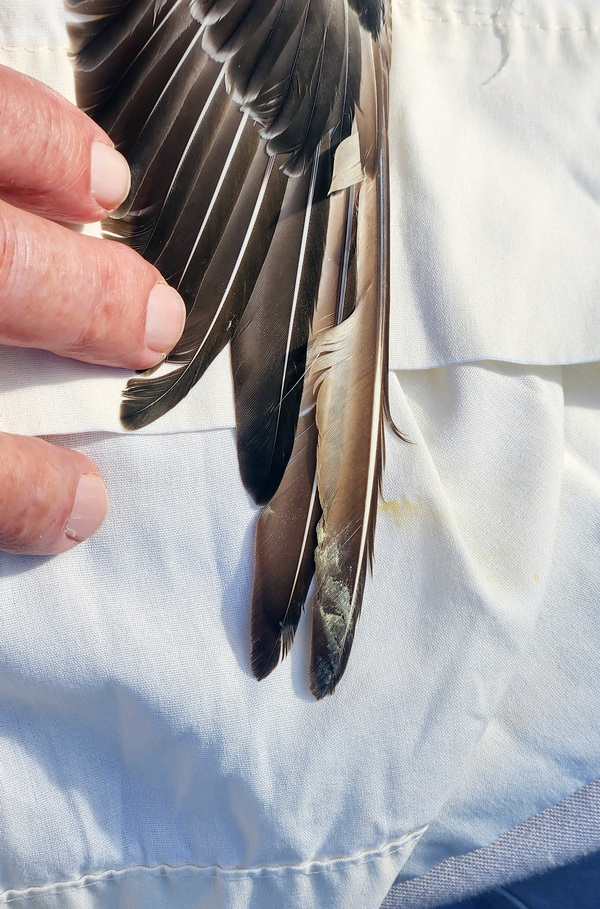 Wally shows volunteers and students the wear on a kōlea’s flight feathers. The bird will drop these hard-used feathers and grow new ones, but gradually, so as to not lose its ability to fly. ©Susan Scott
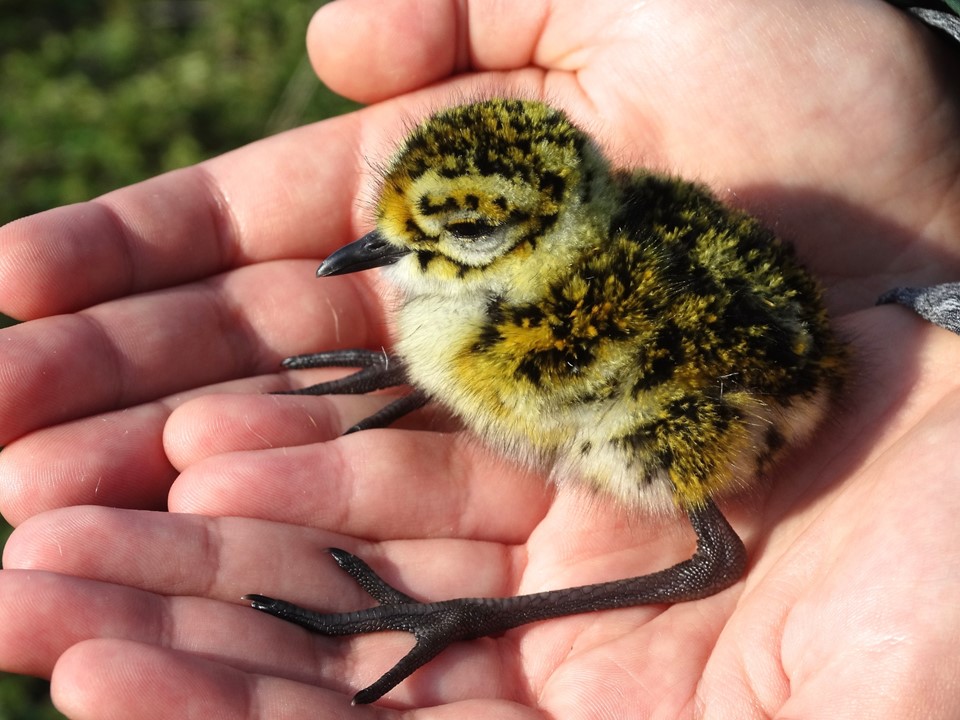 Birdy Big Foot: Kōlea chicks hatch with adult-sized feet and legs, and can fly in about a month. This chick is on the tundra near Nome, Alaska. © Oscar W. Johnson.
  T-shirts available at hiaudubon.org.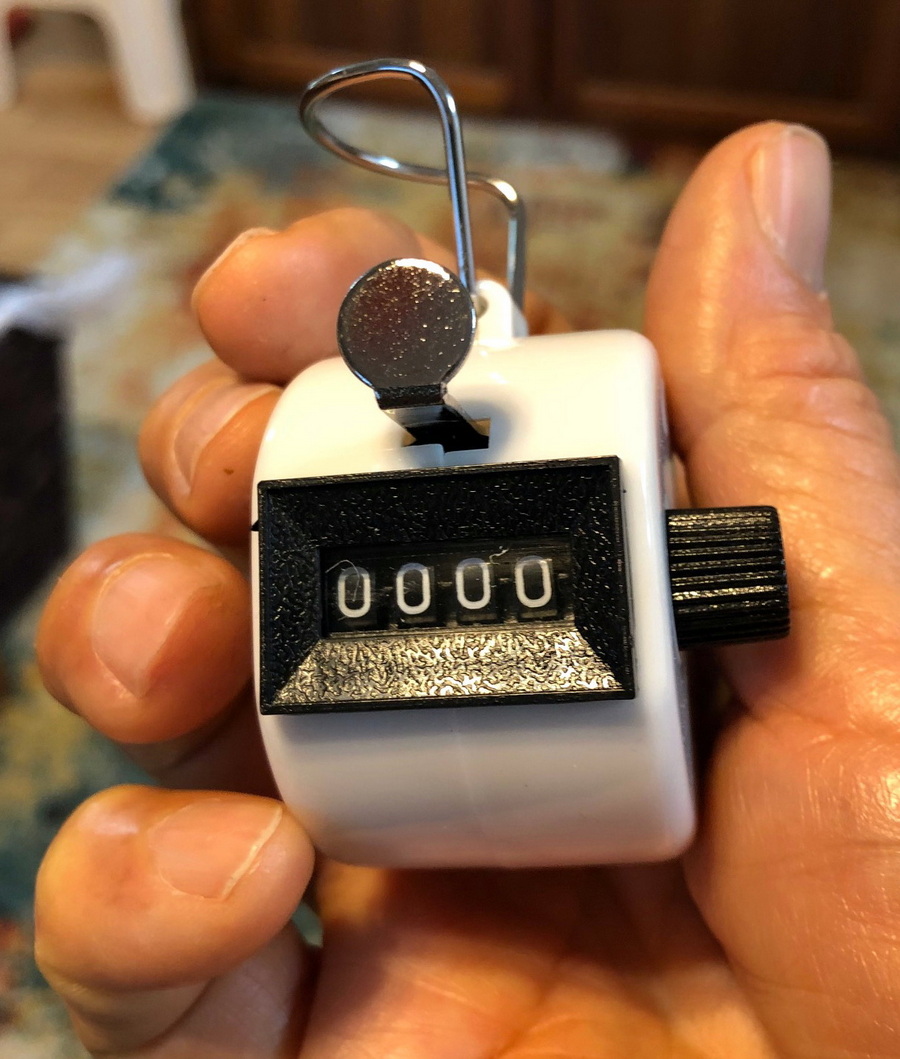
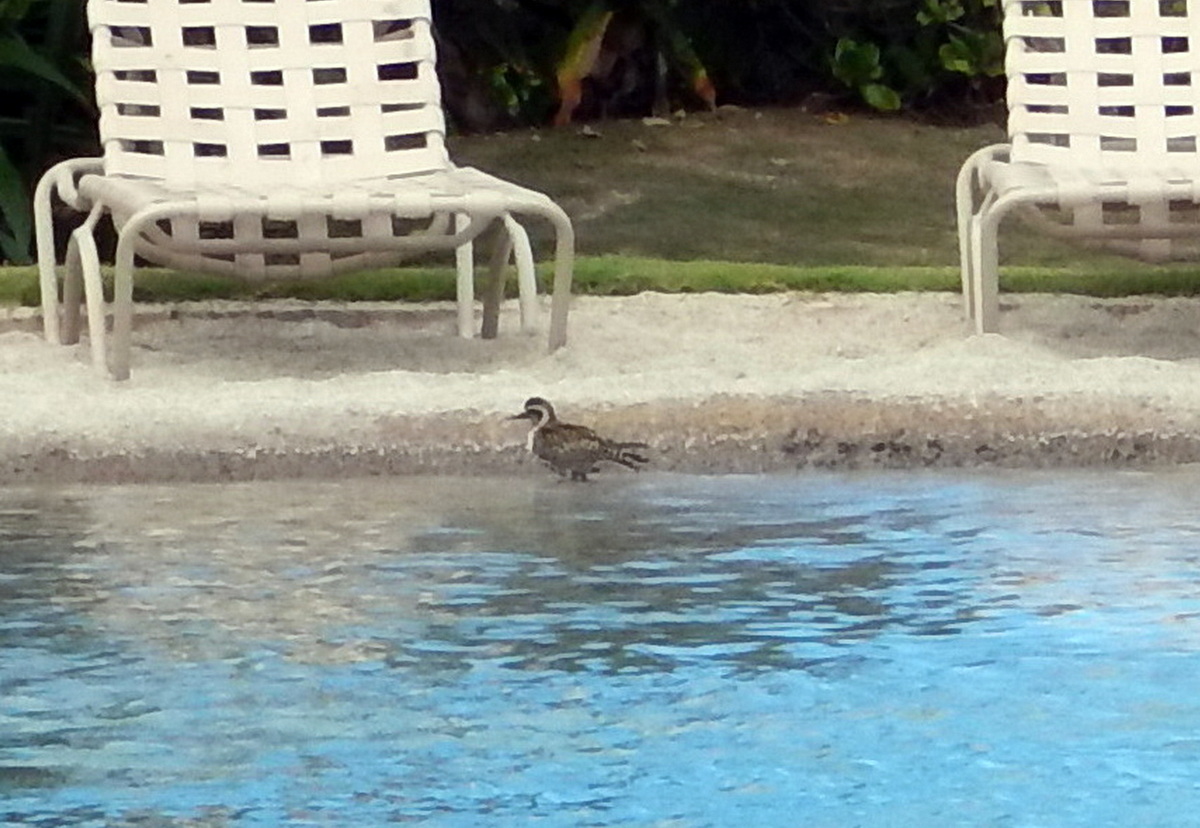 Kōlea pick bugs from Astroturf and bathe in hotel swimming pools. Kauai. ©Susan Scott
 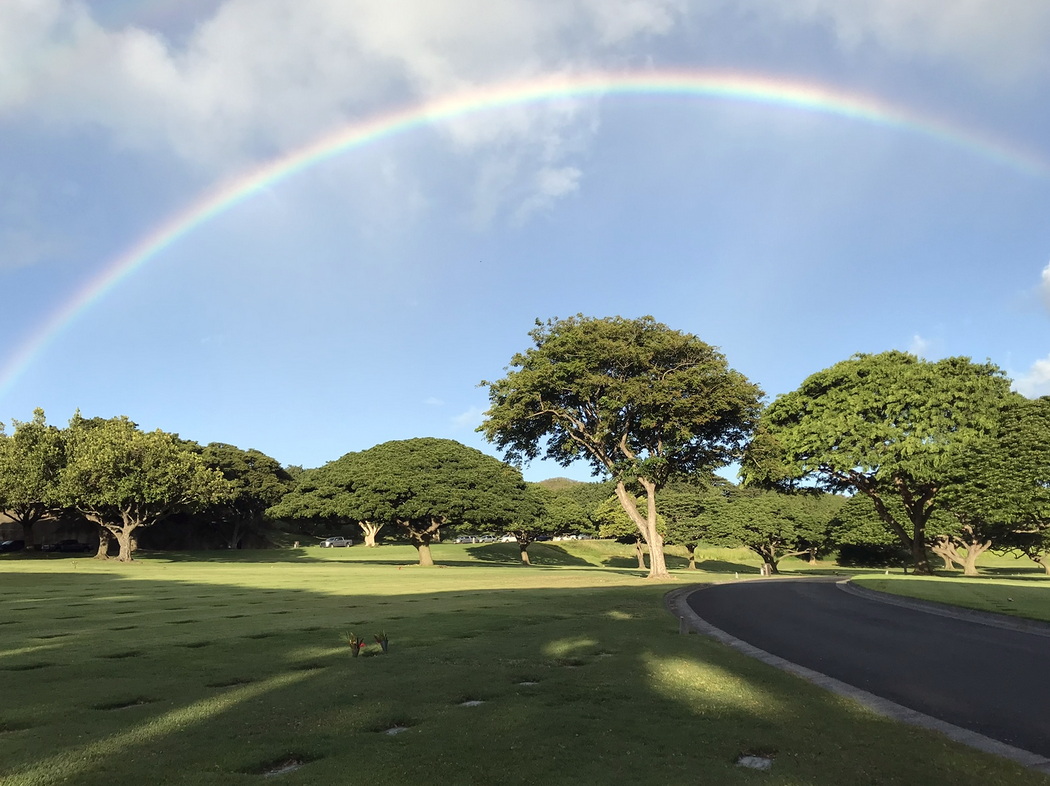 Punchbowl Cemetery, Oahu’s Kōlea lab. © Sigrid Southworth (our Punchbowl Kōlea counter.)
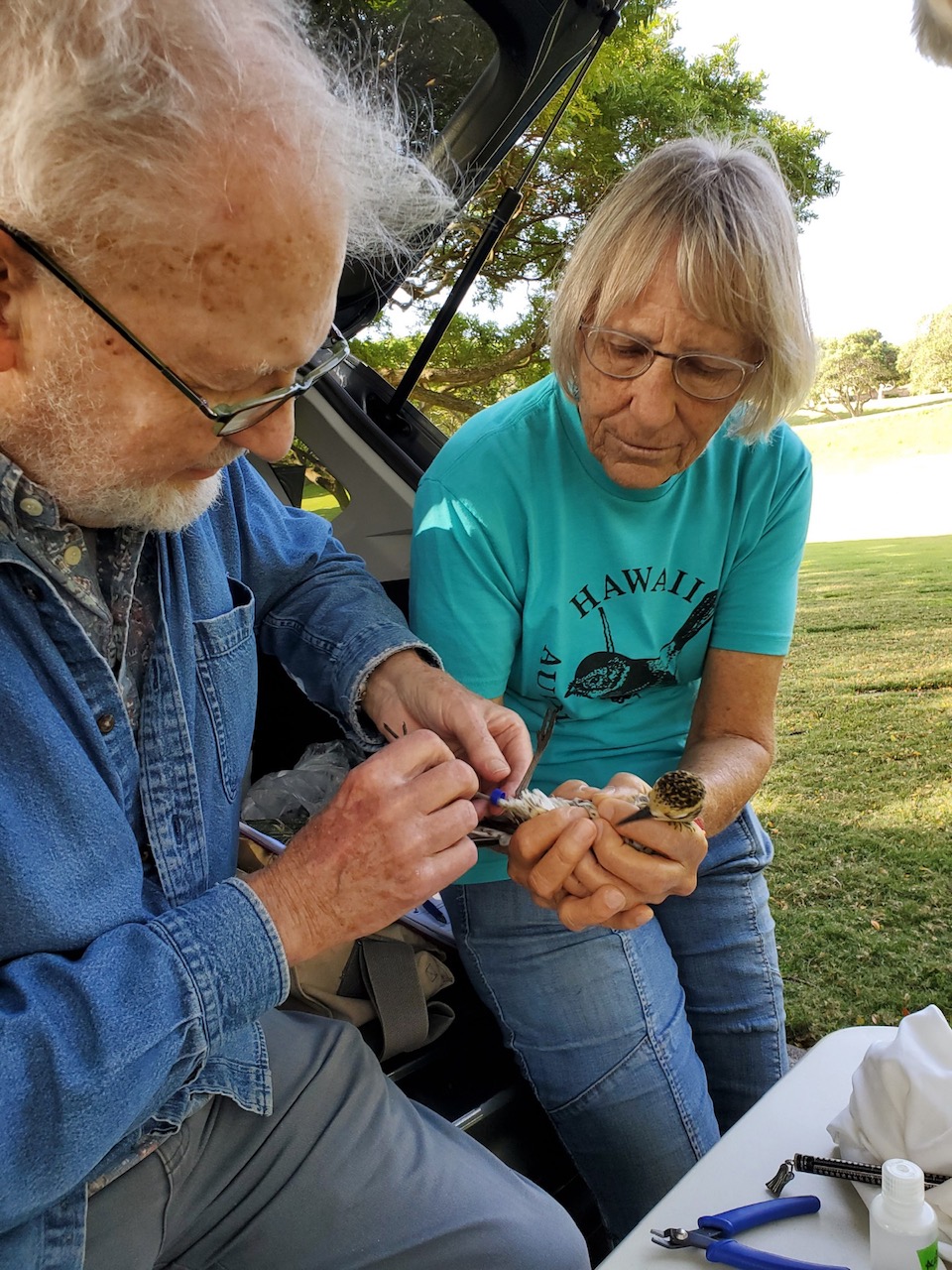 Wally and me (Susan) giving a Kōlea ID leg bands at Punchbowl Cemetery, March, 2022.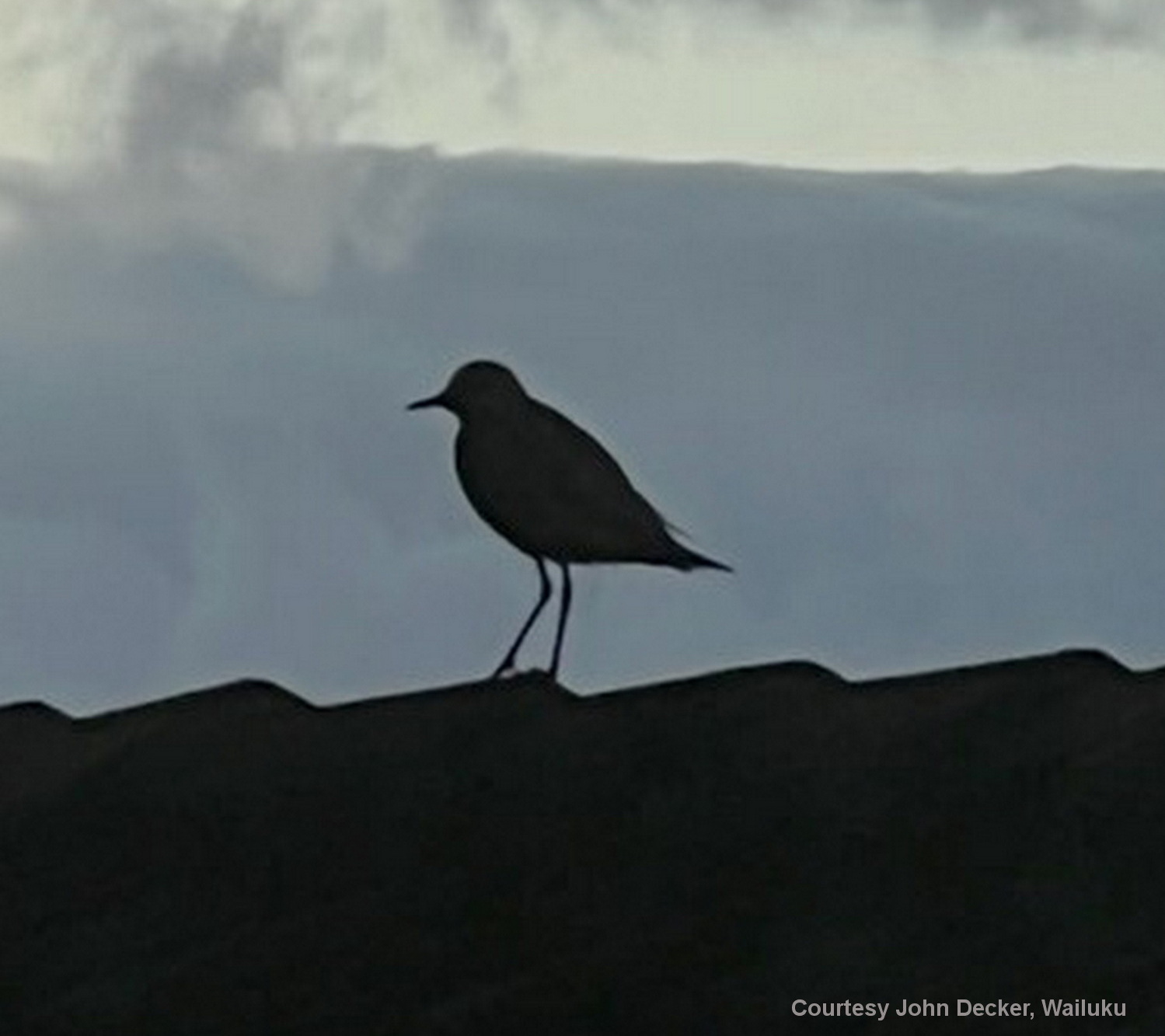
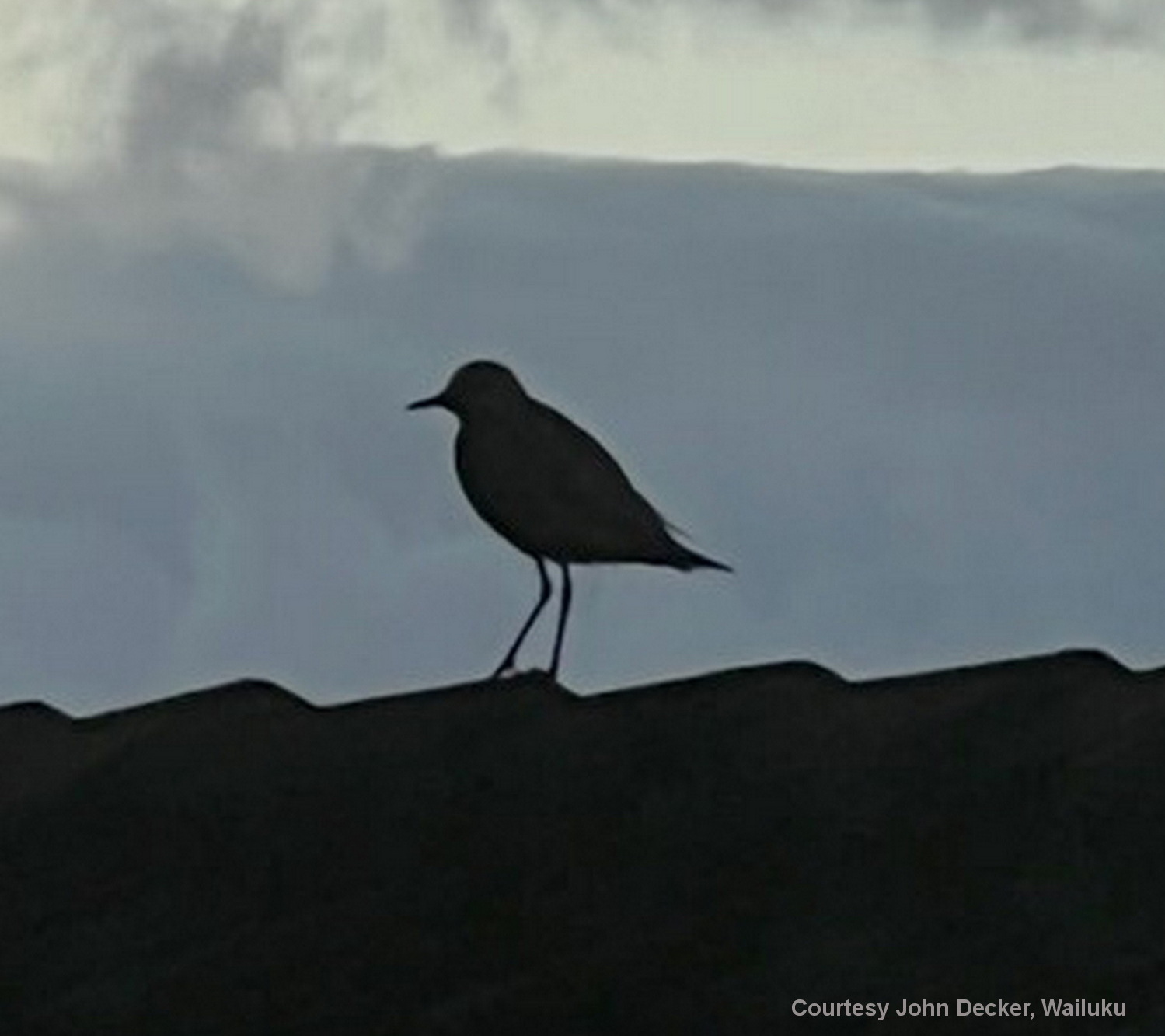
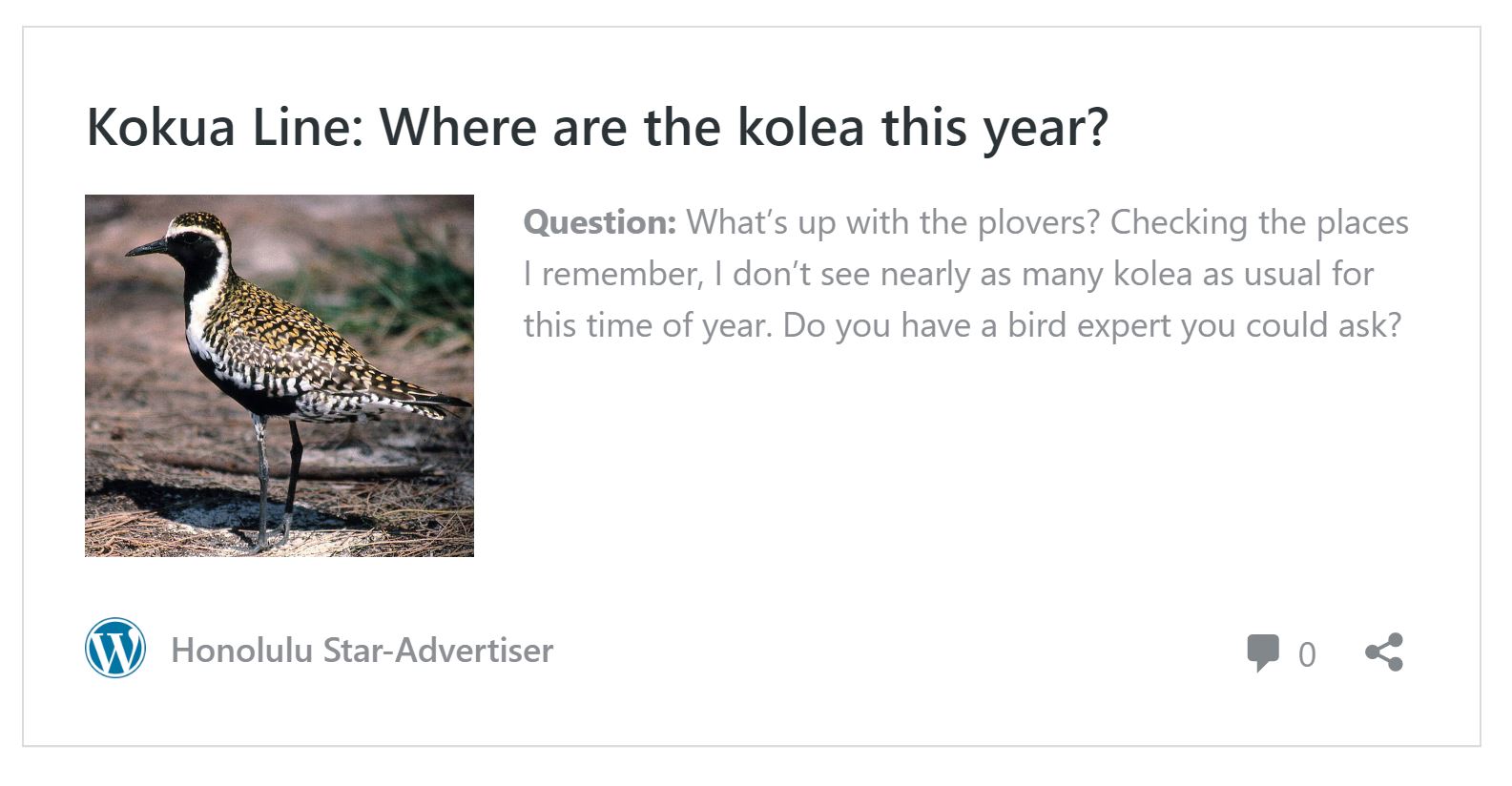 The above clip is from the September 3rd, 2022 Kokua Line. My answers are available only to Star-Advertiser subscribers, but the facts I gave Christine are below, as well as on this website. On September 9th, I also chatted about kōlea with Catherine Cruz, host of Hawaii Public Radio’s “The Conversation.”
 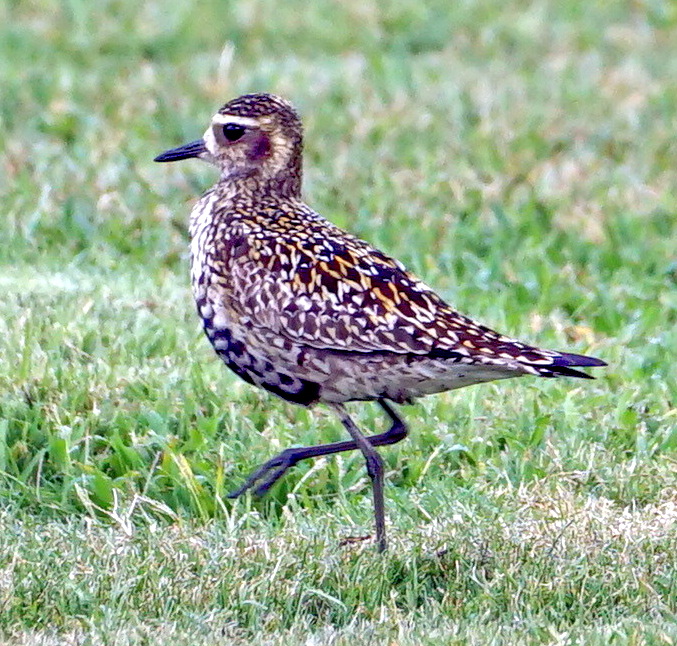 Between 70 and 80 kōlea spend winters in Punchbowl Cemetery. This is the first to arrive back in its Punchbowl patch, spotted by the Hawaii Audubon Society’s office and communications manager, Laura Zoller on August 7, 2022. ©Laura Zoller
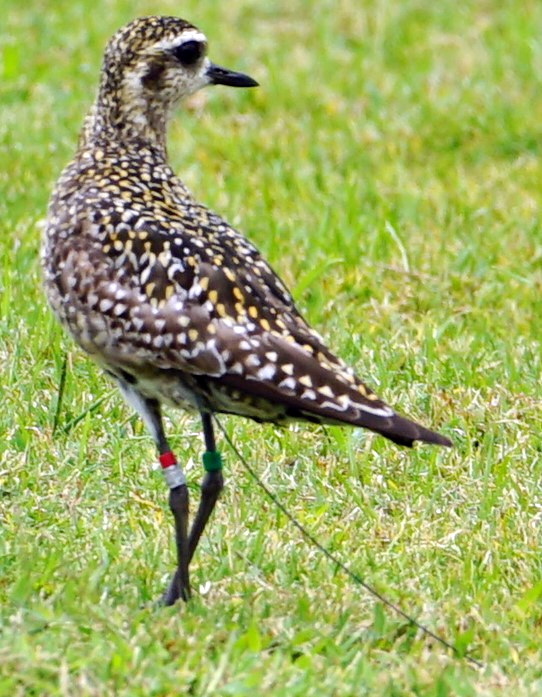
 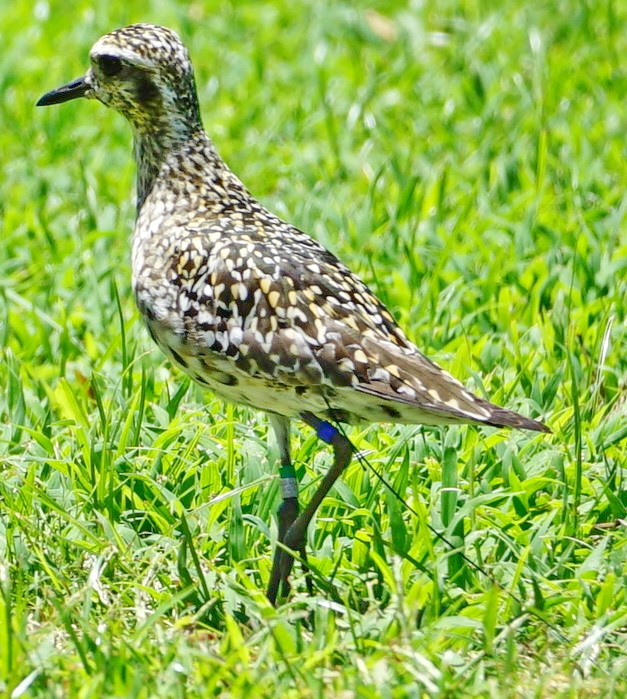 This bird posed perfectly for a picture of its leg bands. The plover returned to Punchbowl on August 22nd, and appeared to be good health after flying 6,000 round-trip miles carrying a tiny satellite tag. (antenna below tail.) © Susanne Spiessberger