A kōlea made me pet a cat
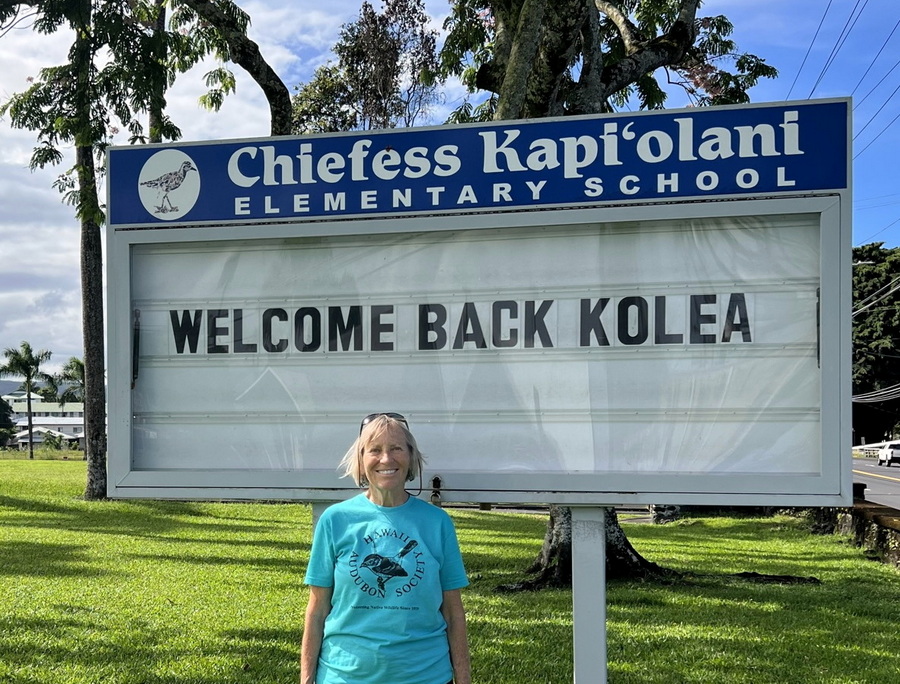
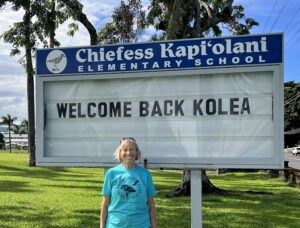 This sign demanded a photo stop during a Hilo visit last year. The kōlea (upper left image on sign) is apparently the Chiefess Kapiʻolani Elementary School’s mascot. ©Wendy Kuntz
August 12, 2024
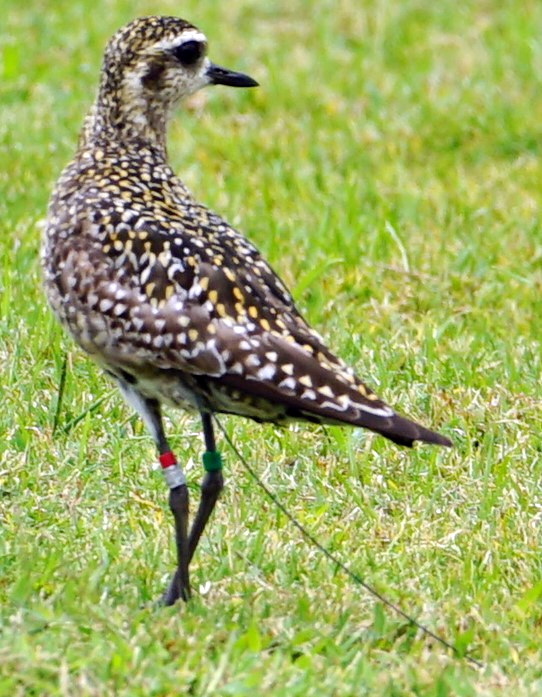
One of the kōlea I visit on my winter morning walks returned on Saturday, August 10th. I call the bird Bougie because he forages in a field behind a row of bougainvillea bushes (below) spaced apart enough for me to peek through without getting punctured
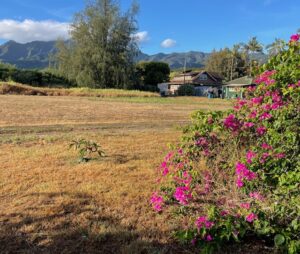
“Welcome home, my friend,” I whispered, feeling teary as I watched the bird run-and-peck, run-and-peck. “You did it.”
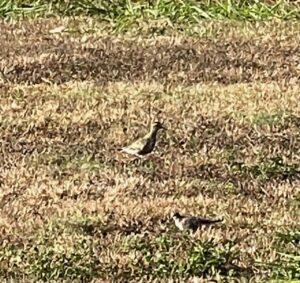 Bougie has returned to this space off Crozier Drive in Waialua for at least five years. (Zebra dove in foreground.) Our phone cameras may not take the best distance photos, but they’re in our pockets to capture the moment.
After seeing kōlea in Alaska in June, their miracle of migration moves me more than ever. To know that this little bird just flew 3,000 miles, nonstop, in three days, well, then some things in the world are right and good.
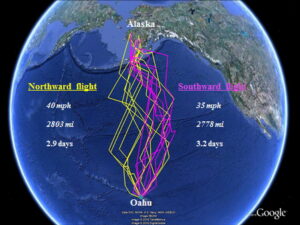 From Wally Johnson’s tracking studies. © O.W. Johnson
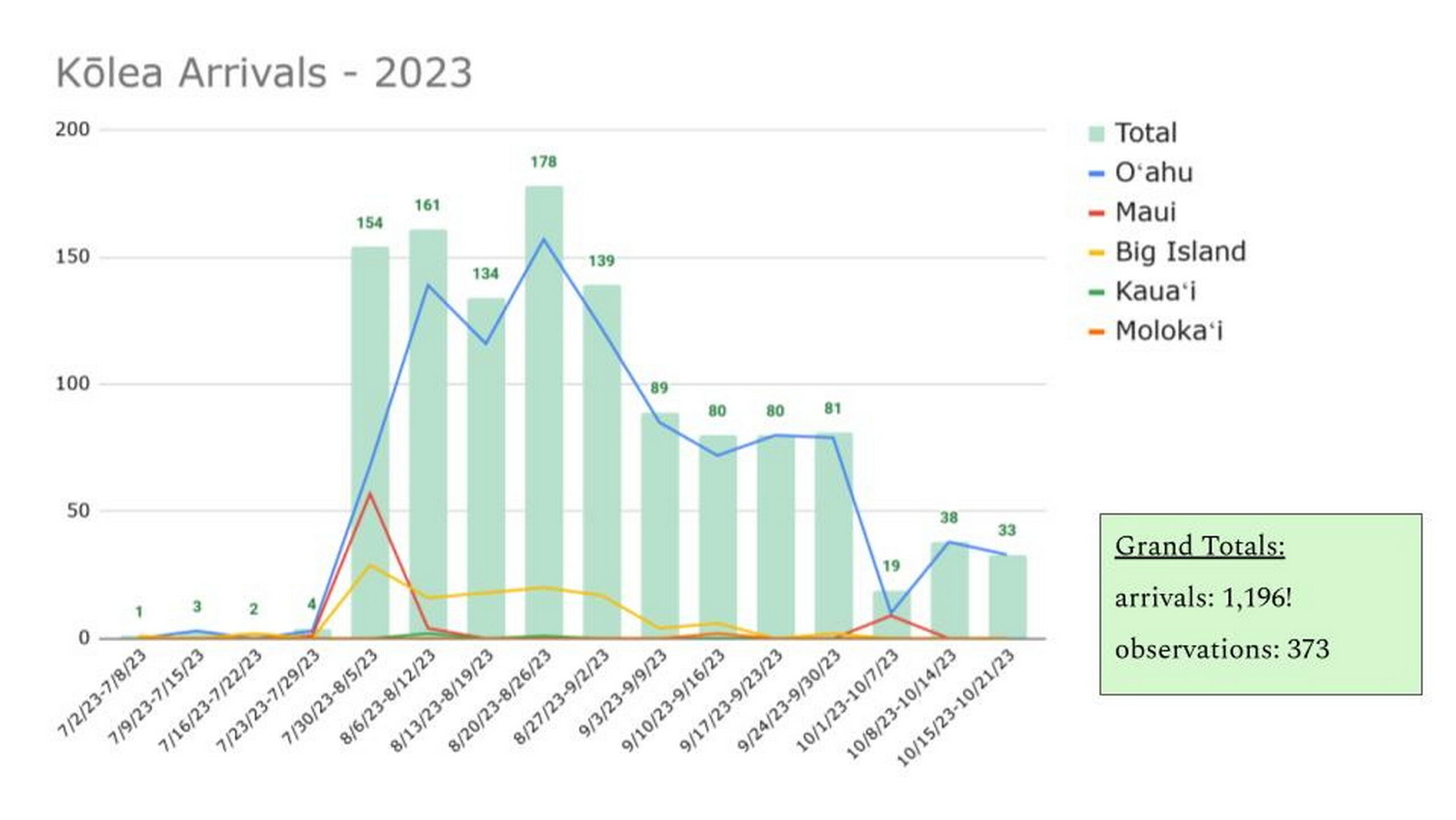
I’m not the only one to have my spirits lifted by a bird. As of this writing, kolea fans have reported 288 returns on the kōlea count website. (I have to continually increase that number as I write this.) Thank you for reporting your birds’ returns on the site’s REPORT tab and for sharing comments and photos. Below are a few, among many, that make me smile:
- “First one to come back home! So happy to see my little friend! Kinda skinny, but looks good overall. So happy!!!”
- “Our friend is back!”
- “Riding in the NaWahine triathlon saw this Kolea on Kahala Avenue & filled me with new energy! Made me happy.”
- “After filling up my car at Sam’s Club gas station, I looked up to see my first returned plover of the year. I felt good!”
- “Saw my first Kolea at Maunawili Elementary on Aug 1st. So excited!!!”
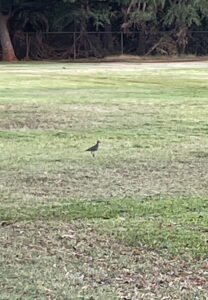 July 25, 2024, Oahu, undisclosed location) © Ann Egleston
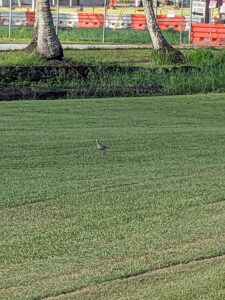 August 9, 2024, Kamehameha soccer field, Hilo ©Jo-Ann Garrigan
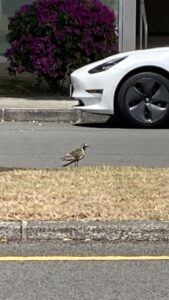 July 25, Niu Valley, © Patricia Johnson
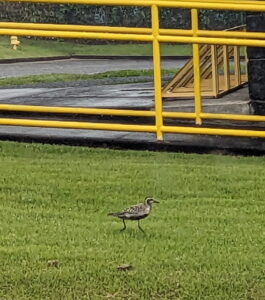 August 2, Hilo Public Library, © Jo-Ann Garrigan
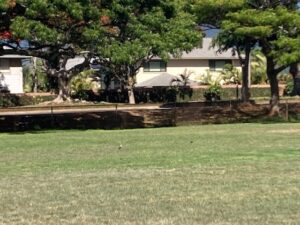 August 6, Kuahelani Park, Mililani © Tempe Kapela
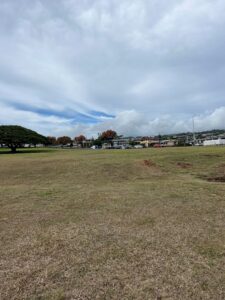 July 30, Waiau district Park, © Evelyn Nakanishi
I get it. The plover-return season makes me feel good too, from seeing the birds themselves to hearing from other people who also love them.
On Saturday, my happy feeling even extended to cats, unusual for me given a cat allergy, as …
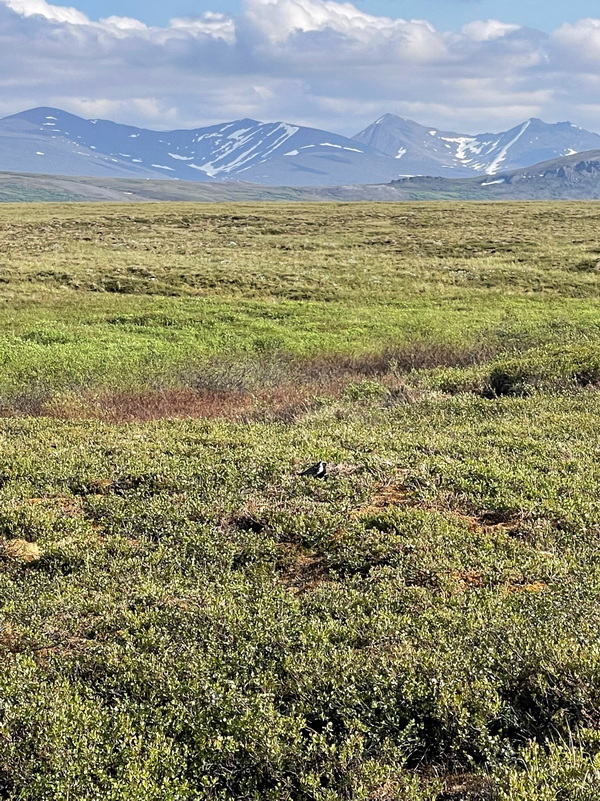
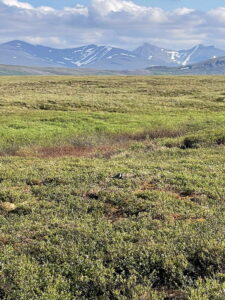 A kōlea on the Nome tundra. ©Susan Scott
 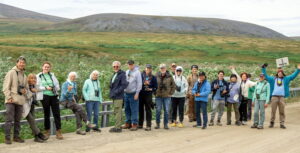 ©Laura Doucette
 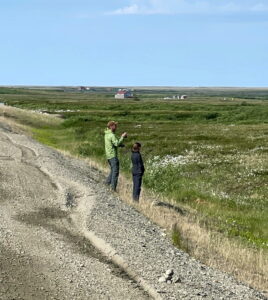 Wally’s long-time field workers, Paul and Nancy Brusseau, scouting for kōlea. ©Susan Scott
 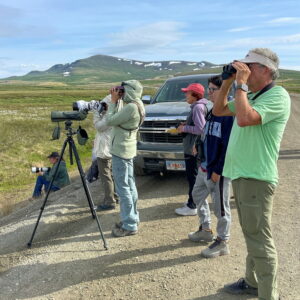 Members of our group looking for birds. ©Susan Scott
 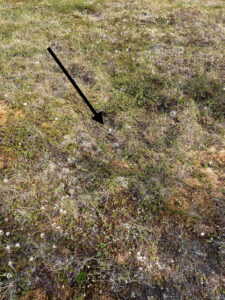 ©Susan Scott
 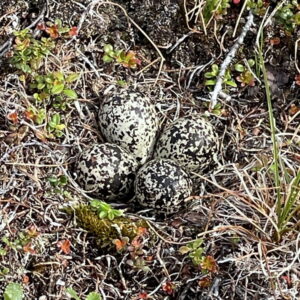 ©Susan Scott
 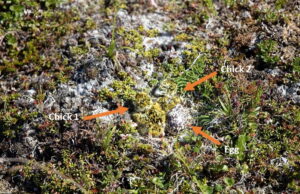 ©Laura Doucette
 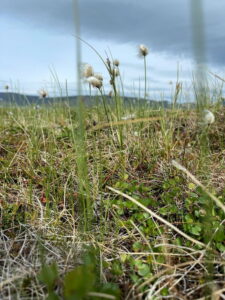 Wally posed this question: If we tall humans have a hard time finding a nest, how do little birds do it? This photo, taken by me on my belly, as Wally suggested, is a kōlea-eye view of the tundra. ©Susan Scott
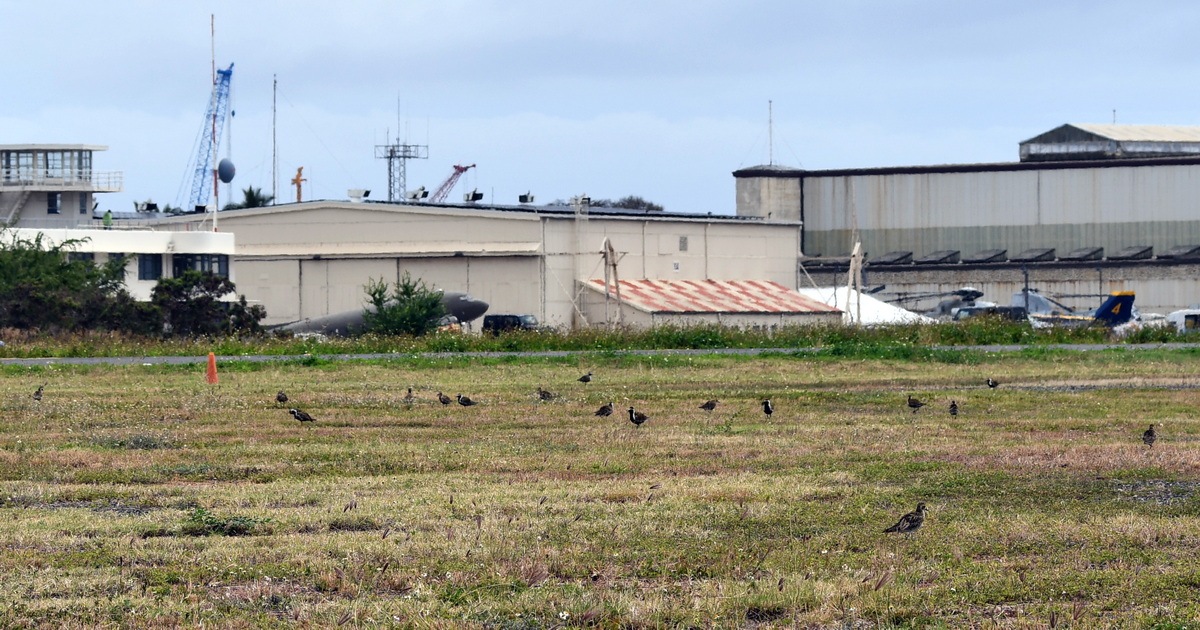
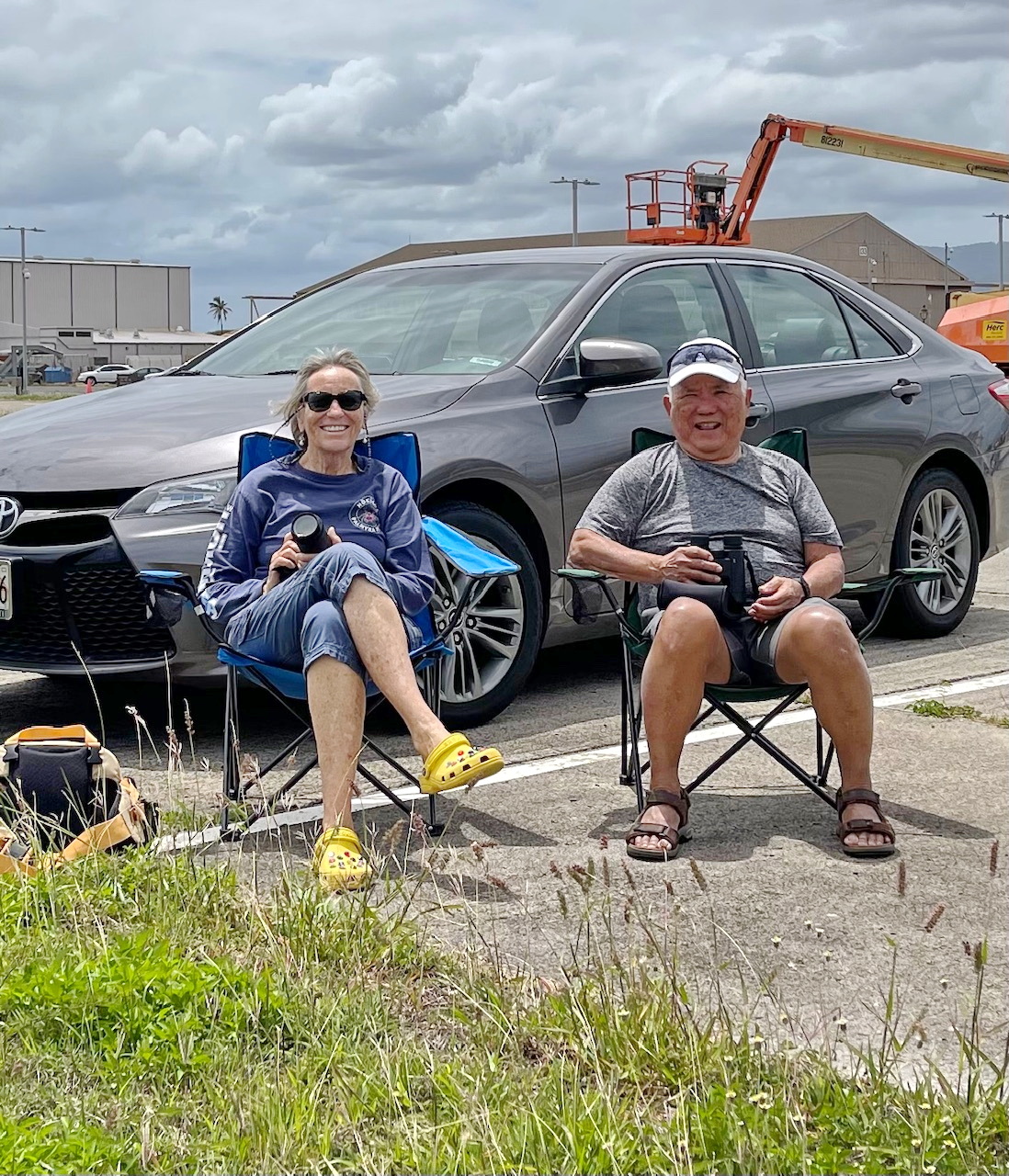 Besides learning new things, kōlea help us to make new friends. Plover fan Roger Kobayashi (right) hosts me several times a year at Ford Island (a contractor working there took this photo of us) and Tripler Army Medical Center to watch kōlea gather. On Saturday, only 6 birds remained, a gradual decrease from a high of 110.
  This kōlea learned to eat mealworms from the home owner’s hand. The bird returned to the man’s Kailua yard for 15 years.
 If you feed your bird, please offer high protein food, such as worms or scrambled egg. This is my Jake, at least eight years old, eating his egg. His last day on my lanai was April 20th.

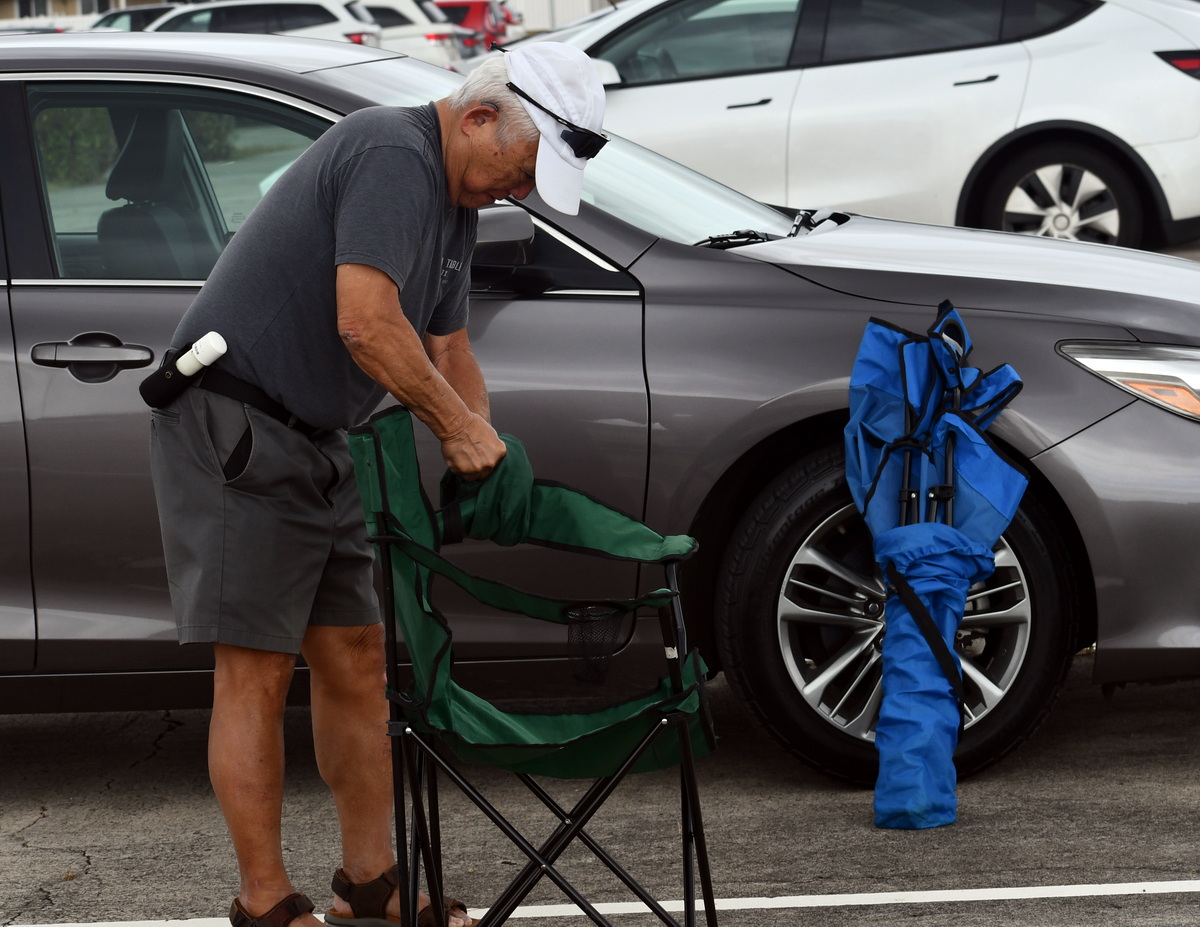 Roger Kobayashi unfolds chairs for our kōlea watch. ©Susan Scott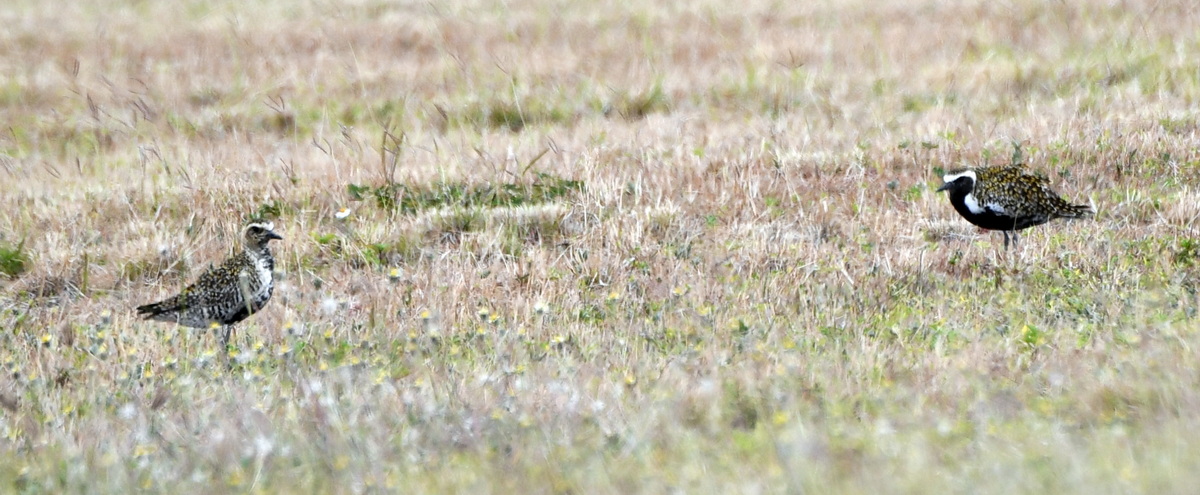
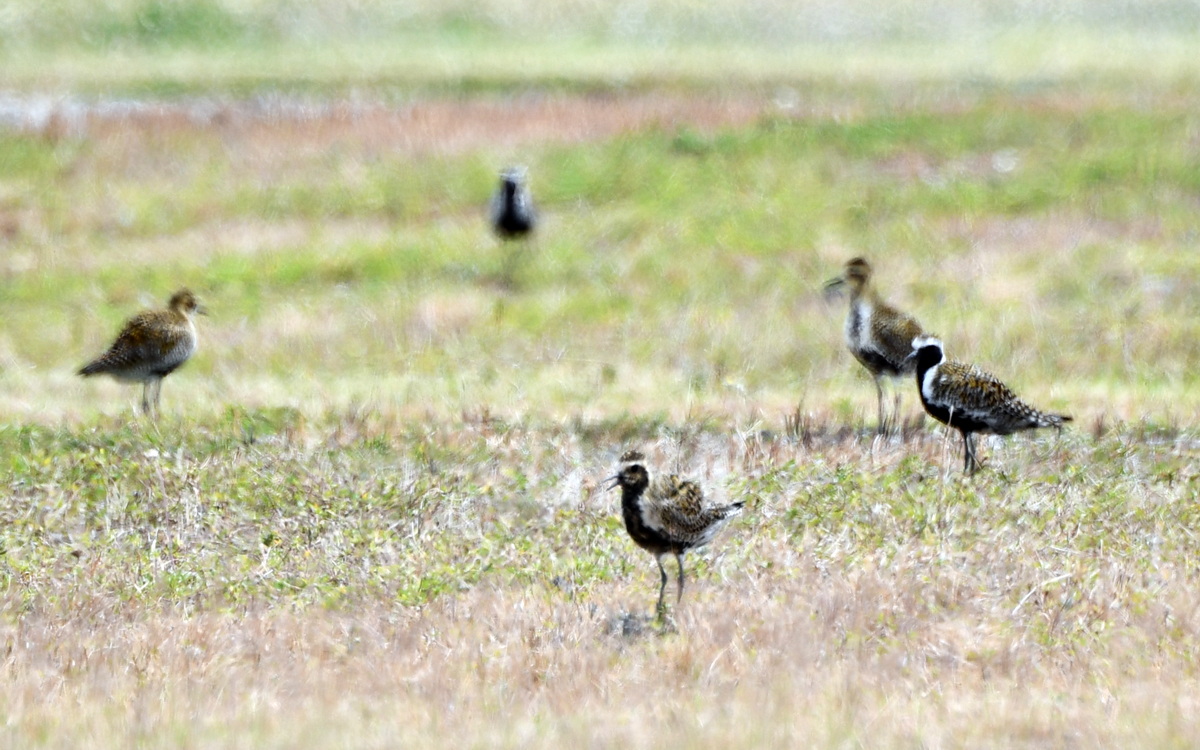 From our distance, the male/female mix seemed about equal. ©Susan Scott
 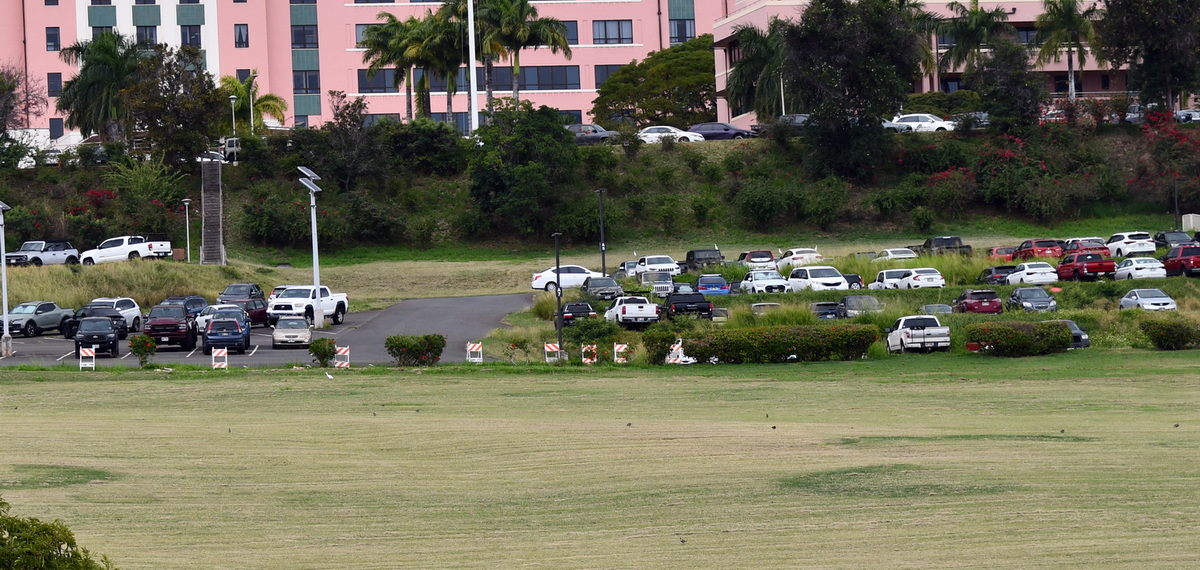 The black dots in this Tripler Army Medical Center (pink building) field are kōlea. ©Susan Scott
 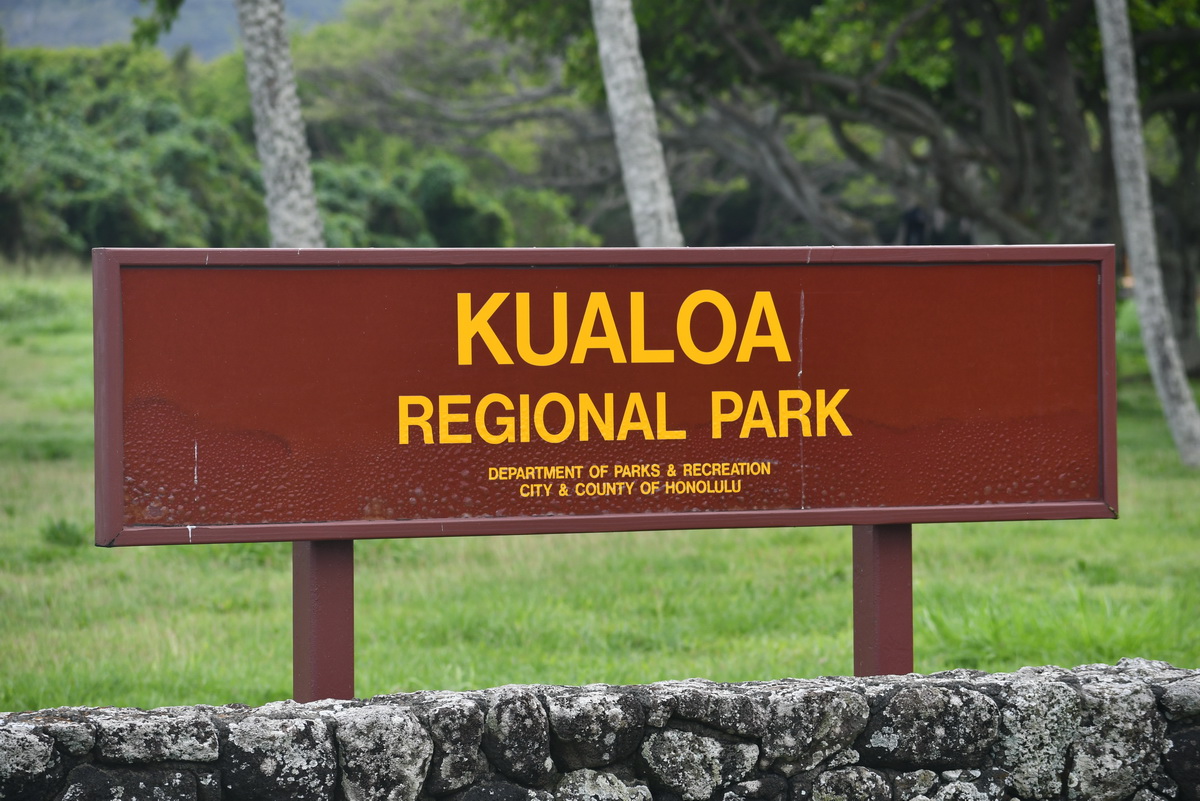 After Roger contacted me with the gathering news, I drove to Kualoa Park to see if kōlea are gathering there. They were not. I’ll keep checking. ©Susan Scott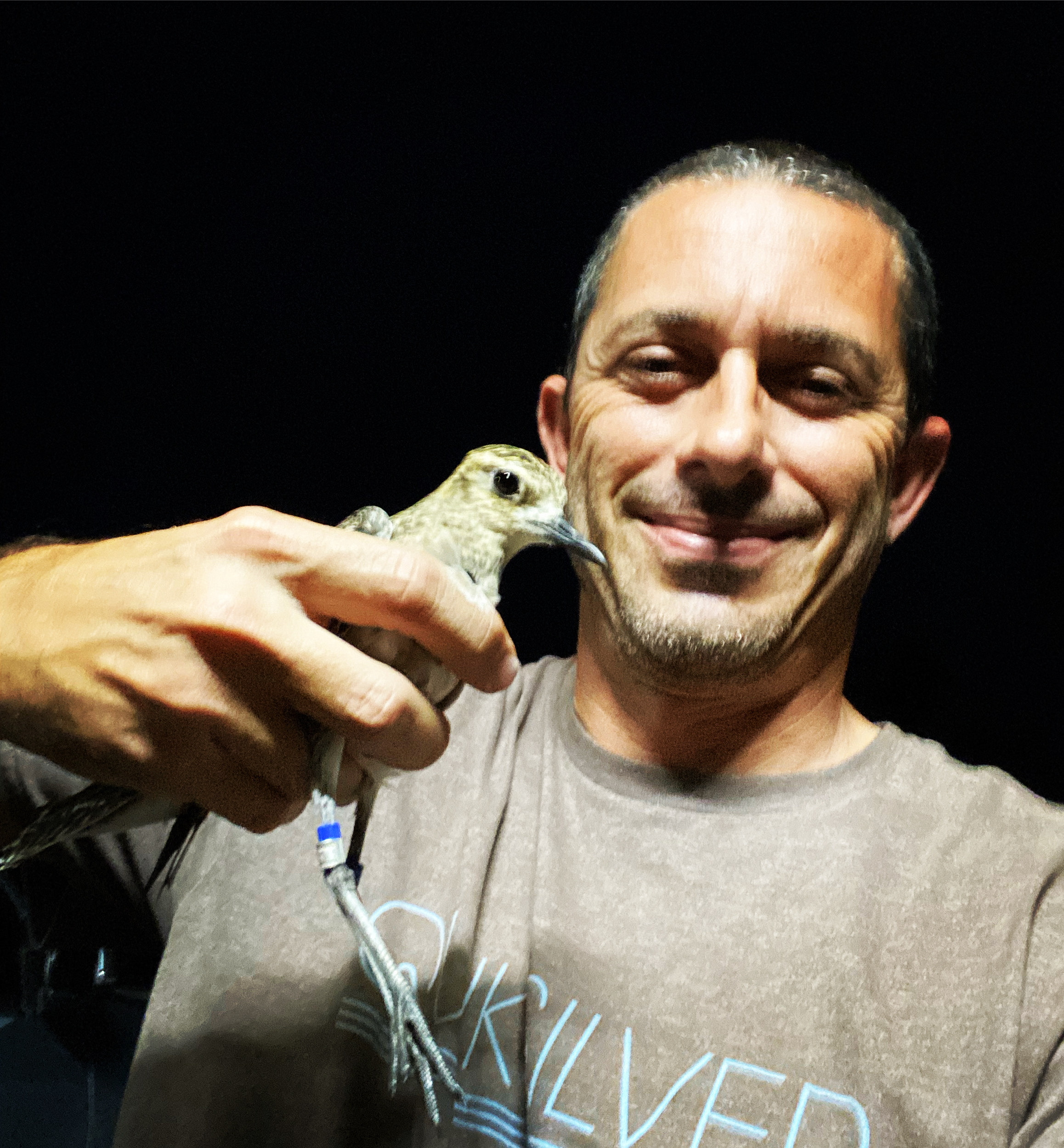
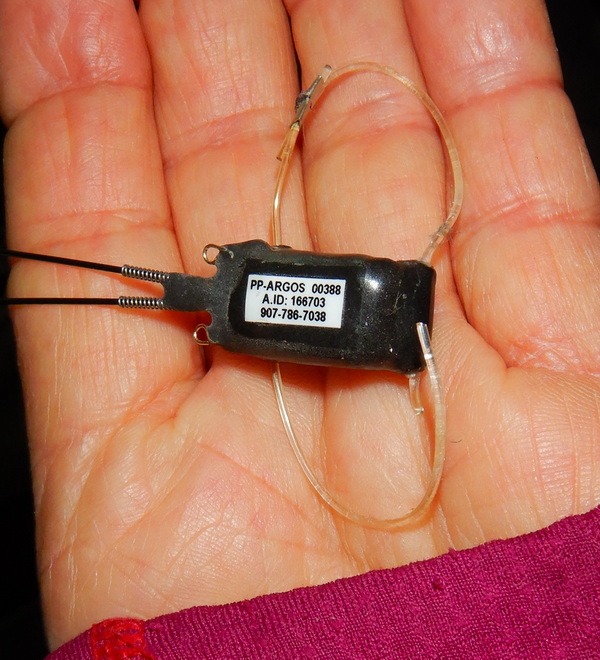
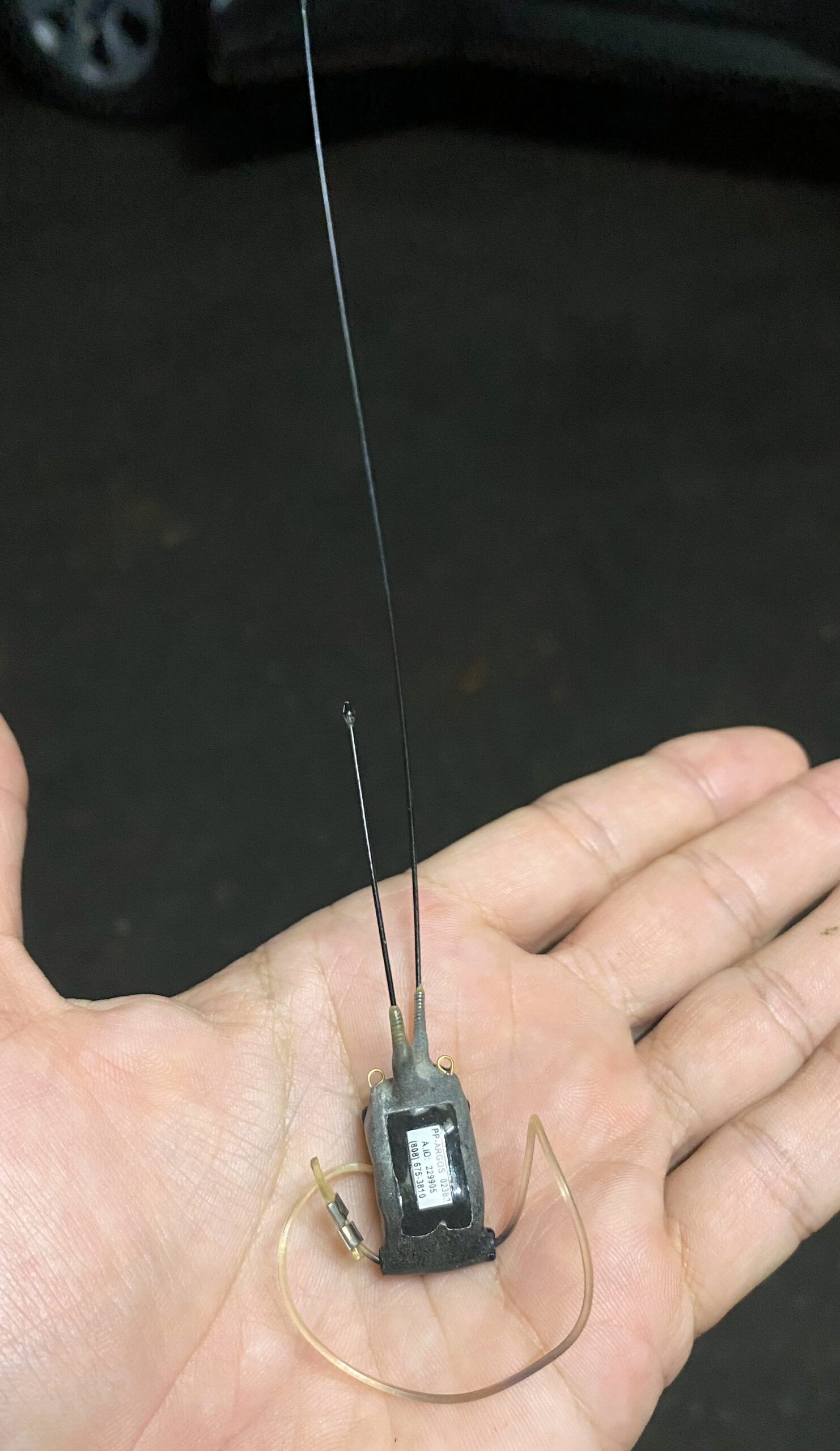 Unfortunately, the batteries in these satellite-signaling devices only have enough charge for one season. Total weight of the device and harness is a bit less than one U.S. nickle. Wally Johnson photo
 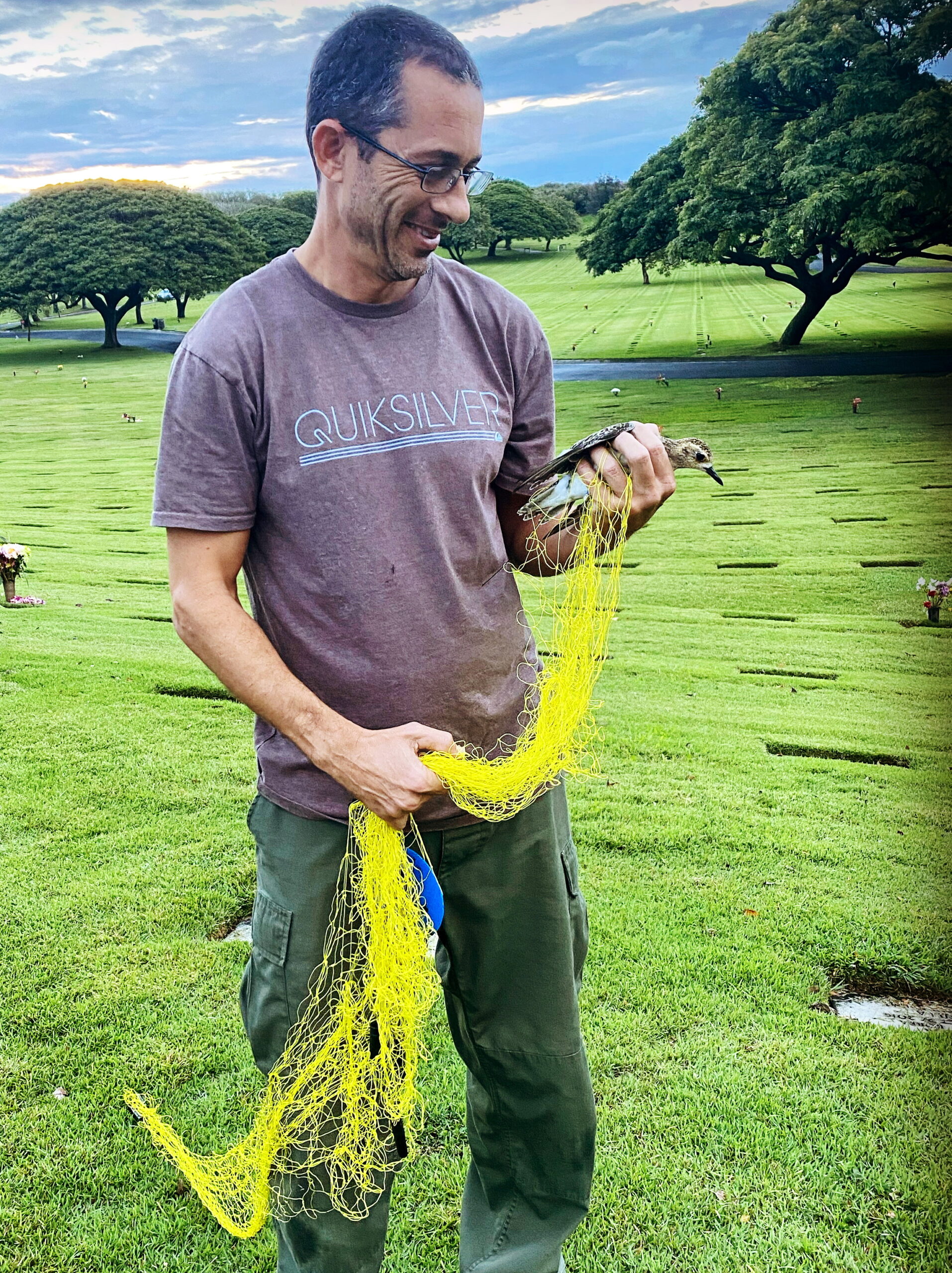 Josh with his hard-earned prize kōlea, November 29, 2023. Wally Johnson photo
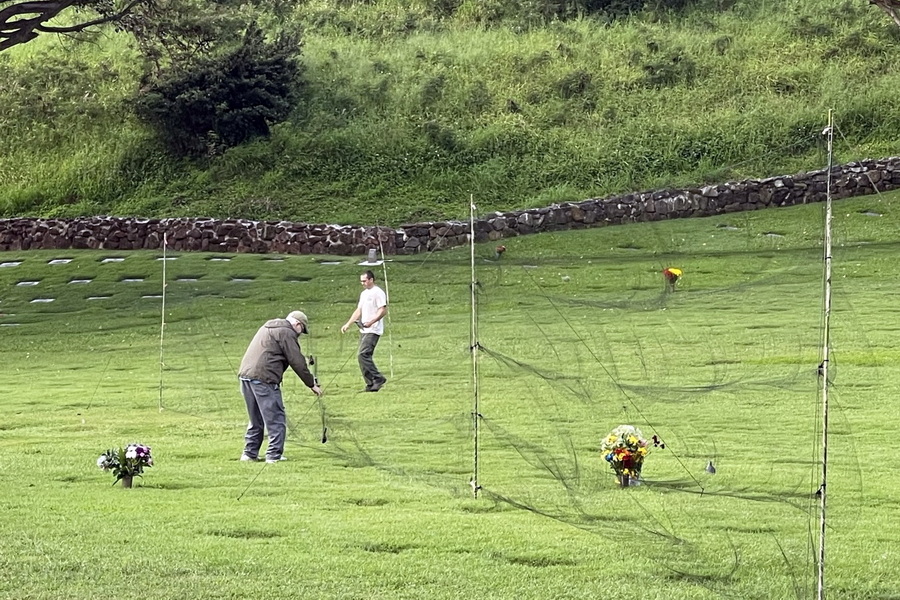
 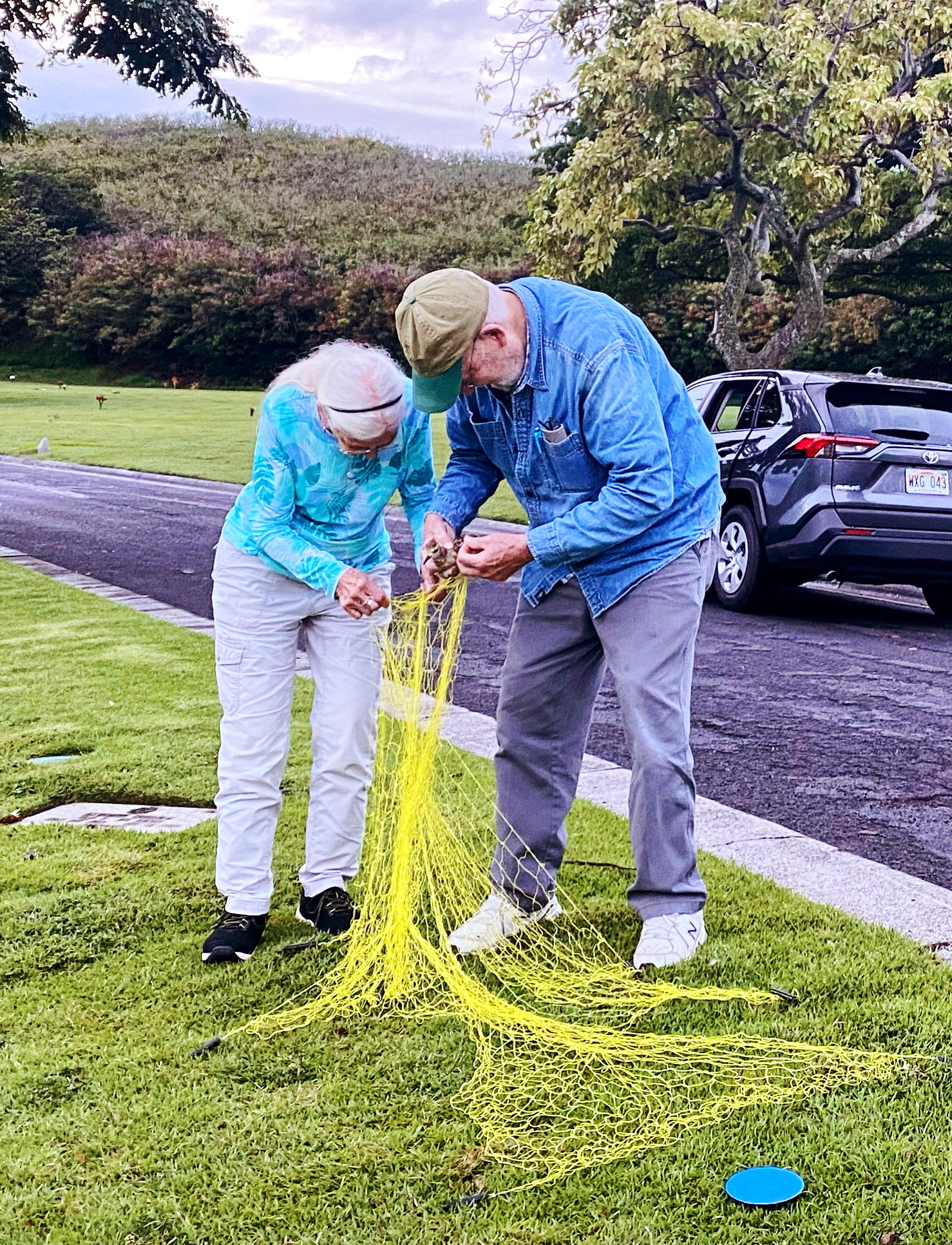 Wally Johnson and partner Diane Smith untangle the kōlea from the net. Josh Fisher photo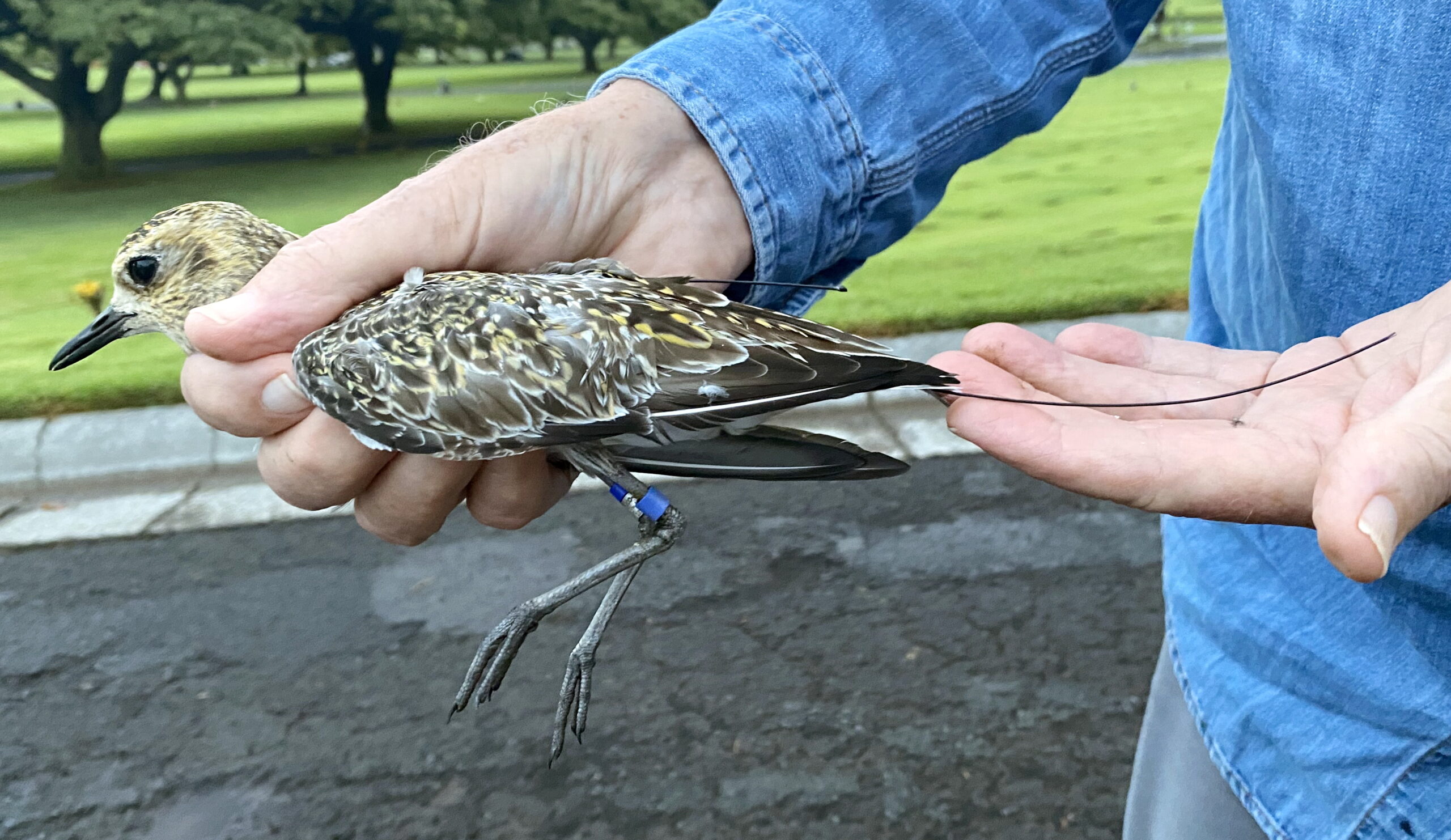
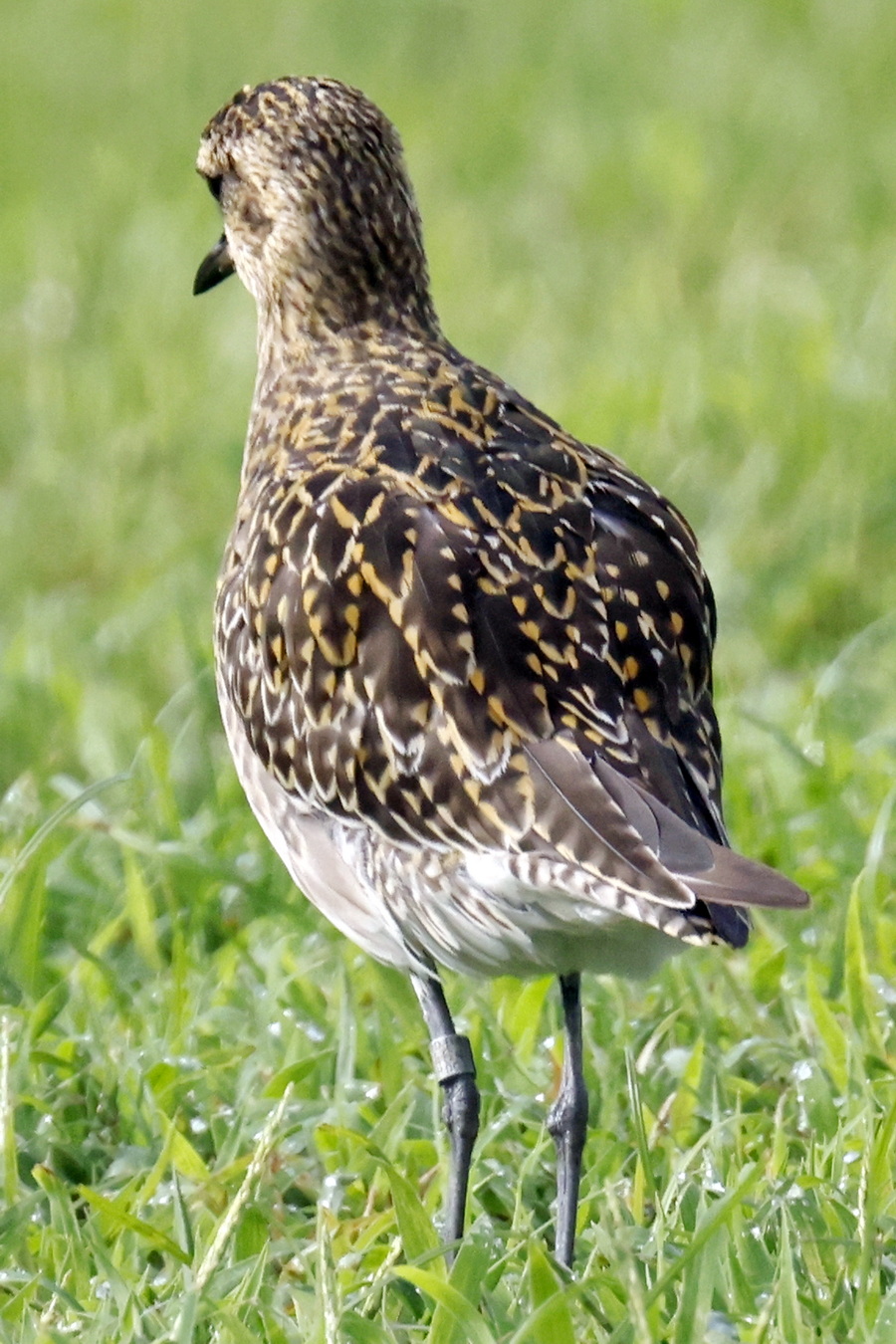 Mr. X with his 21-year-old aluminum band. Tom Fake photo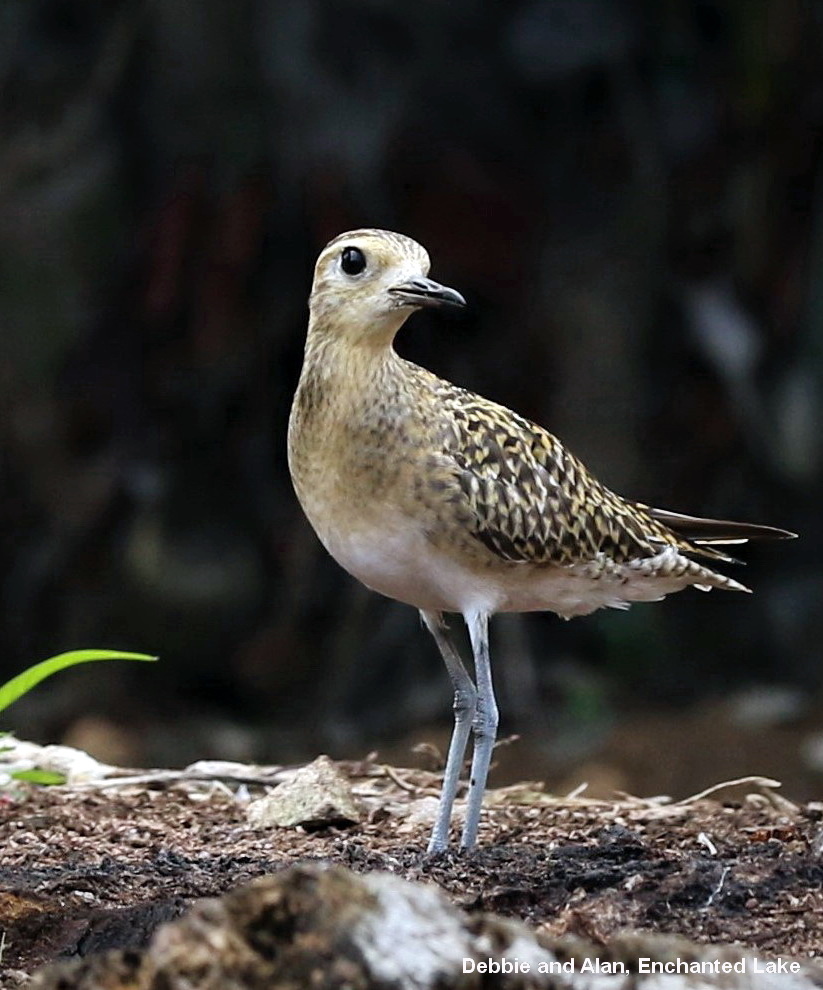
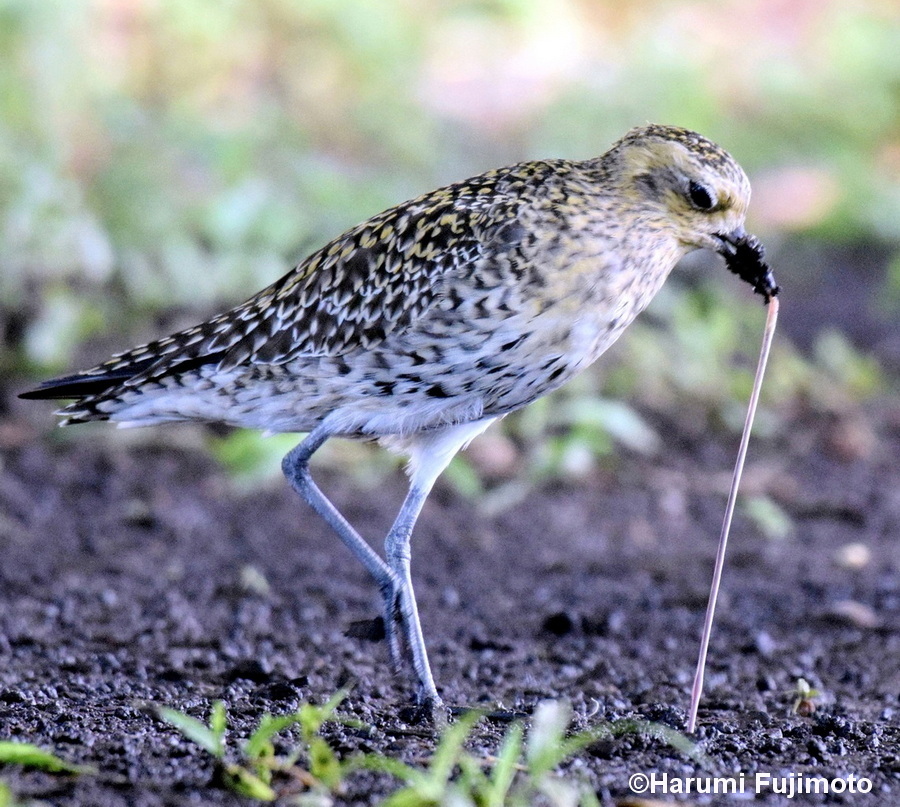
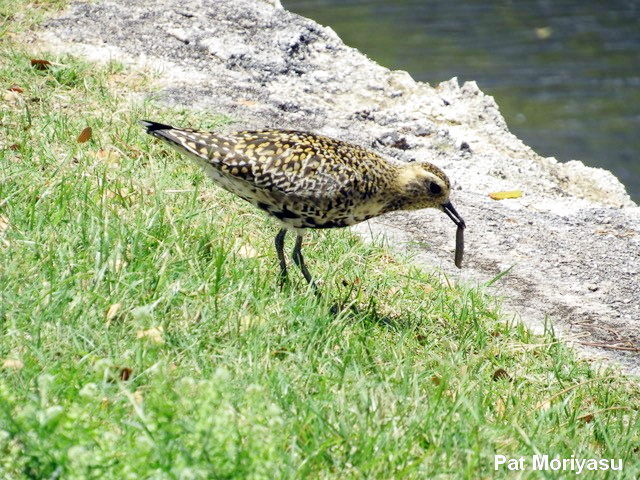 Once a plover survives its first year in Hawaiʻi, the bird returns to that precise place year after year. Foraging patches range in size from about one acre to a football field, depending on the abundance of crawly things in the patch. Kolea eat anything they can catch and swallow, including slugs (above), cockroaches, centipedes, and spiders. ©Pat Moriyasu
 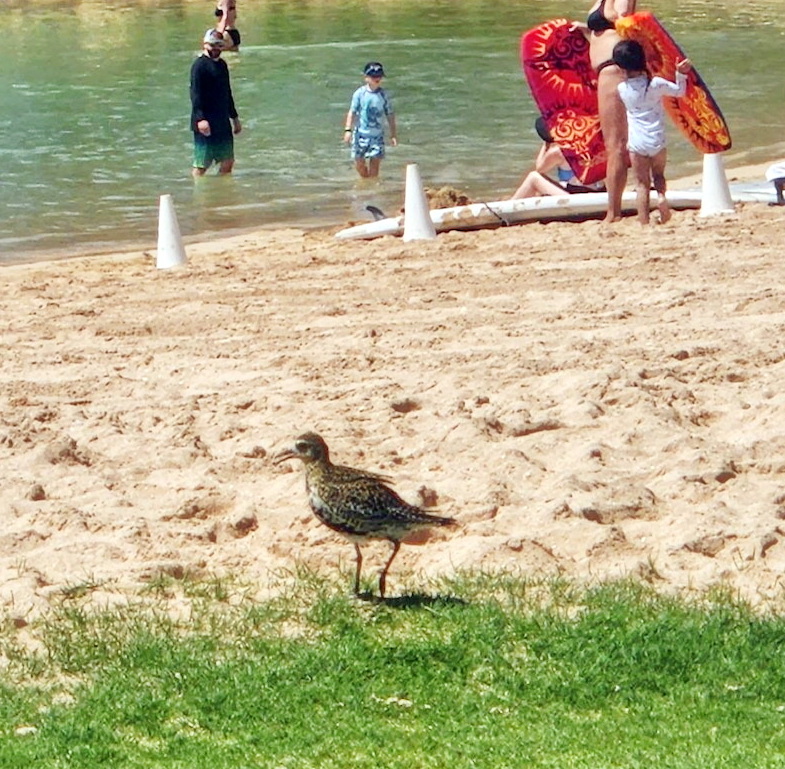 When a disturbance passes, a plover returns to its chosen patch, such as this bird at popular Ko Olina Lagoon 3, January 2023. ©Susan Scott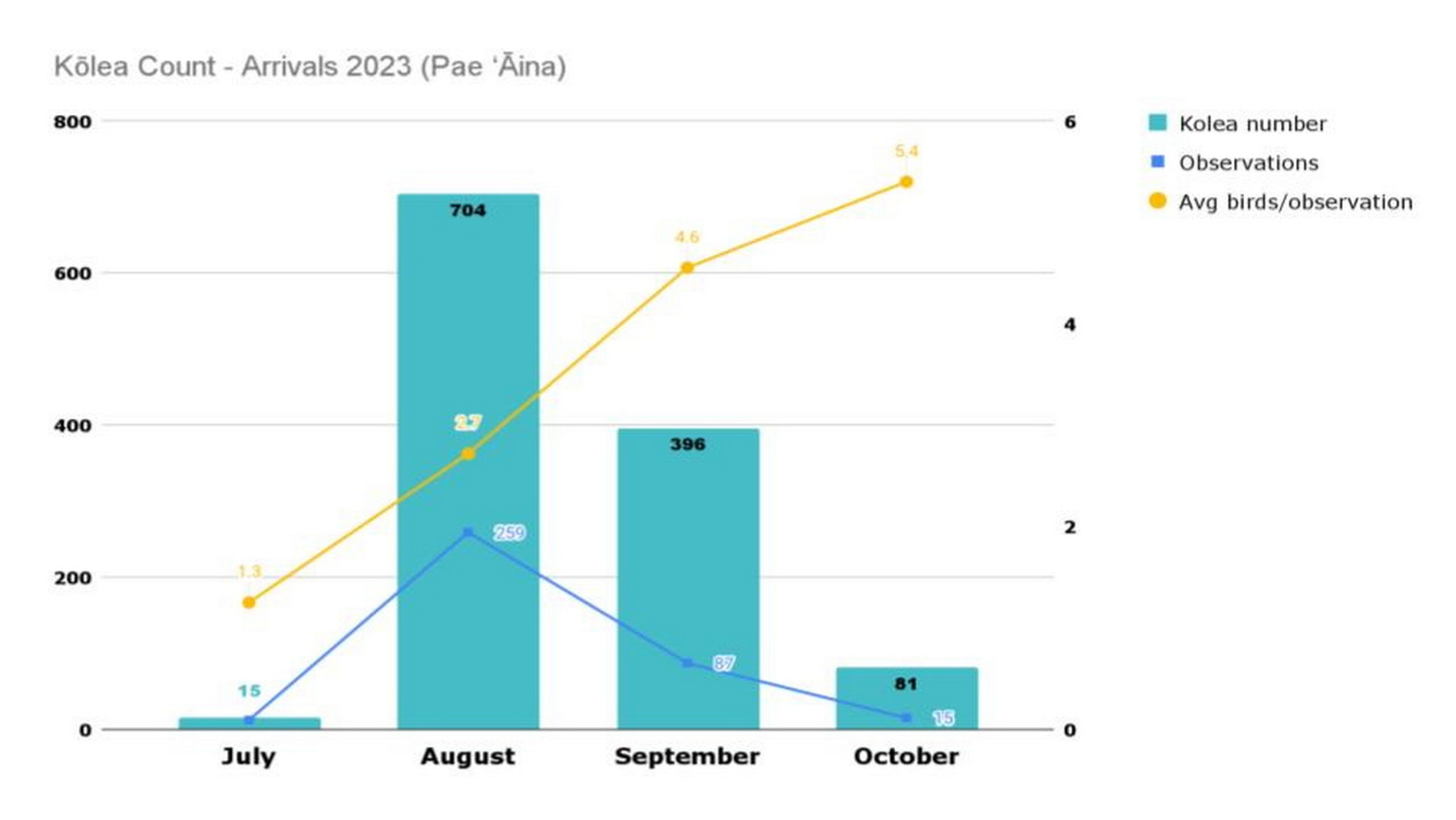
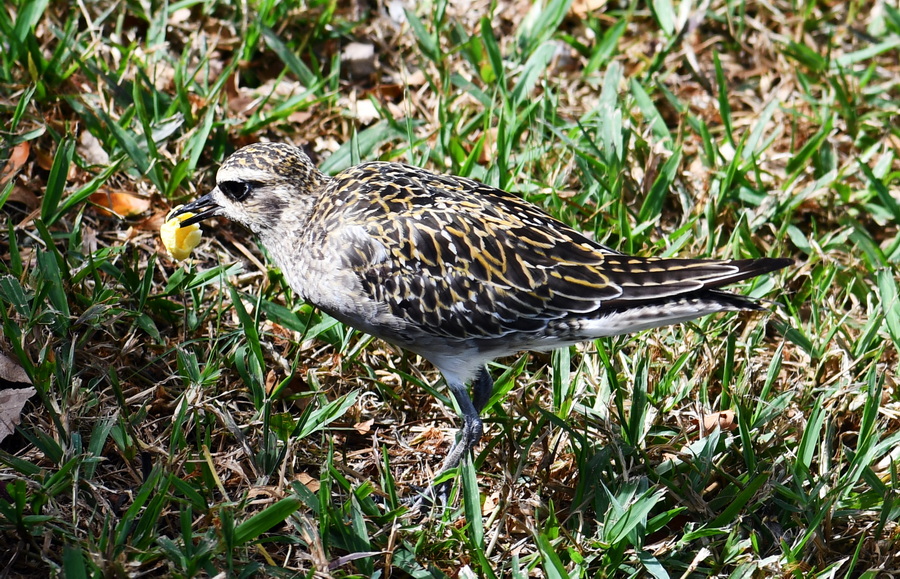 Jake arrived August 11th this year. Here he is this morning eating scrambled egg, rich in fat and protein, and just what he needs. ©Susan Scott
 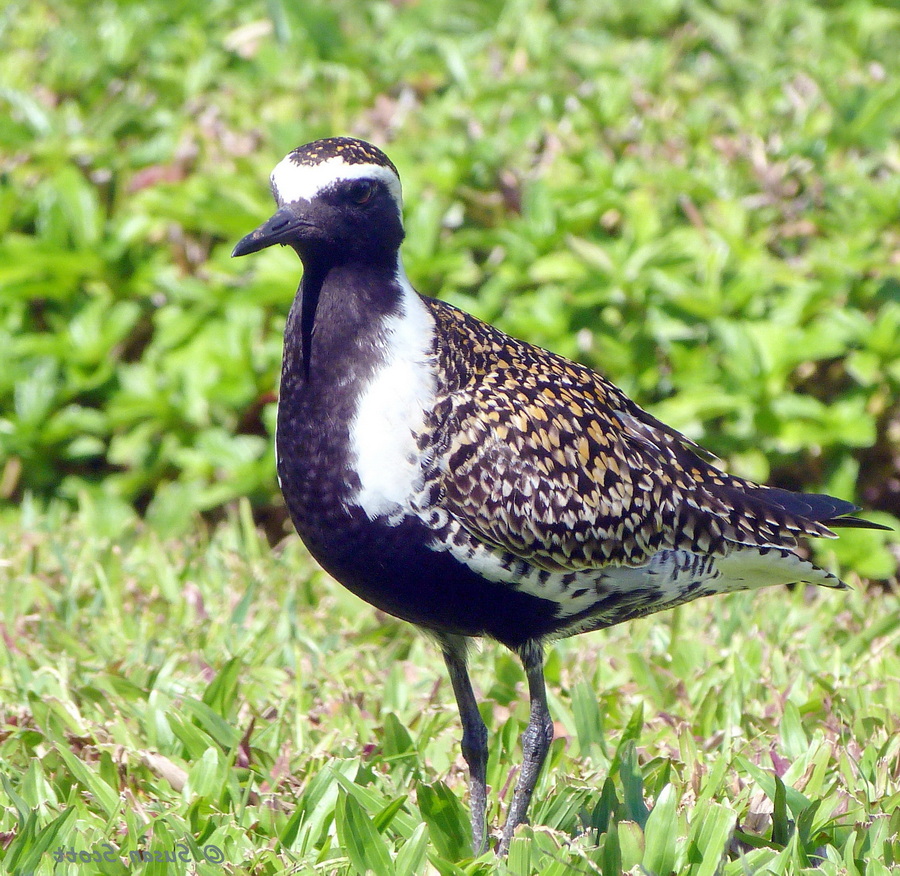 Our Jake, April 25th, plump and dressed to the nines. ©Susan Scott
 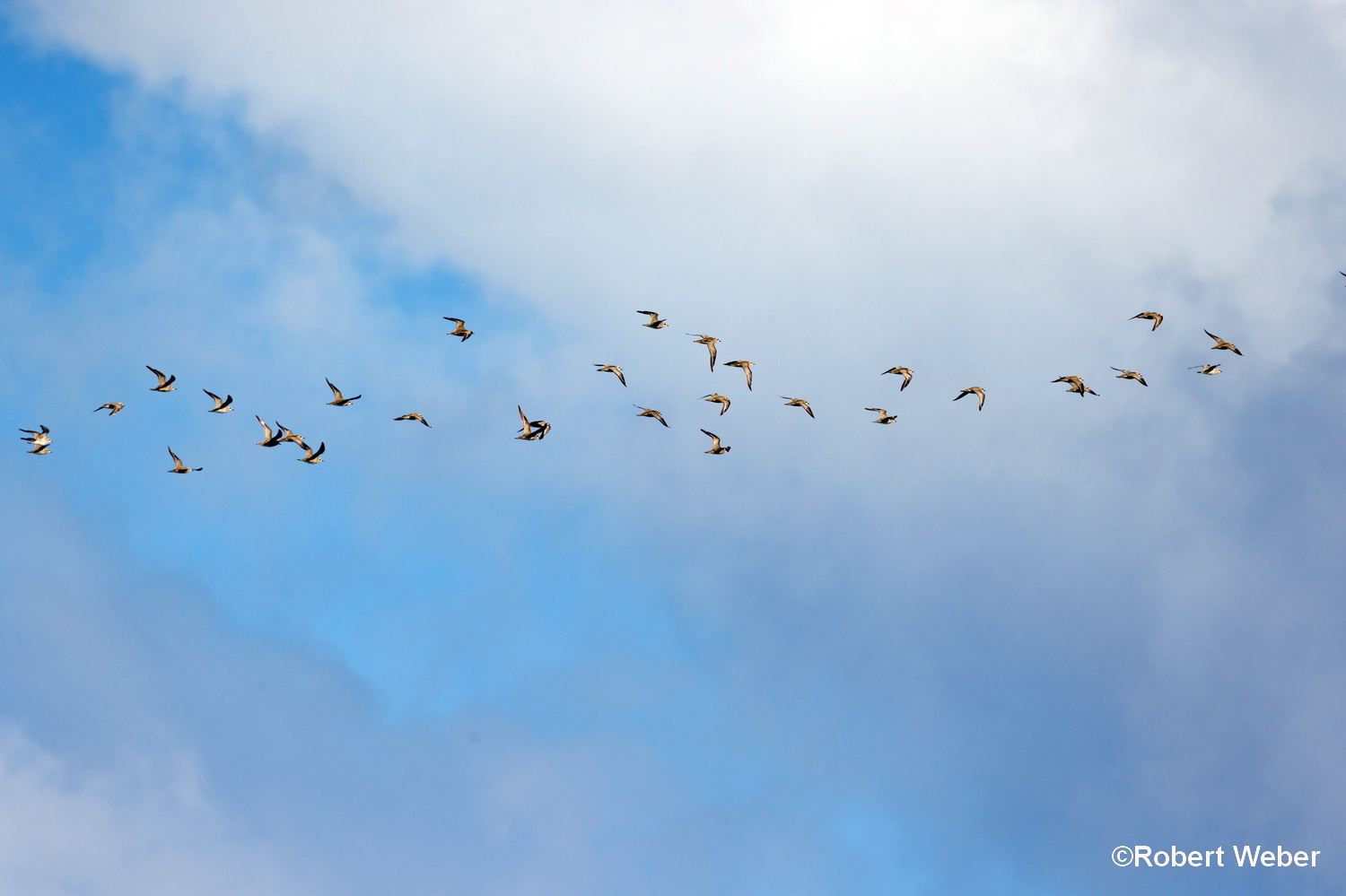 Photographer and kōlea fan, Robert Weber, shared this photo he took of a kōlea flock near Kahuku on October 13. These birds may be summer offspring that made it from Alaska to Hawaiʻi. Plover youngsters, have no adult guidance. Navigation is by instinct.
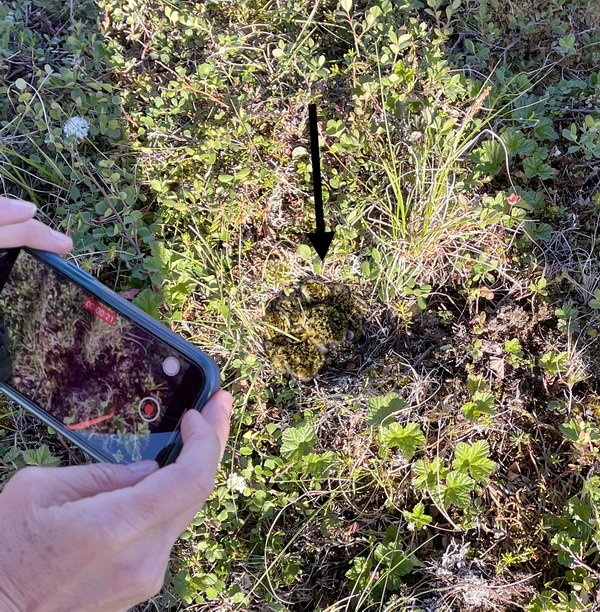
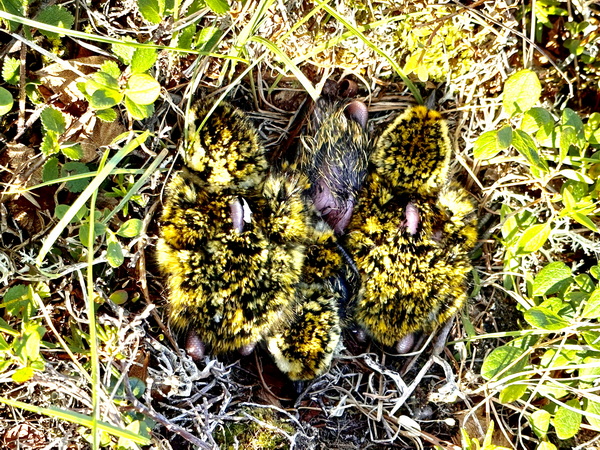
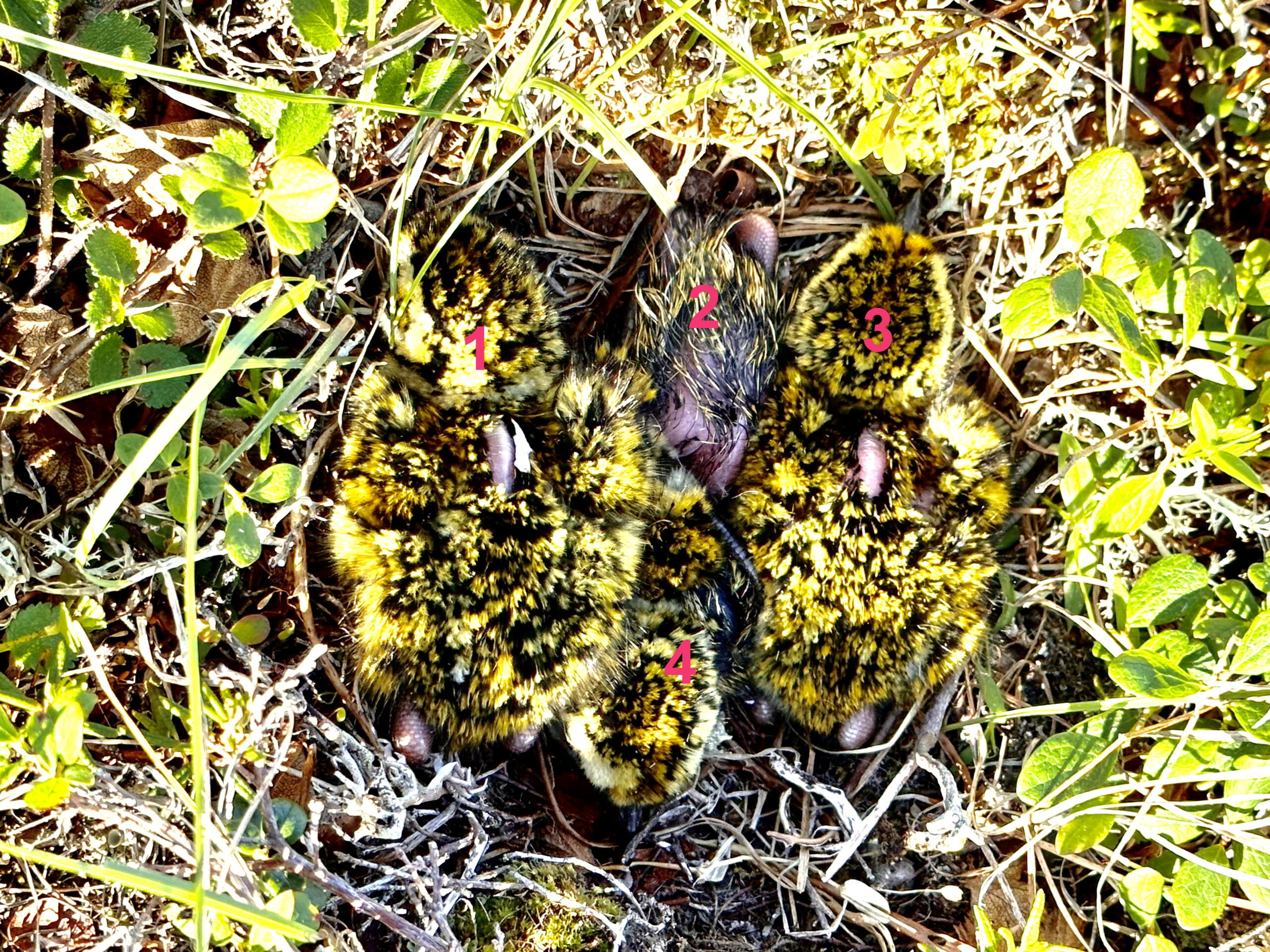 Chicks hatch in the order the female laid the eggs. The top center chick, still wet, was the last to hatch. The parents immediately pick up the empty eggshells and drop them far from the nest, since the white shell interiors are a visible clue to predators. The flesh-colored bumps are the chicks’ long, adult-size legs folded beneath them. ©Susan Scott
 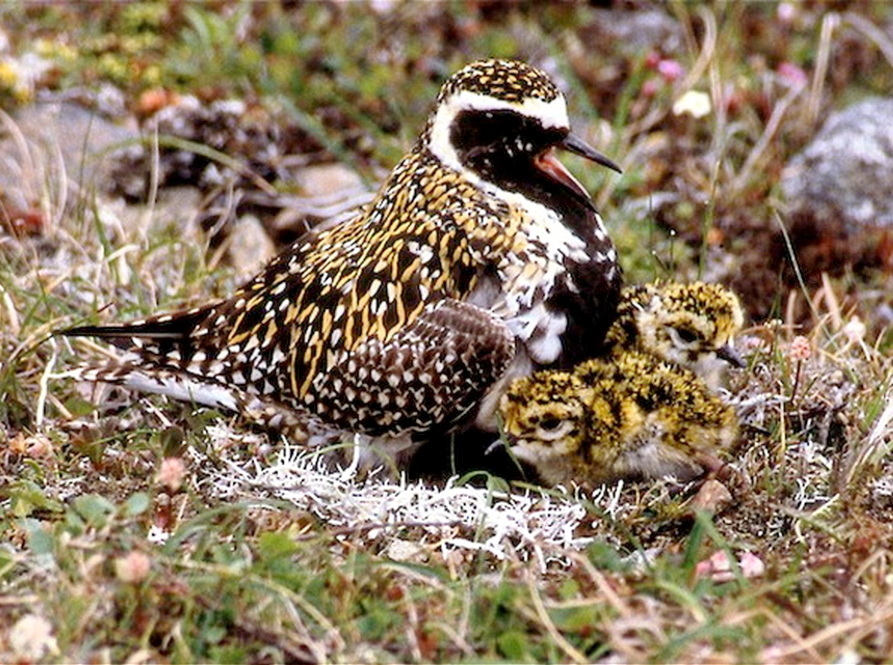 This photo from one of Wally’s past trips shows a male parent protecting his newly hatched offspring. © O.W. Johnson
 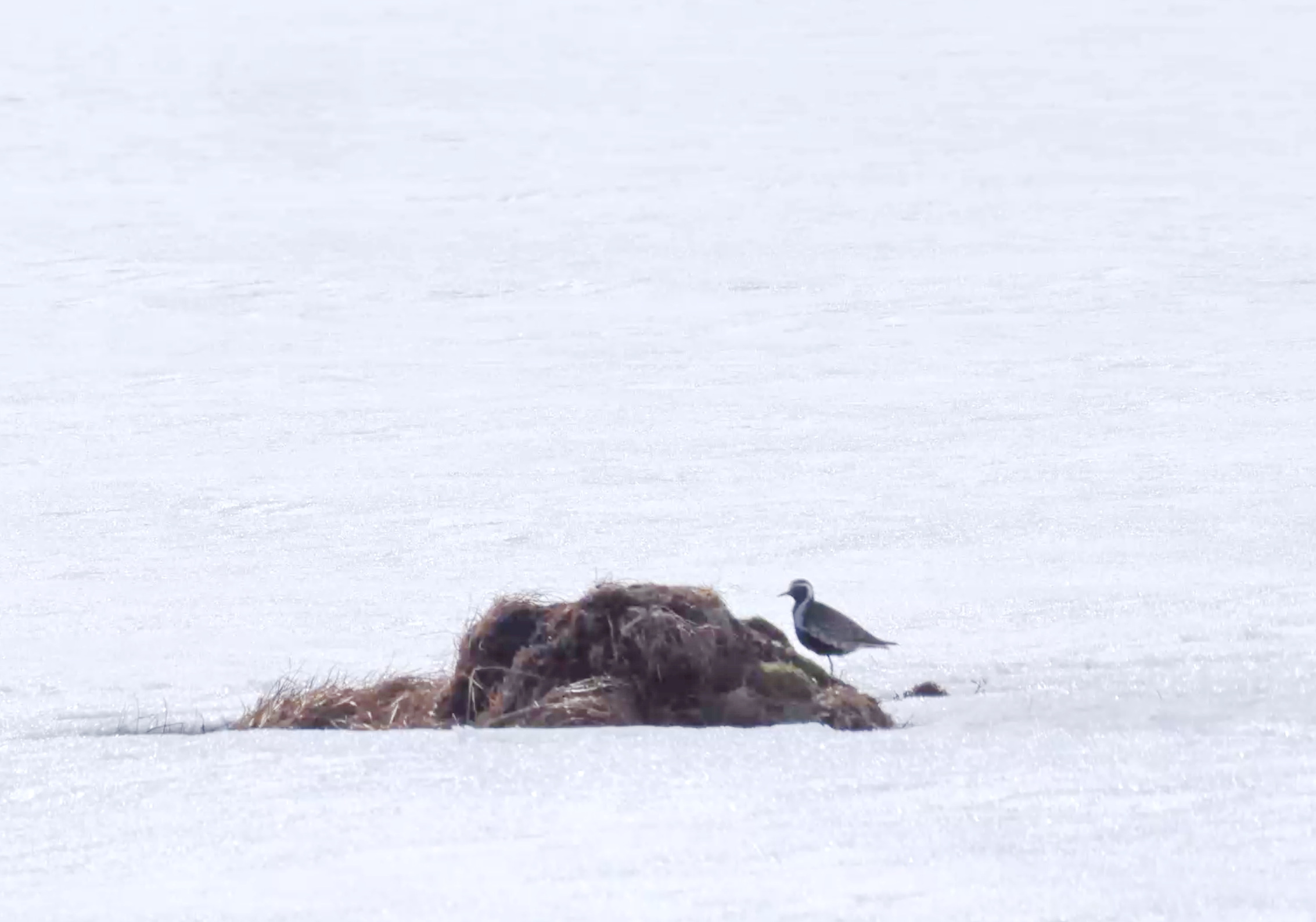 Late snowfall leaves little for newly arrived kōlea to eat. © Jim Dory
 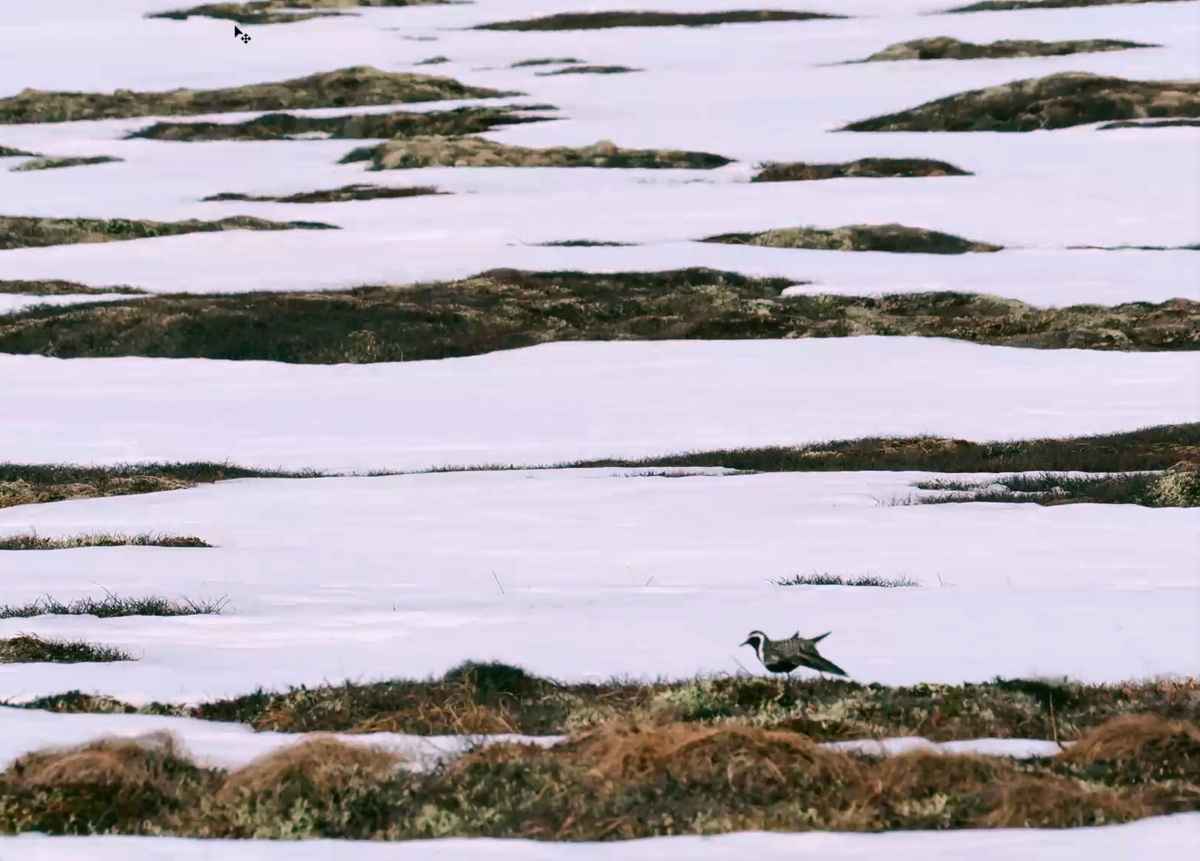 After their 3,000-mile nonstop flight, kōlea need nourishment fast. When mosquitoes and other insects hatch late due to cold weather, kōlea eat freeze-dried berries from the previous fall. © Jim Dory.
 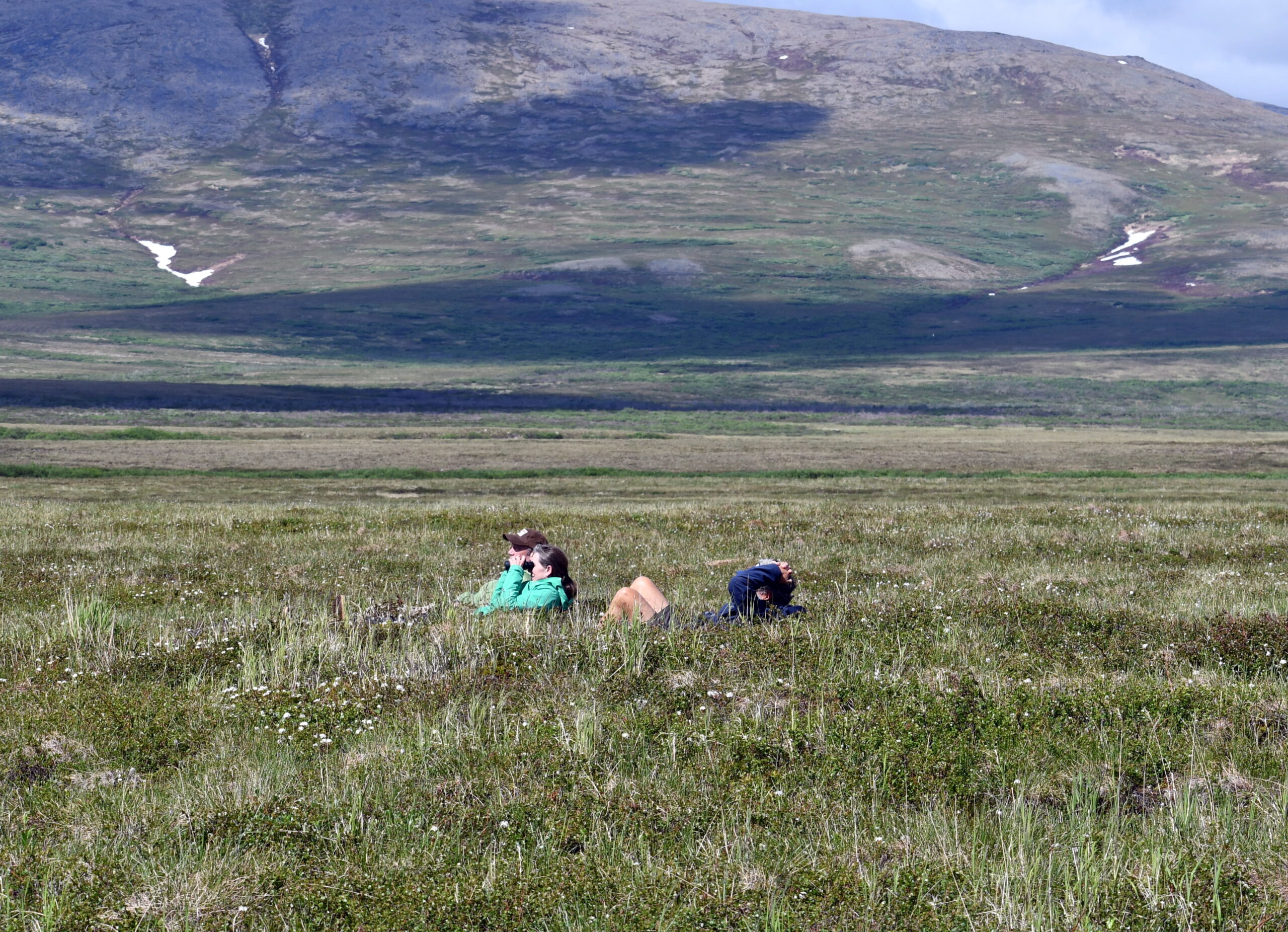 To find a nest in the vast tundra, Alaska researchers, Nancy and Paul Brusseau, watch where a flying kōlea landed. Craig Thomas (my husband) in shorts, works hard here supervising. ©Susan Scott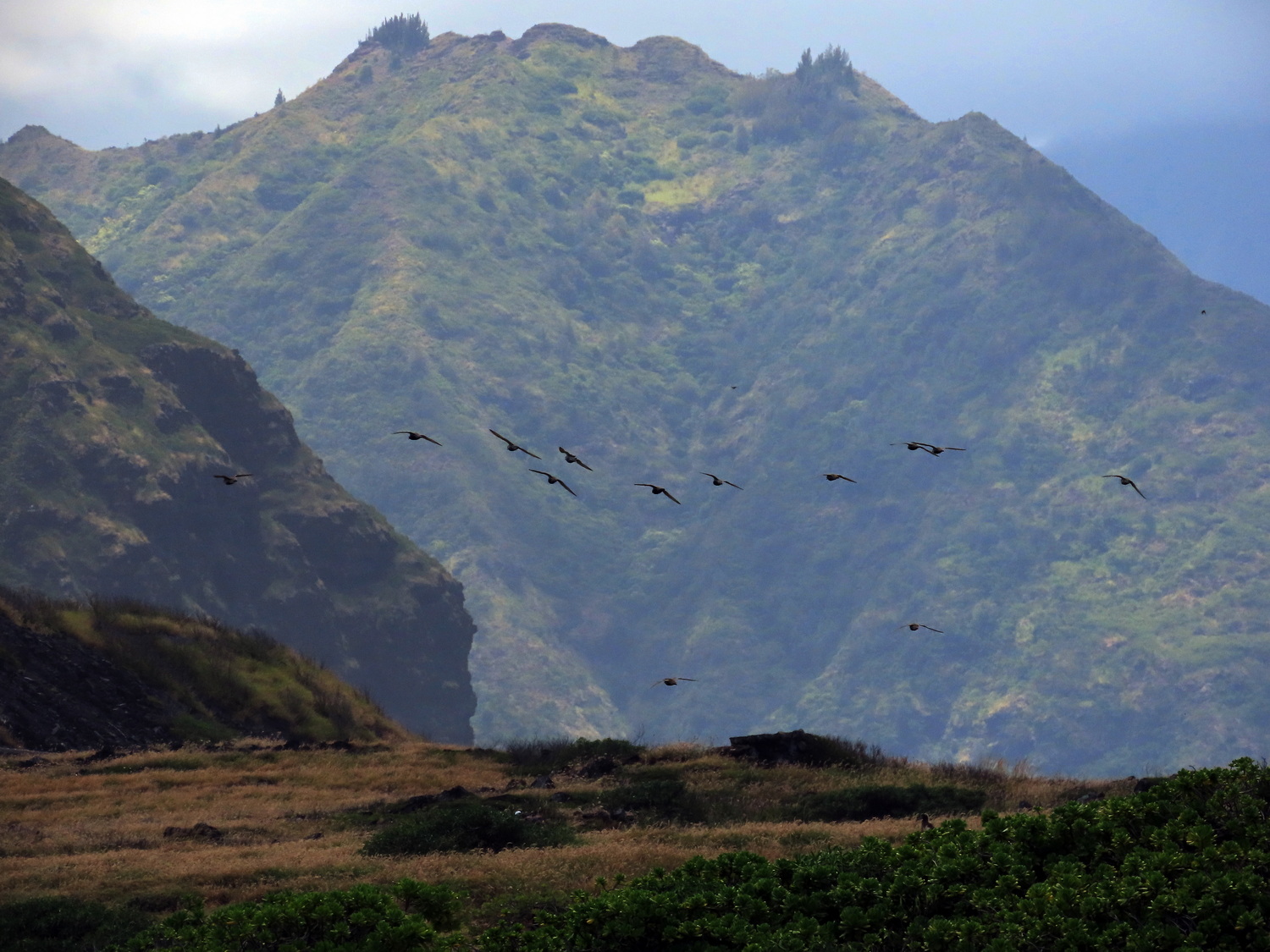
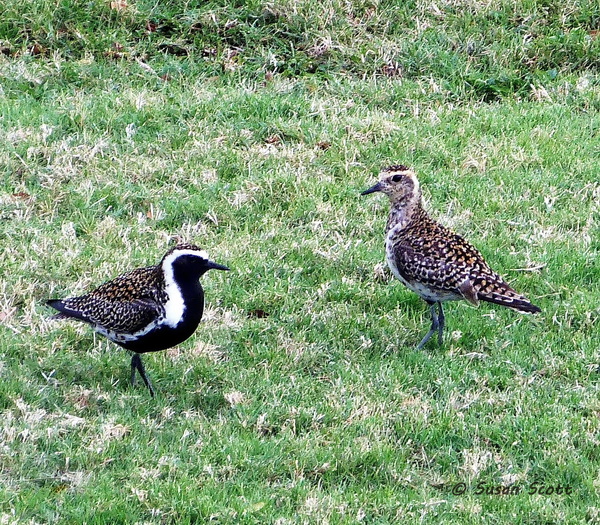 Our male, Jake, (left) usually defends his foraging territory from other birds but come April, he tolerates company, such as this attractive female. ©Susan Scott
 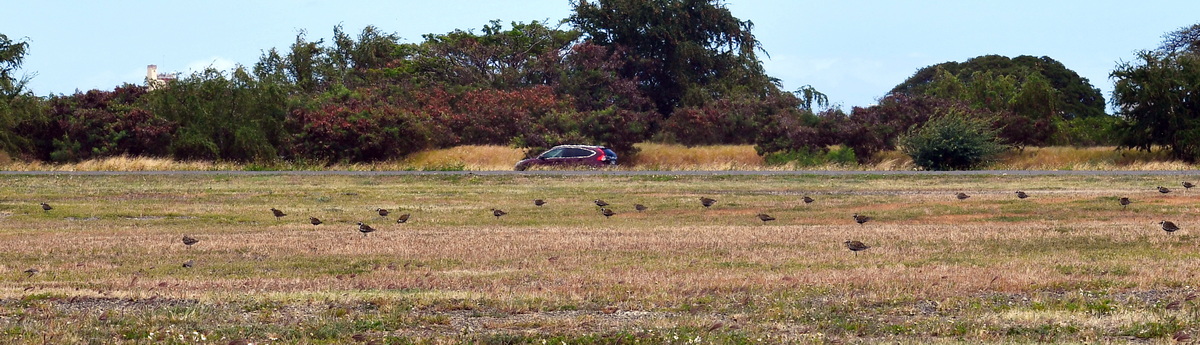 Plover fan, Roger Kobayashi, escorted me onto Ford Island (military ID required) to see the gathering near the NOAA building. ©Susan Scott
 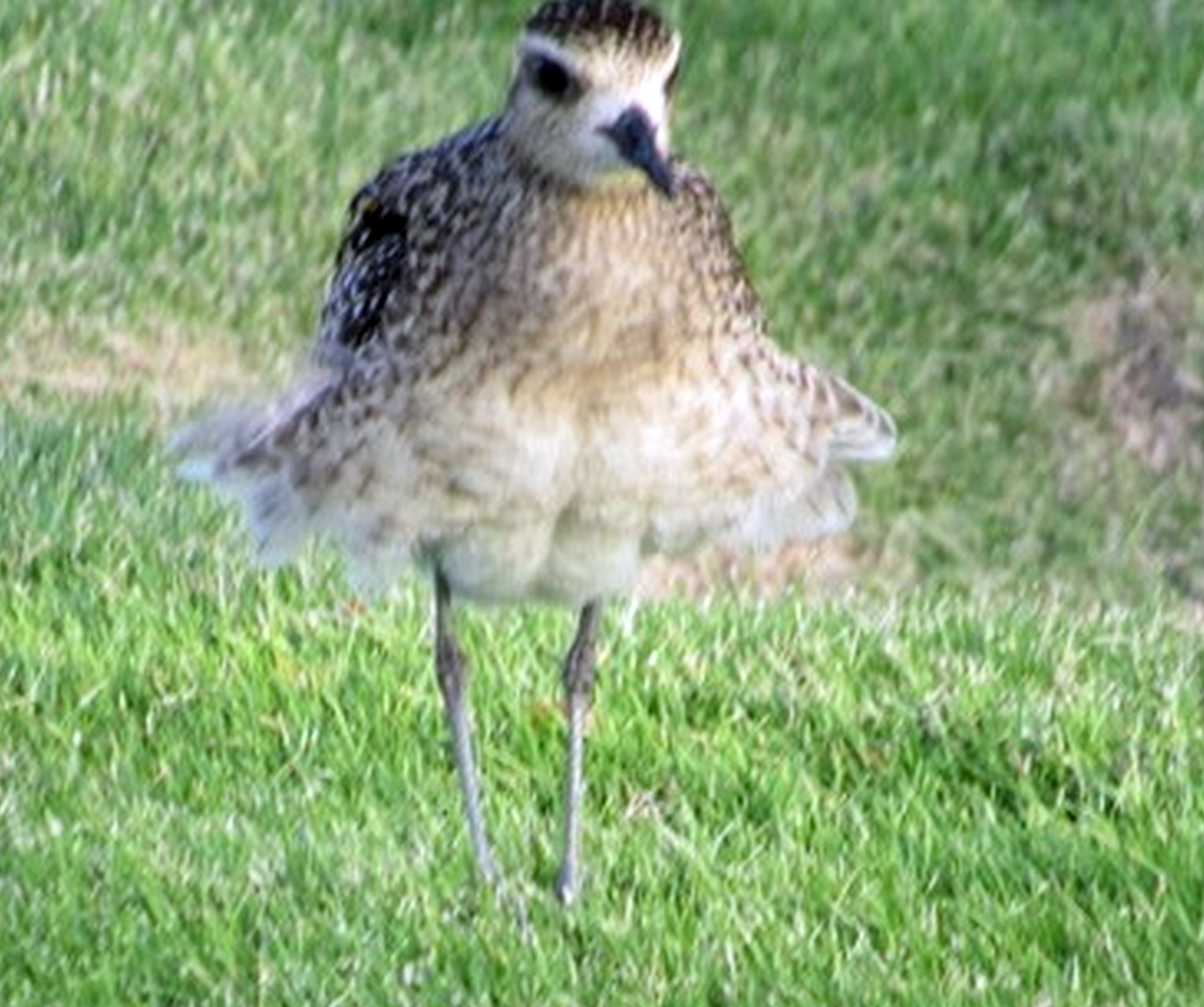 Hawaiʻi Audubon board member and kōlea fan, Pat Moriyasu, shot this funny photo of a kōleaʻs “skirt” during one of our blustery days in early March.