
Superbird, Mr, Necker, returns
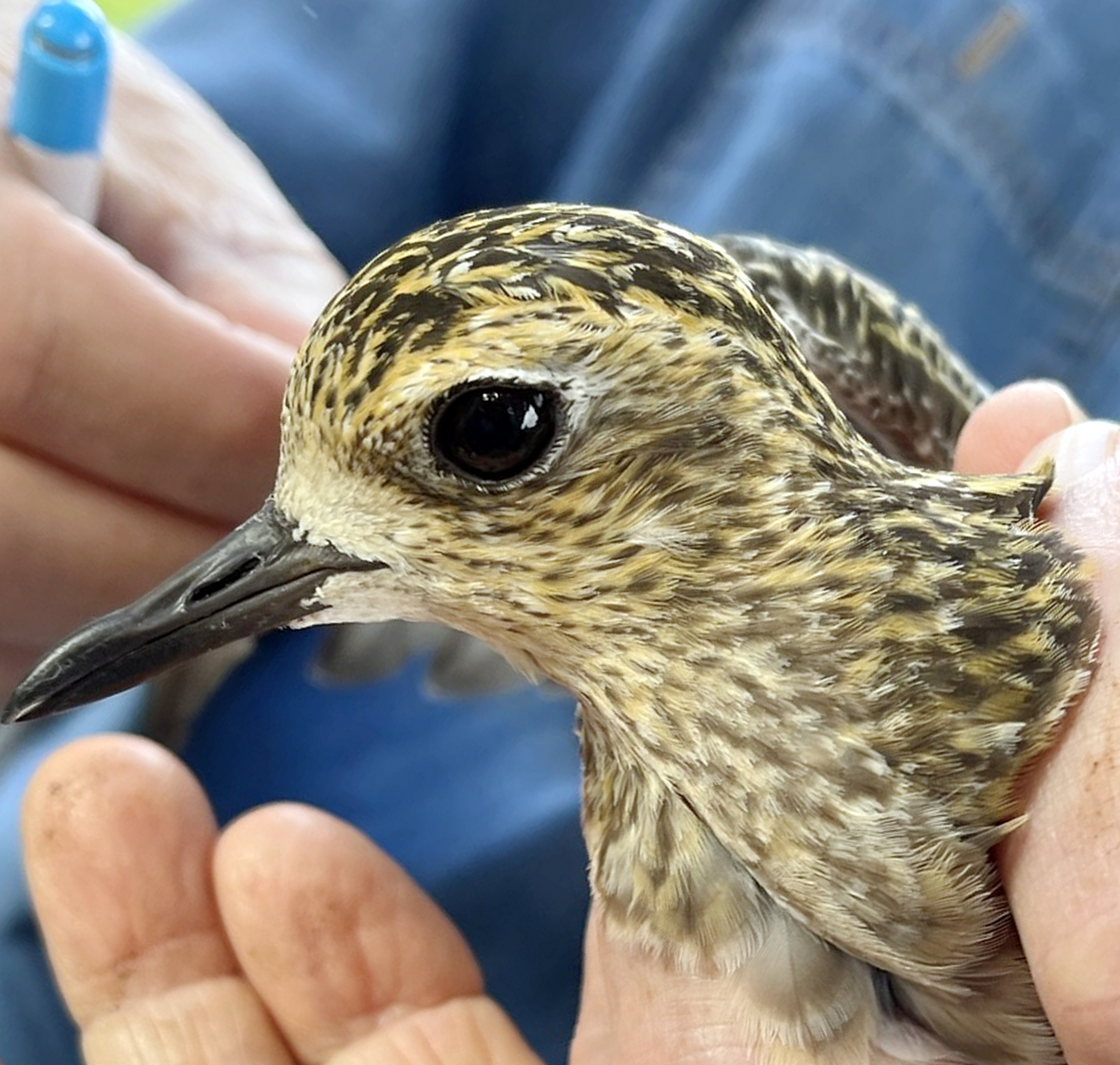 Mr. Necker on October 20, 2022. ©Susan Scott
September 1, 2025
We Hawaii plover fans have been happily welcoming our kōlea back from their summer jobs in Alaska. As of this writing, the kōlea REPORT database has 355 entries of birds returned totaling 807 individuals.
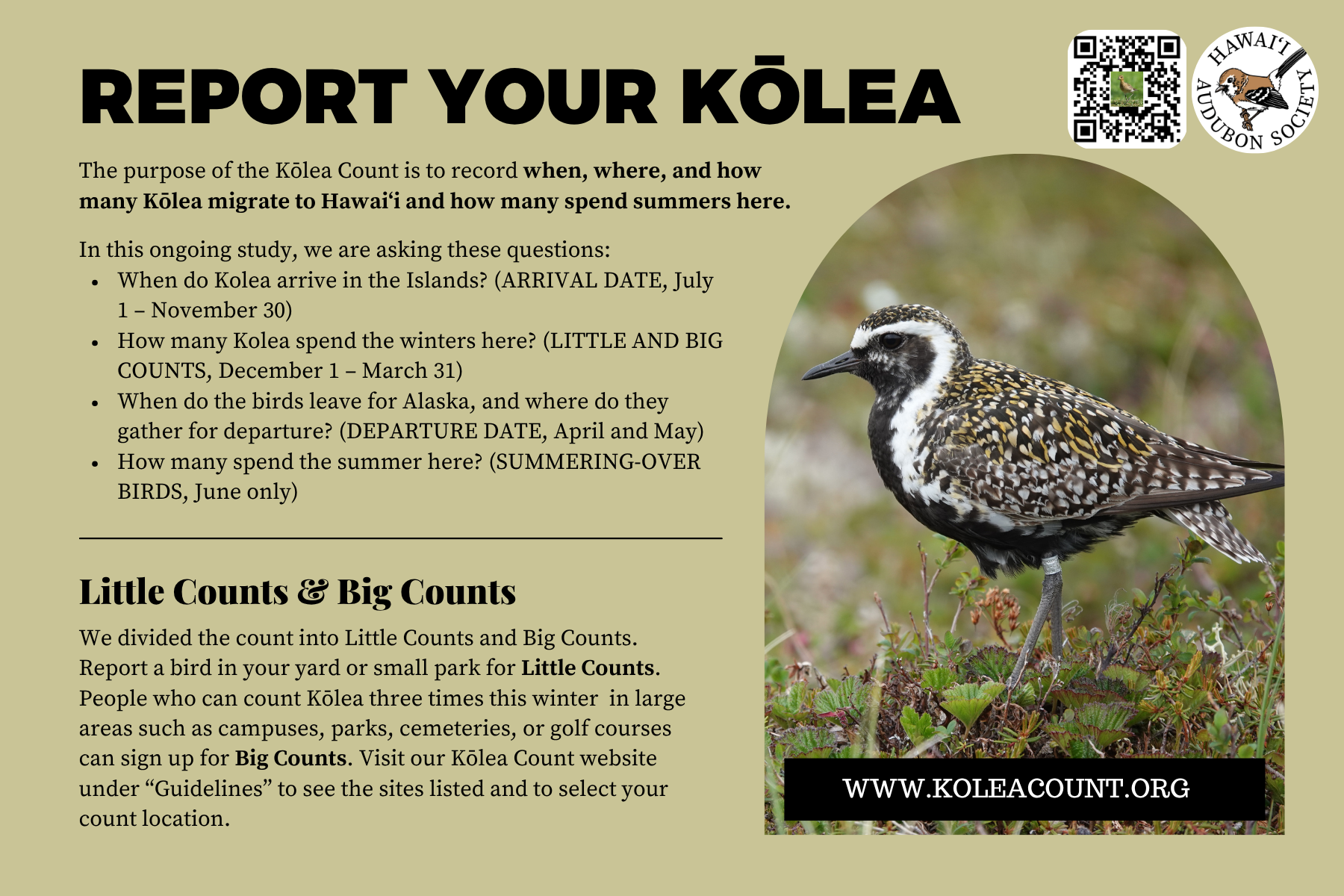 Hawaiʻi Audubon Society’s outreach manager, Elena Arinaga, made these cards to explain our citizen science project Kōlea Count. Get one at Saturday’s kōlea festival (see below.)
It’s thrilling to see a bird that we recognize in a yard, field, or park, and I personally say hello and congratulations to the ones I know. These birds have flown an astonishing 6,000 miles round-trip in about 4 months, and each deserves a verbal pat on the back.
My Jake got one. He arrived August 20th on his grassy space around a sprawling monkeypod tree. My first photo of Jake is dated 2016, making this male at least nine years old.
Another plover that gets a gold star on its gold back is Mr. Necker, the bird banded and tagged in Punchbowl Cemetery by plover researcher Wally Johnson in a March, 2022 study. Mr. Necker flew to Alaska, then Russia, then Mokumanamana, former known as Necker Island, in Hawaiʻi’s Northwest Chain.
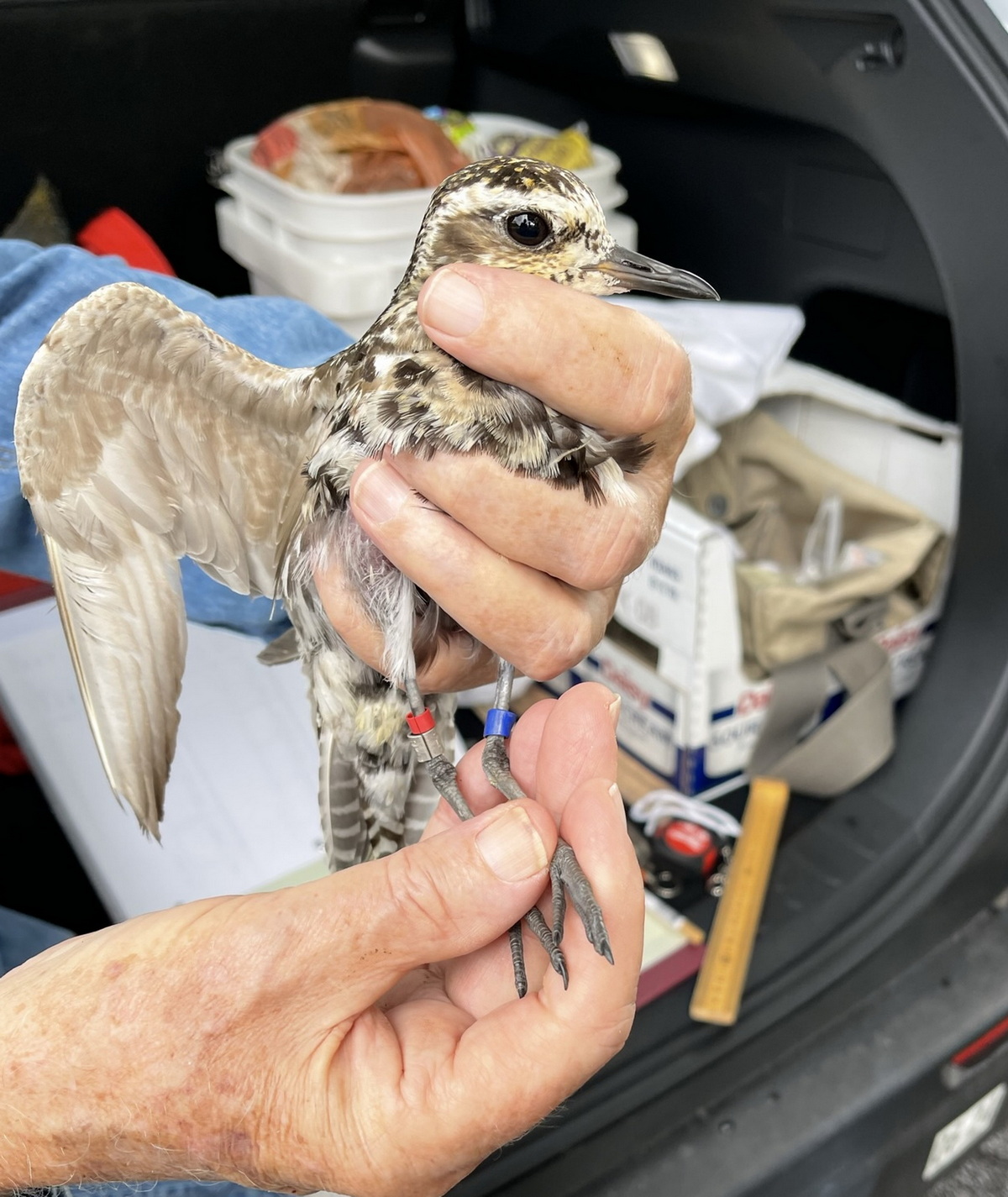 Mr. Necker in Wally Johnson’s loving hands, October 22, 2022. ©Susan Scott
Because the bird’s battery went dead there, no one knew where the bird flew next. To our delight, Mr. Necker showed up in his precise place in Punchbowl Cemetery on October 20, 2022. Late for an adult, but that he made it back at all is a miracle.
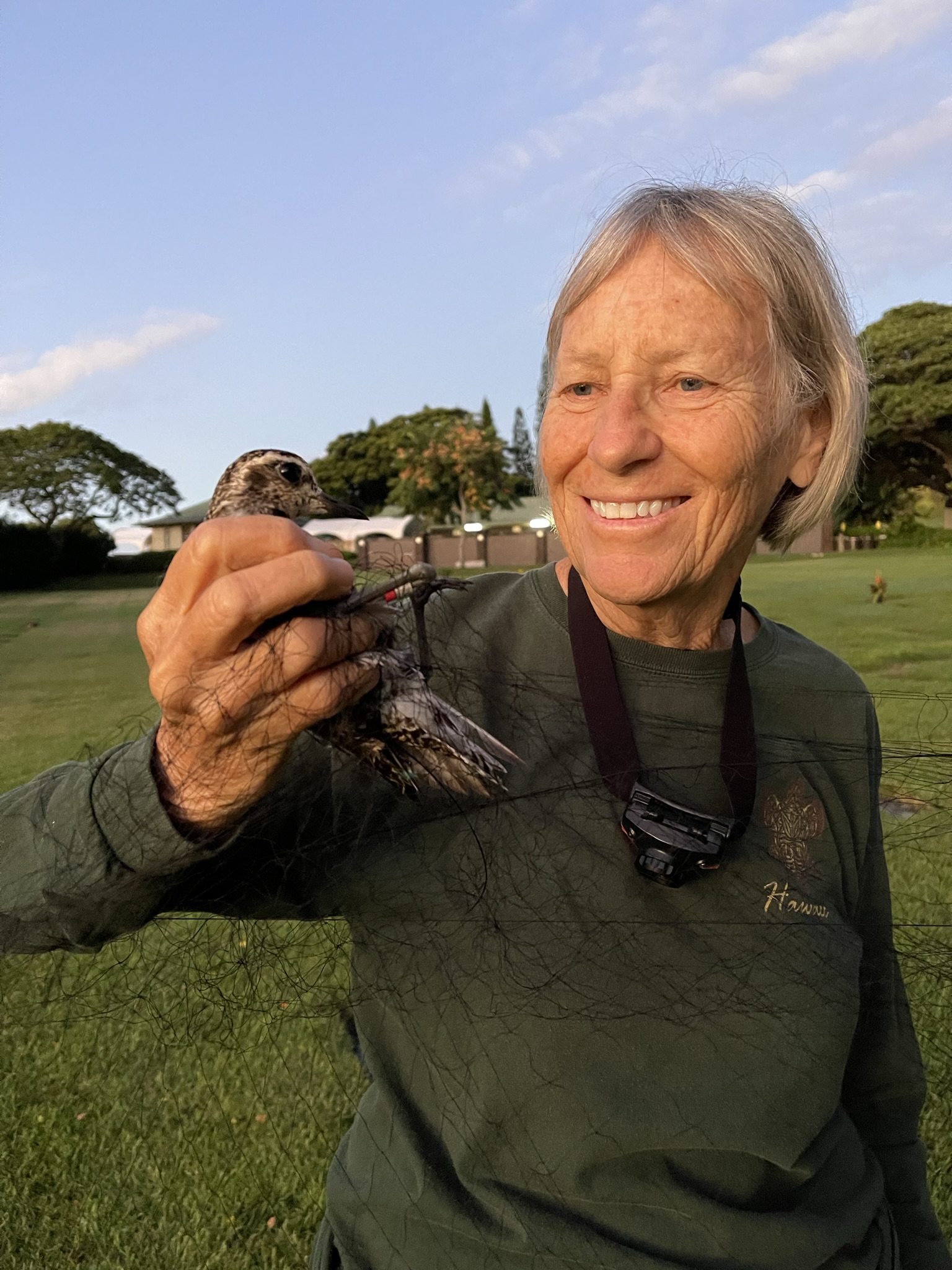 Mr. Necker gave me the honor of flying into the mist net I was monitoring at Punchbowl Cemetery. We Hawaiʻi Audubon volunteers were there to recapture the study birds and relieve them of their satellite-tag backpacks. I was so excited that Mr. Necker had made it back, I asked another volunteer to take this picture with my phone.
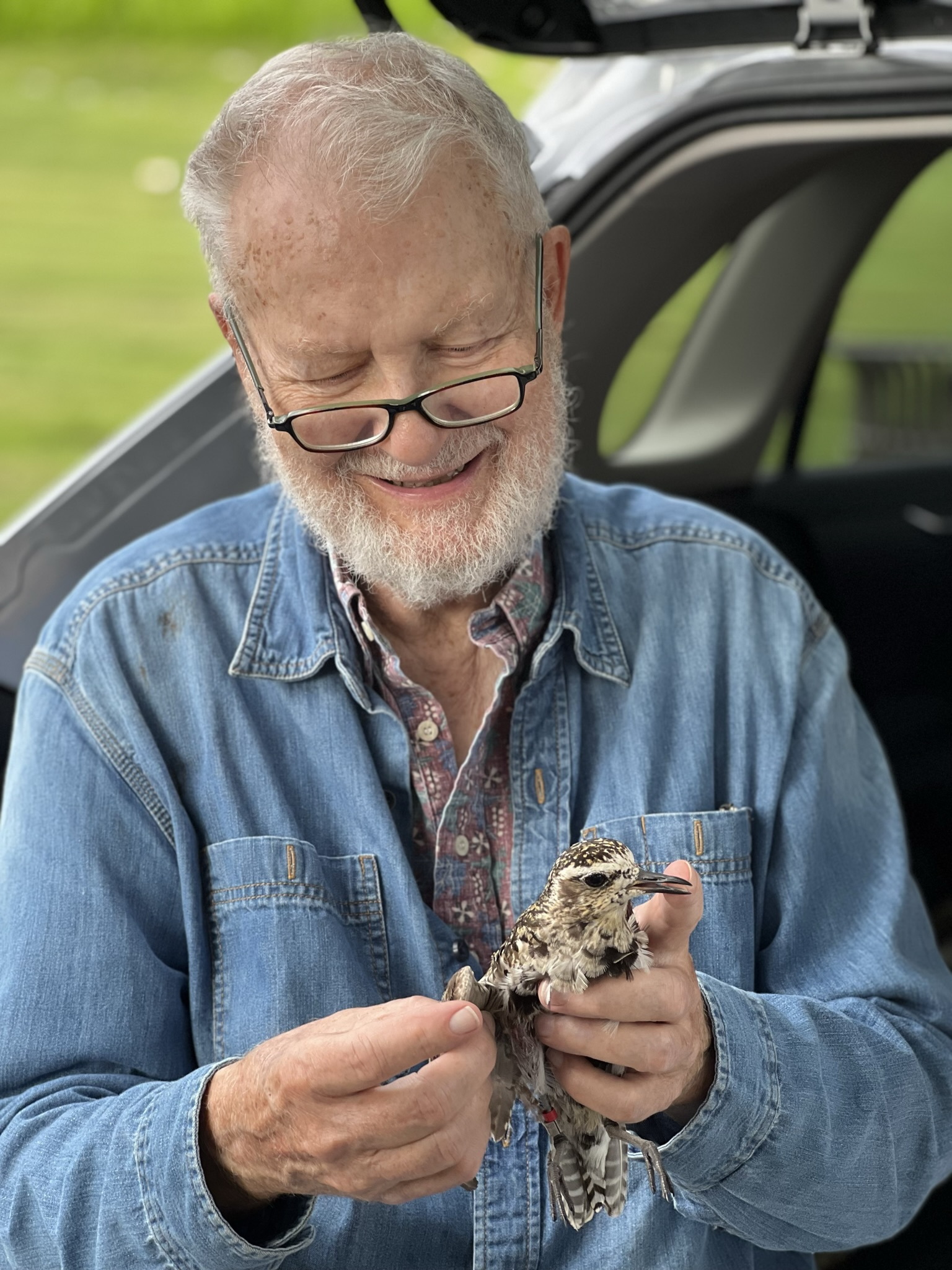 A happy Wally Johnson checking on Mr. Necker’s feathers. The bird’s tiny backpack did not show any ill affects on the bird’s back or legs. ©Susan Scott
We can continue our admiration of this roving bird. Bird fan and extraordinary photographer, Tom Fake, got photos of Mr. Necker last week, August 21, in the bird’s precise spot in Punchbowl Cemetery.
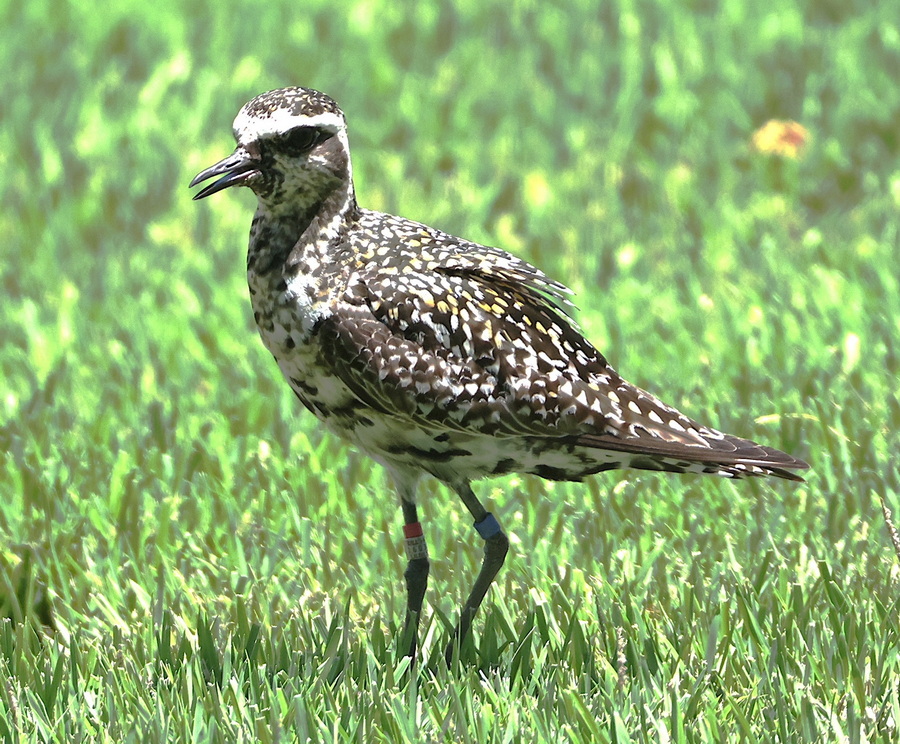 Mr. Necker looking good last week, August 21, 2025. Note that the bird has already shed most of its breeding-colored feathers. If we didn’t know the identity of this bird, we would not be able to tell whether it’s male or female. ©Tom Fake
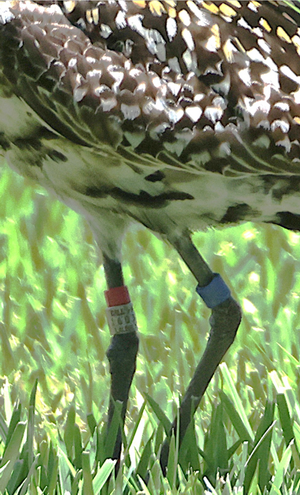 Close-up of Mr. Necker’s leg bands. ©Tom Fake.
Join us plover lovers Saturday at Magic Island to celebrate Jake, Mr. Necker, and all …
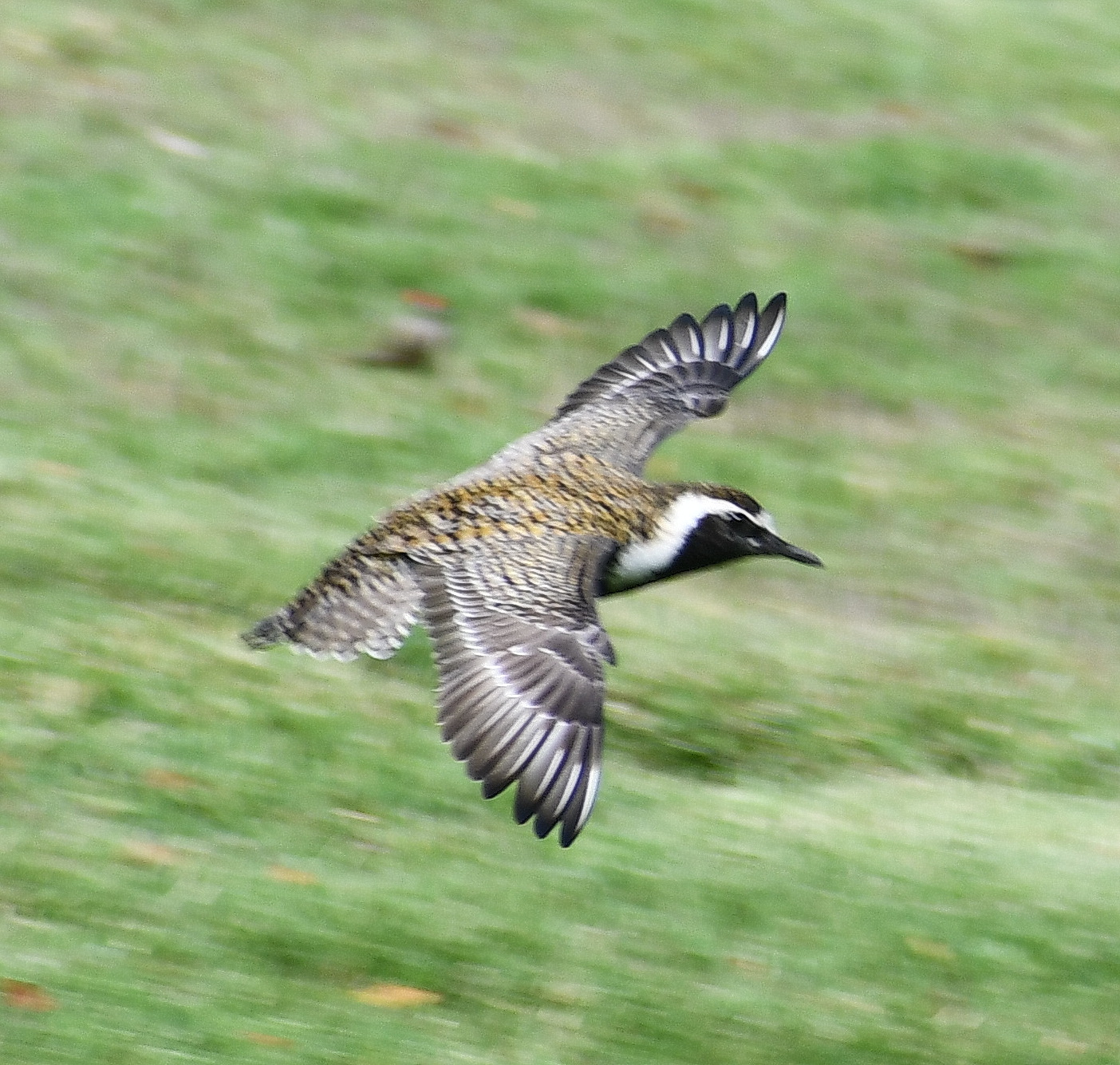
 Puuiki Cemetery, Waialua September 2, 2024. ©Susan Scott
 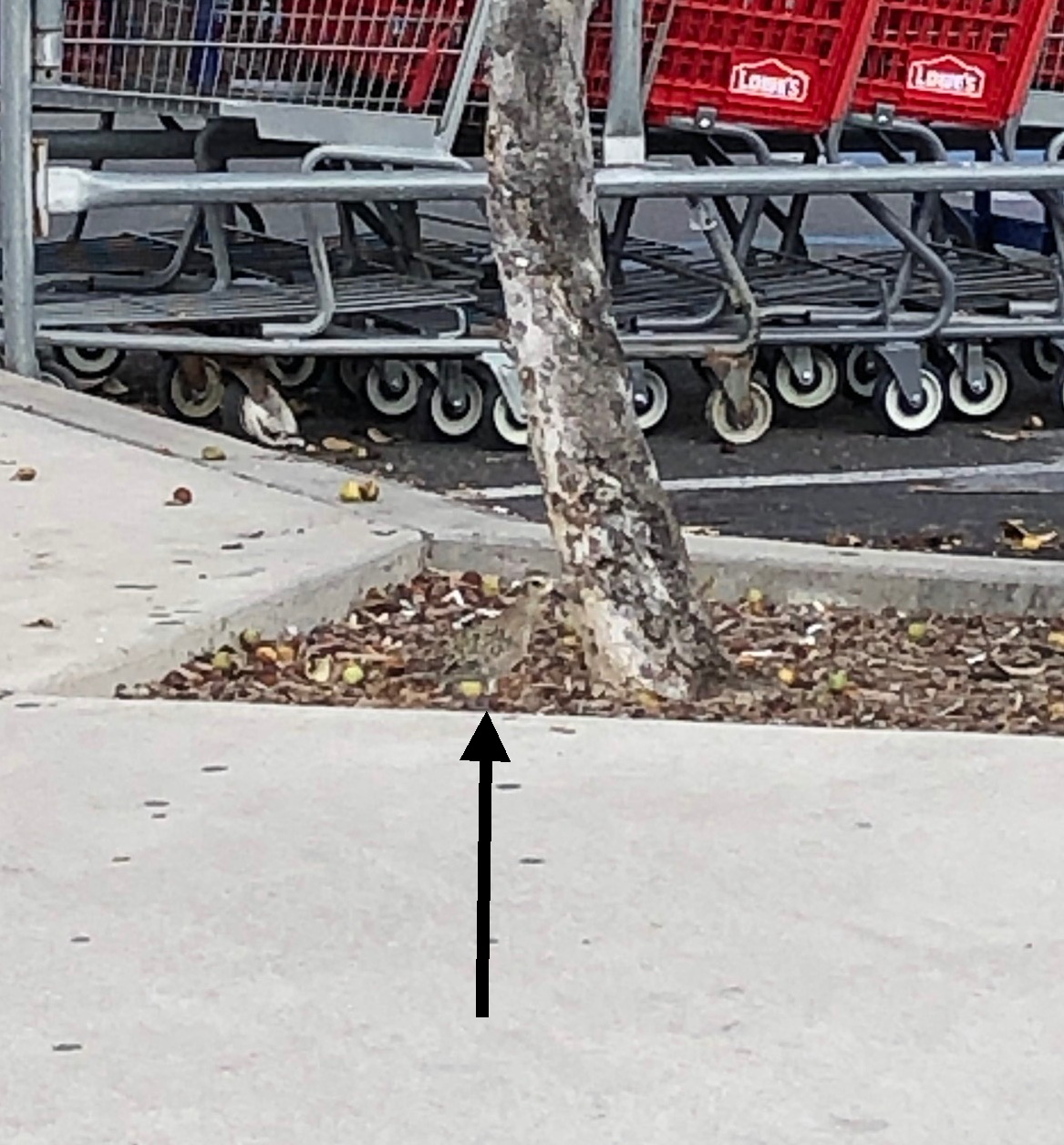 A Lowe’s parking lot kōlea. Elton Miyagawa photo.
 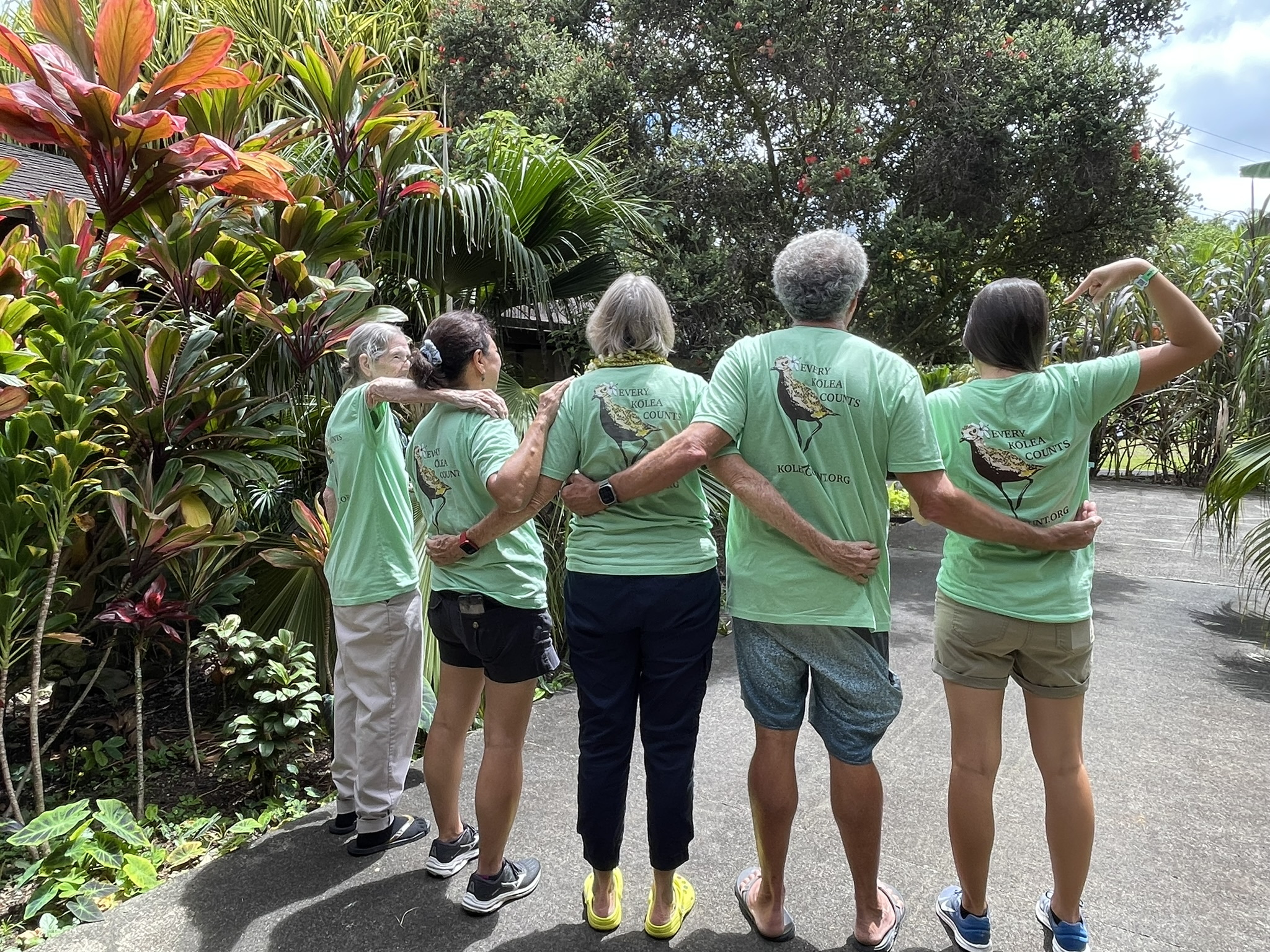 Hawaii Audubon Society members show off their kōlea fandom at Hoʻomaluhia Botanical Garden on September 6. Memberships and Ts, available at Hawaii Audubon.org, help support research and education.
 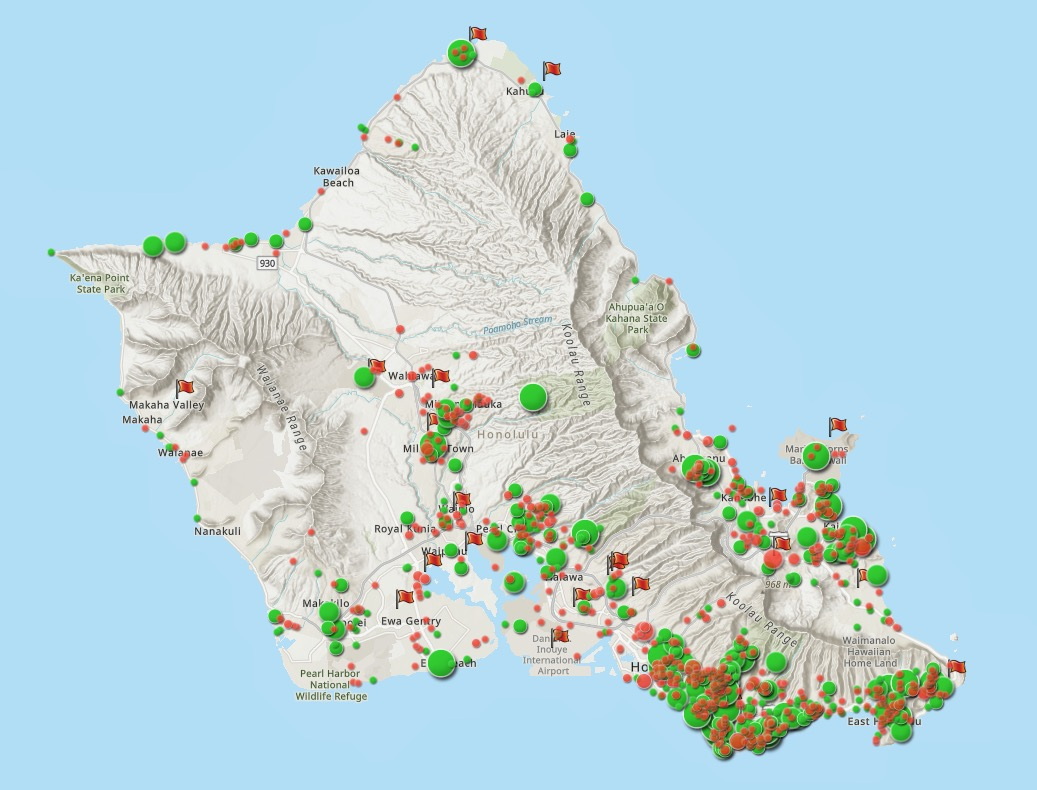 Flags show golf courses, ideal habitat for our kōlea but currently far under-counted. Green dots are kōlea locations reported in 2023-2024 season. Orange dots are plovers reported in previous years but not 2023-2024. Dot sizes reflect number of years reported. Rich Downs image.
  Kōlea Count and eBird data layered over a Hawaii Land Cover map. Rich Downs image.