

5th Annual Kōlea Count
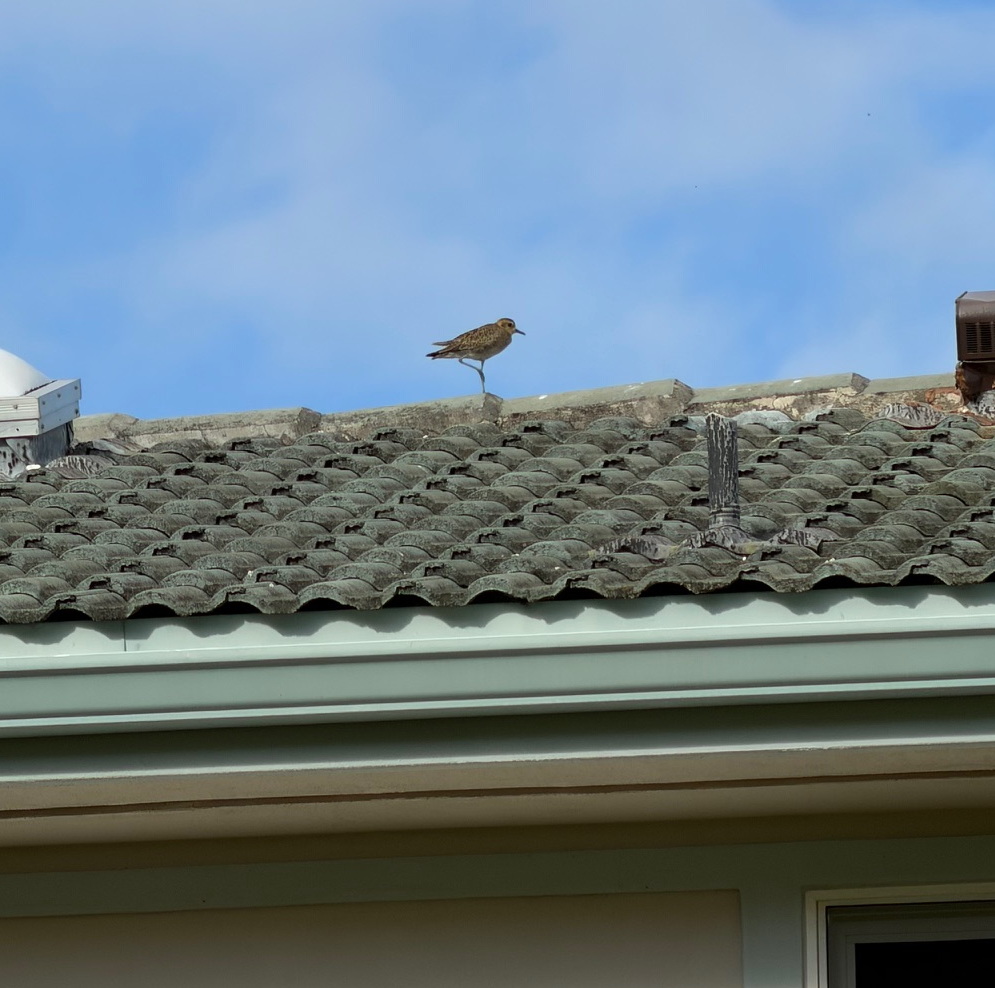 Not amused by the Mid-Pacific Country Club’s Turkey Trot, the golf course’s 80 or so kolea took to neighbor’s rooftops until the invading humans left. ©Susan Scott
November 29, 2025
When Wally Johnson and I launched Kōlea Count in January 2020, we had two unknowns. First, we were oblivious that a pandemic would soon coop us up in our houses. Second, we didn’t know if Hawaiʻi residents would be willing to join a statewide plover counting program.
Those two unknowns merged into a happy result. Covid cabin fever helped motivate plover lovers to get outside, walk the neighborhoods, and count kolea. It was so pleasant in so many ways that year after year people have continued signing up, counting, and reporting. As a result, I’m delighted to announce the Hawaiʻi Audubon Society’s fifth annual Kōlea Count starting Monday, December 1st.
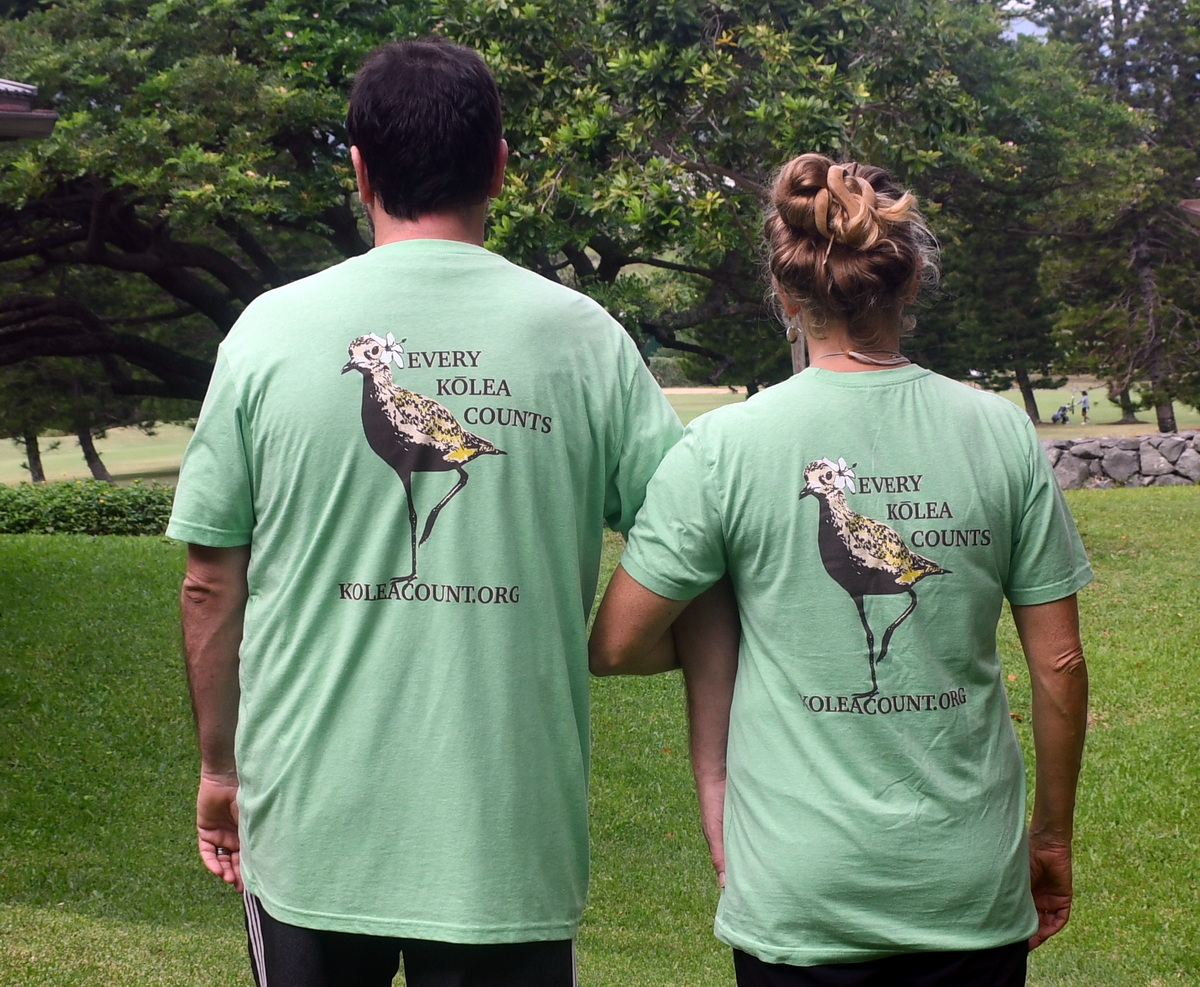 See the Count site list link (below) for current counting sites. Email me your choice in the CONTACT tab. (Only I can make the X in taken.) See GUIDELINES tab to count. T-shirts help fund the research: Hawaii Audubon Society/shop
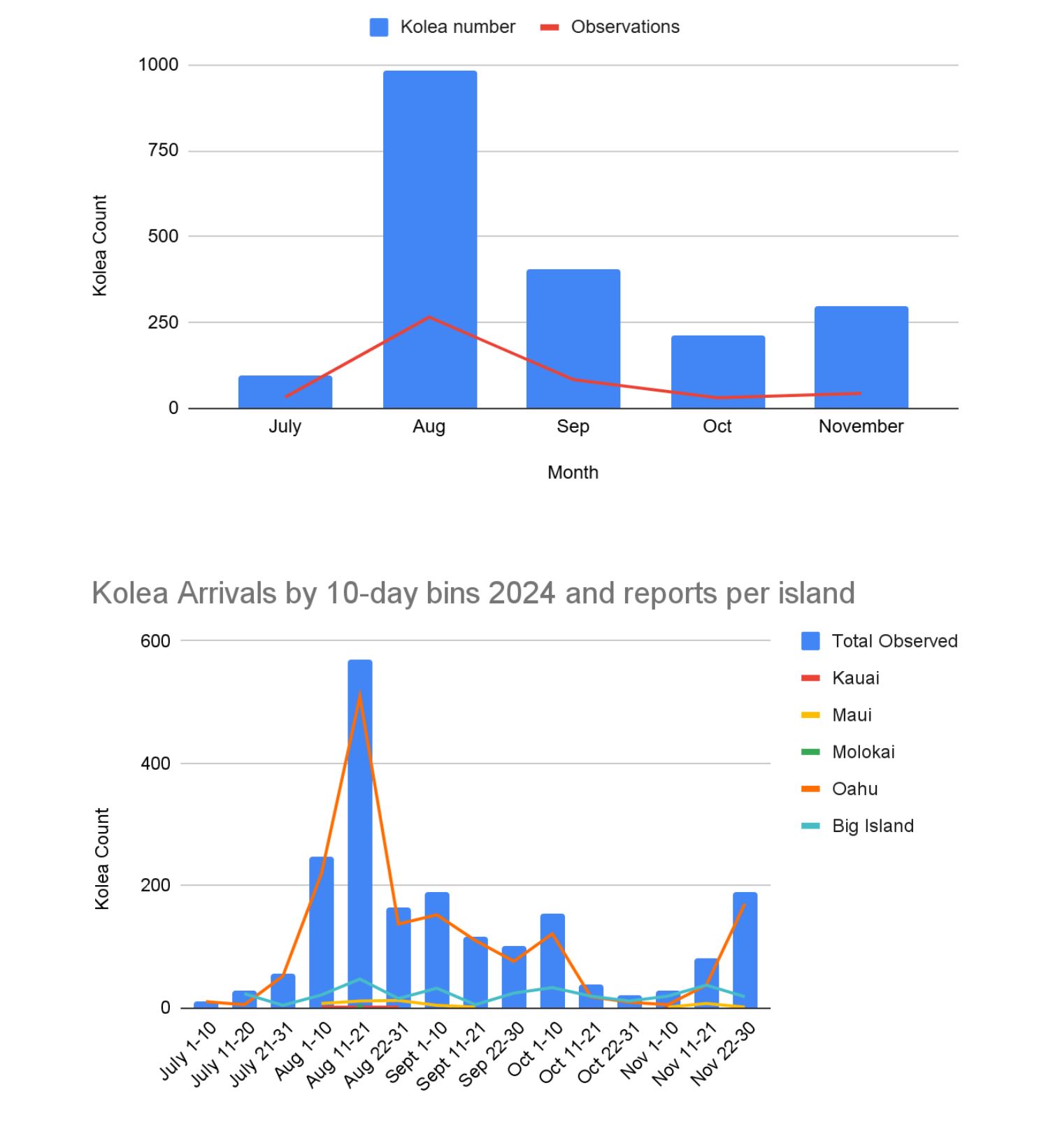
The 2025-2026 kolea season has already gotten off to a great start. Since July 4th, when Pam O’Brien-Gongora reported the first kolea return in a Mililani skate park, plover watchers have made 556 entries regarding arrivals of 1,682 birds. Some of those reports are the same birds, but that’s okay. Part of our motivation for creating Kōlea Count was to encourage people to notice, appreciate, and enjoy these amazing native birds.
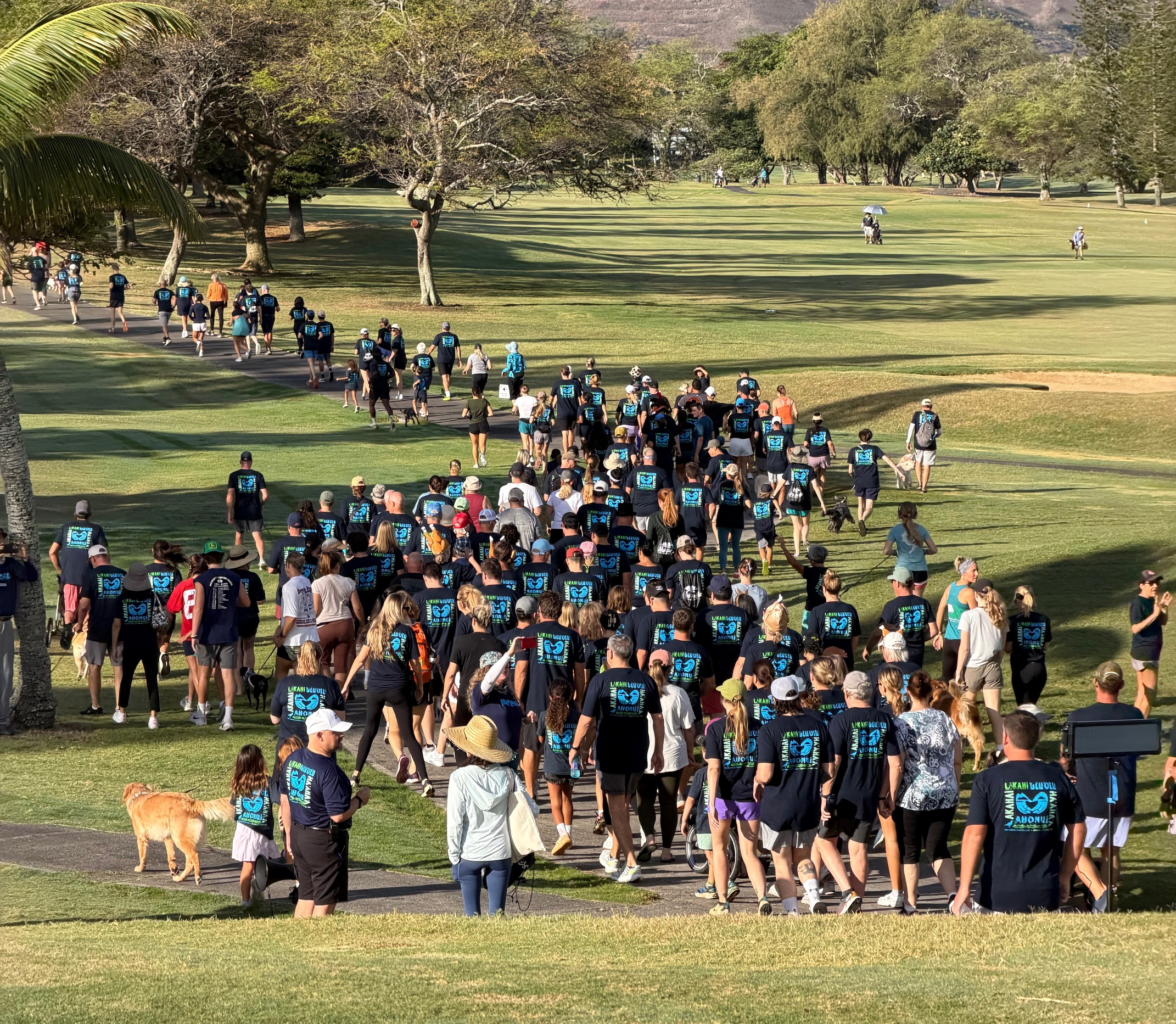
And that’s happening. When Kailua’s Mid-Pacific Country Club sponsored a Thanksgiving Day Turkey Trot fundraiser for the Hawaiʻi Food Bank, they put a kōlea on the event T-shirts. Before the start, General Manager, Ron Haas, gave a short kōlea talk, reminding everyone of our birds’ extraordinary feats of flying.

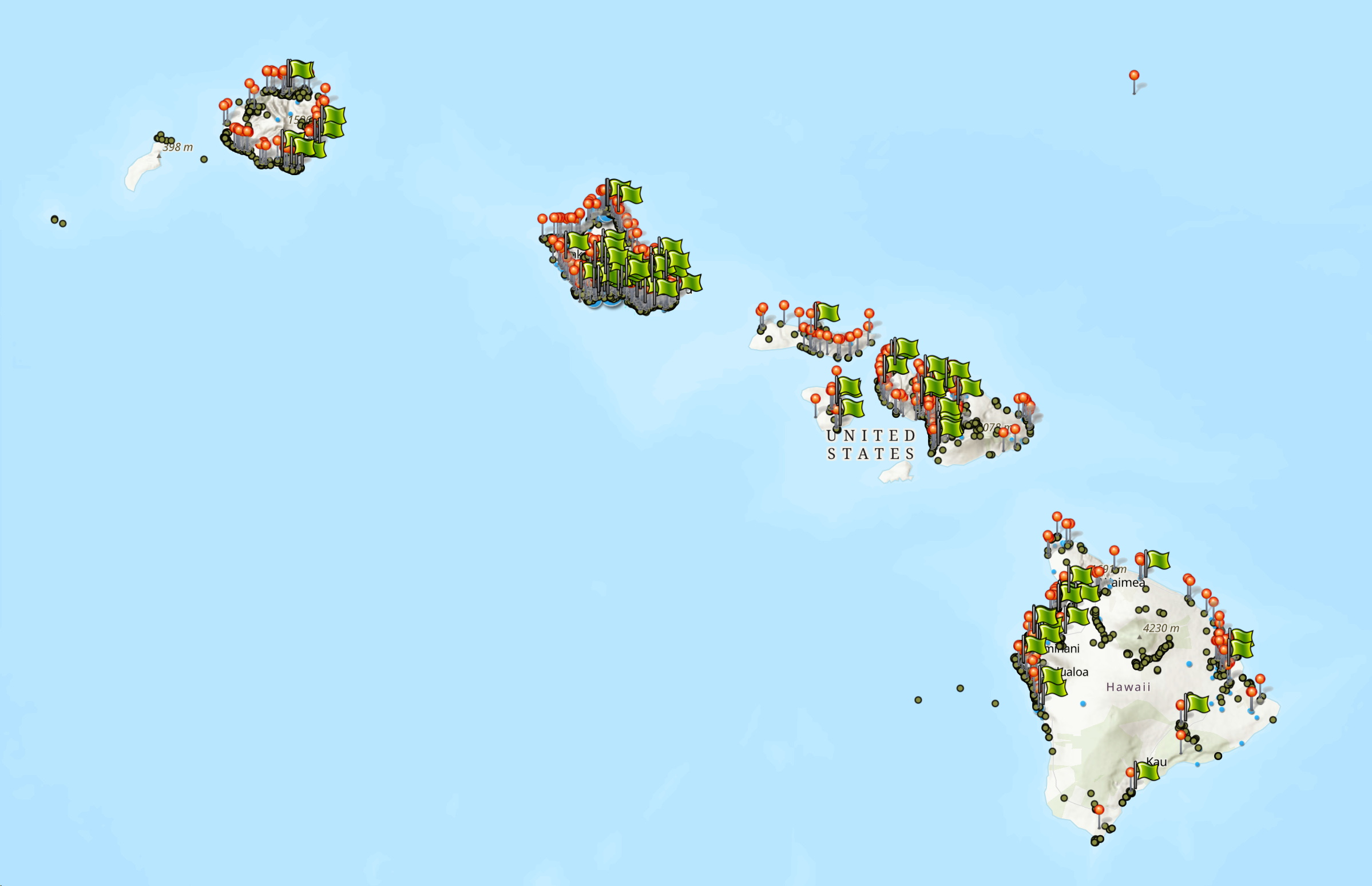
Another happy occasion with Kōlea Count is that Rich Downs, a professional data analyst, as well as Oahu’s manu o Kū expert, is working with our accumulating kōlea facts and figures. By combining eBird observations with Kolea Count numbers, and noting Hawaiʻi’s golf courses (green flags), we’re learning the precise locations of our birds statewide.
Rich’s work, combined with our September 6th Welcome Home Kolea party at Magic Island, the annual Nome Kolea Quest (info at events@hiaudubon.org) and the Anchorage Museum’s planned future exhibit about plovers connecting Hawaiʻi and Alaska, well, we’re rich in plover appreciation.
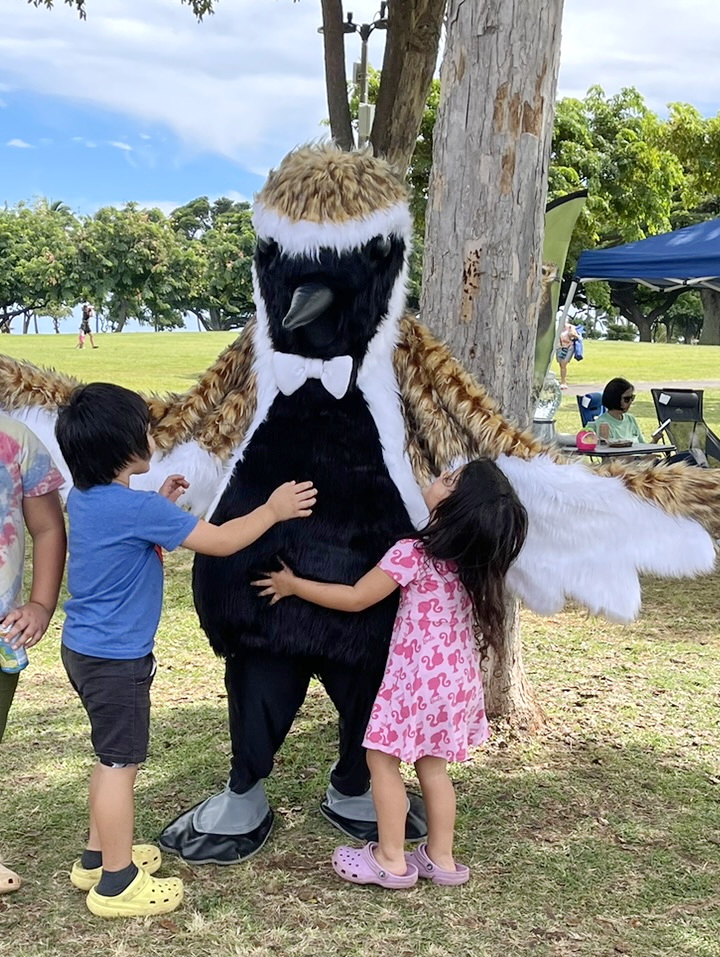
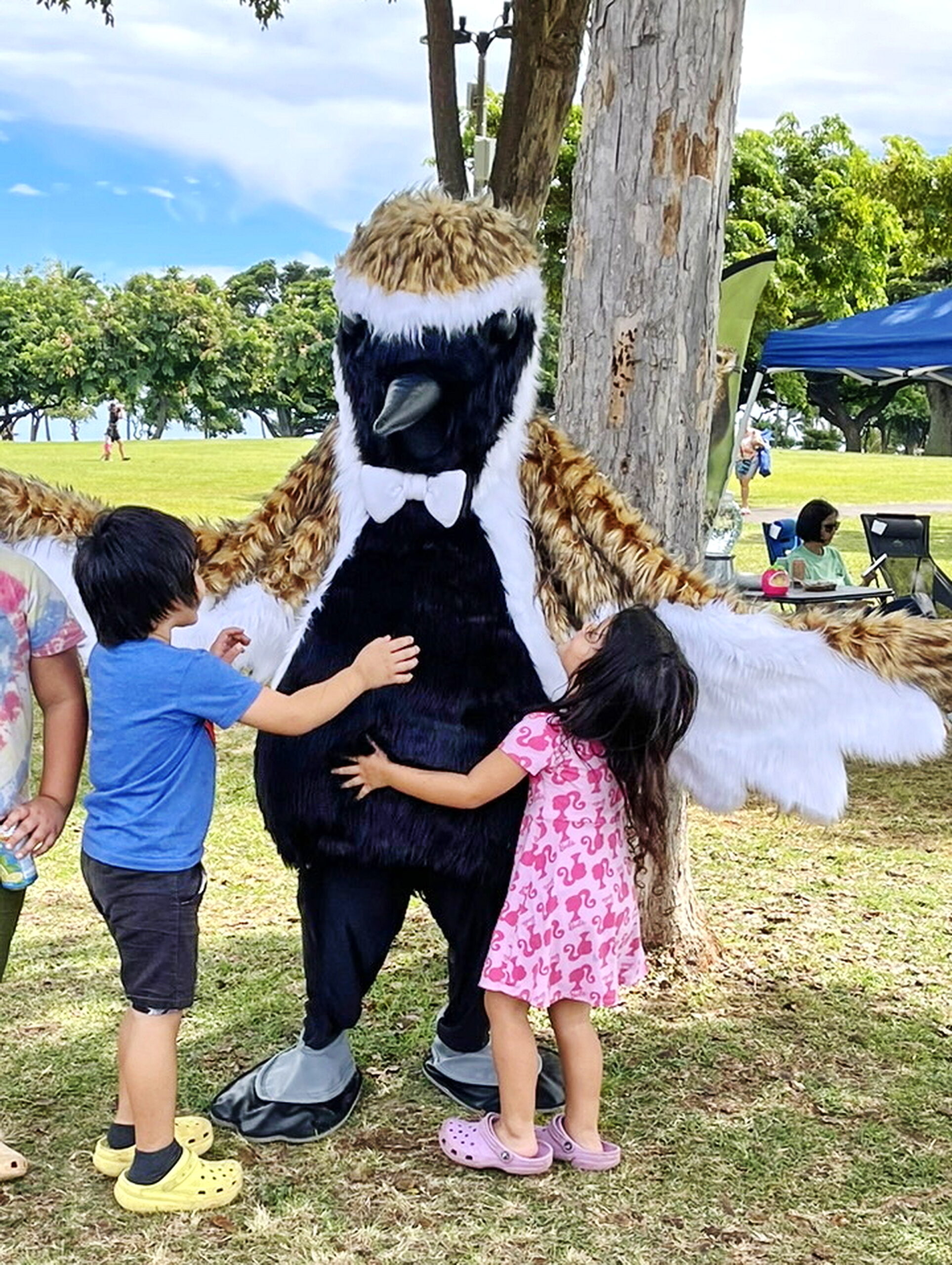 Everyone loves hugs from our mascot, Kōlea Nui (at the Welcome Home Kōlea celebration.) ©Susan Scott
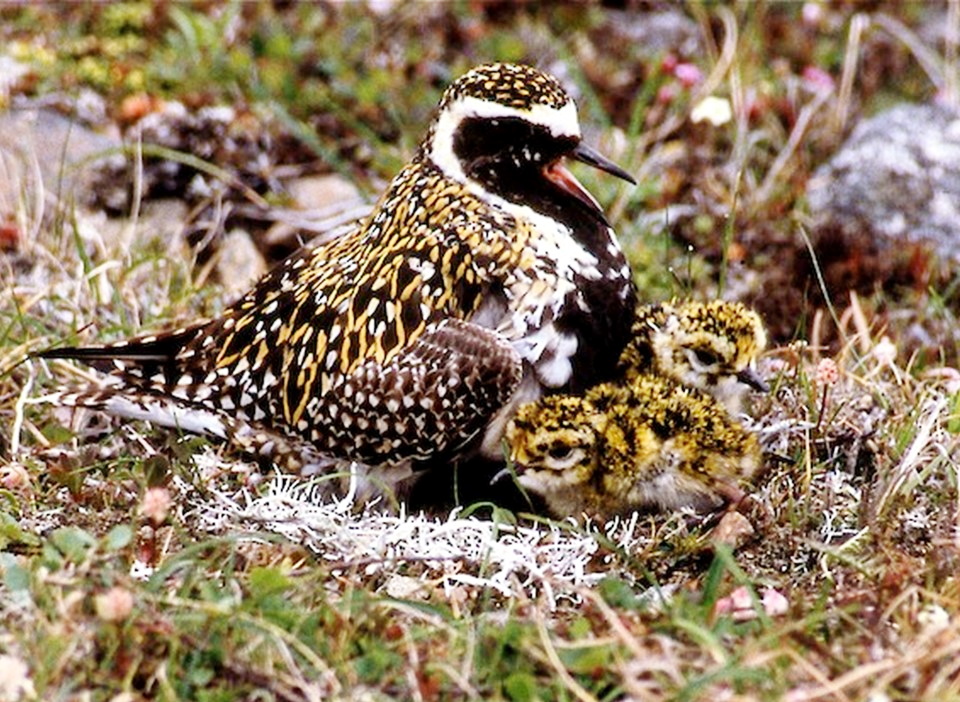 Kōlea dad with chicks, Nome. ©Wally Johnson
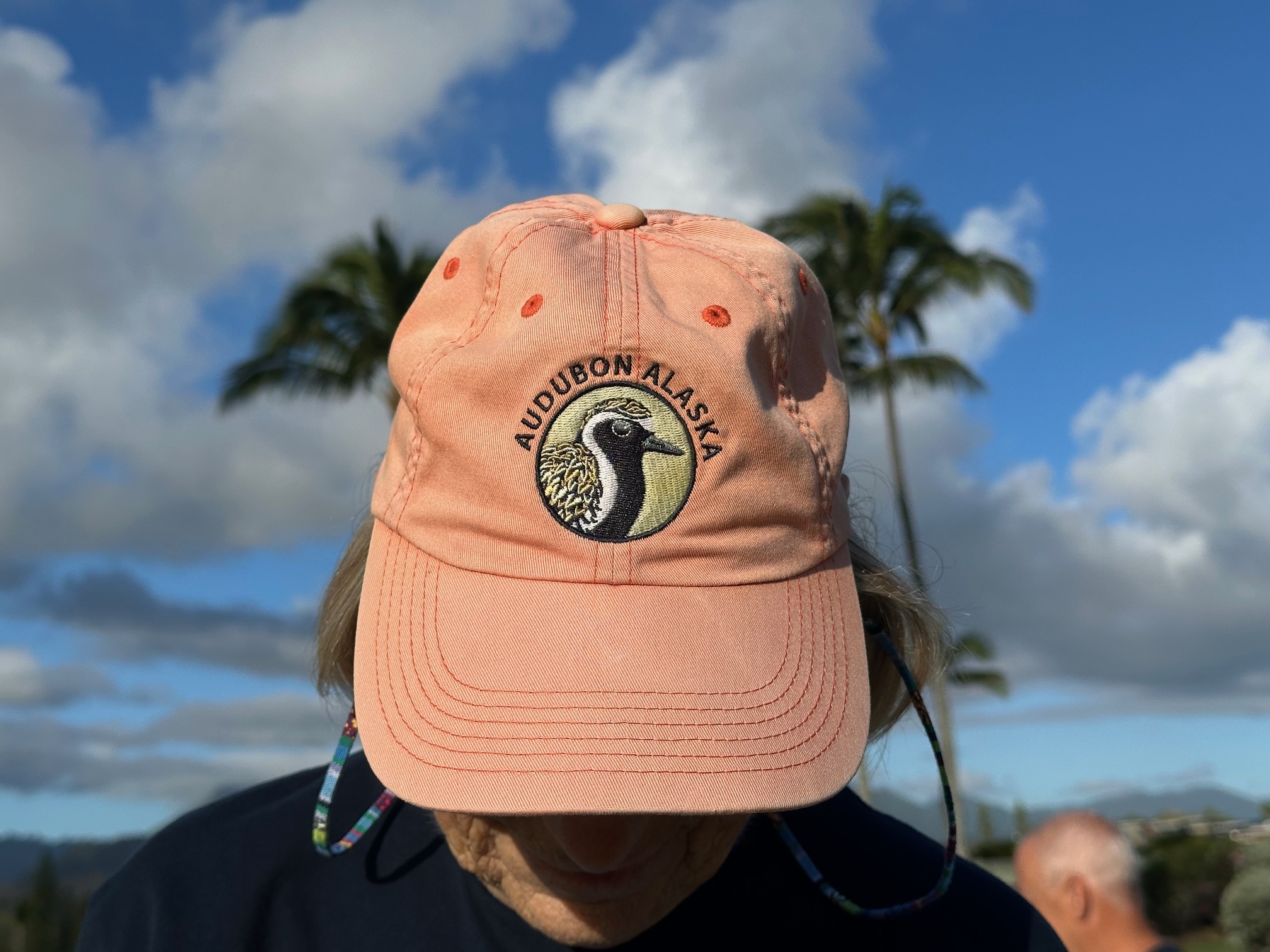 The hat I wore on …
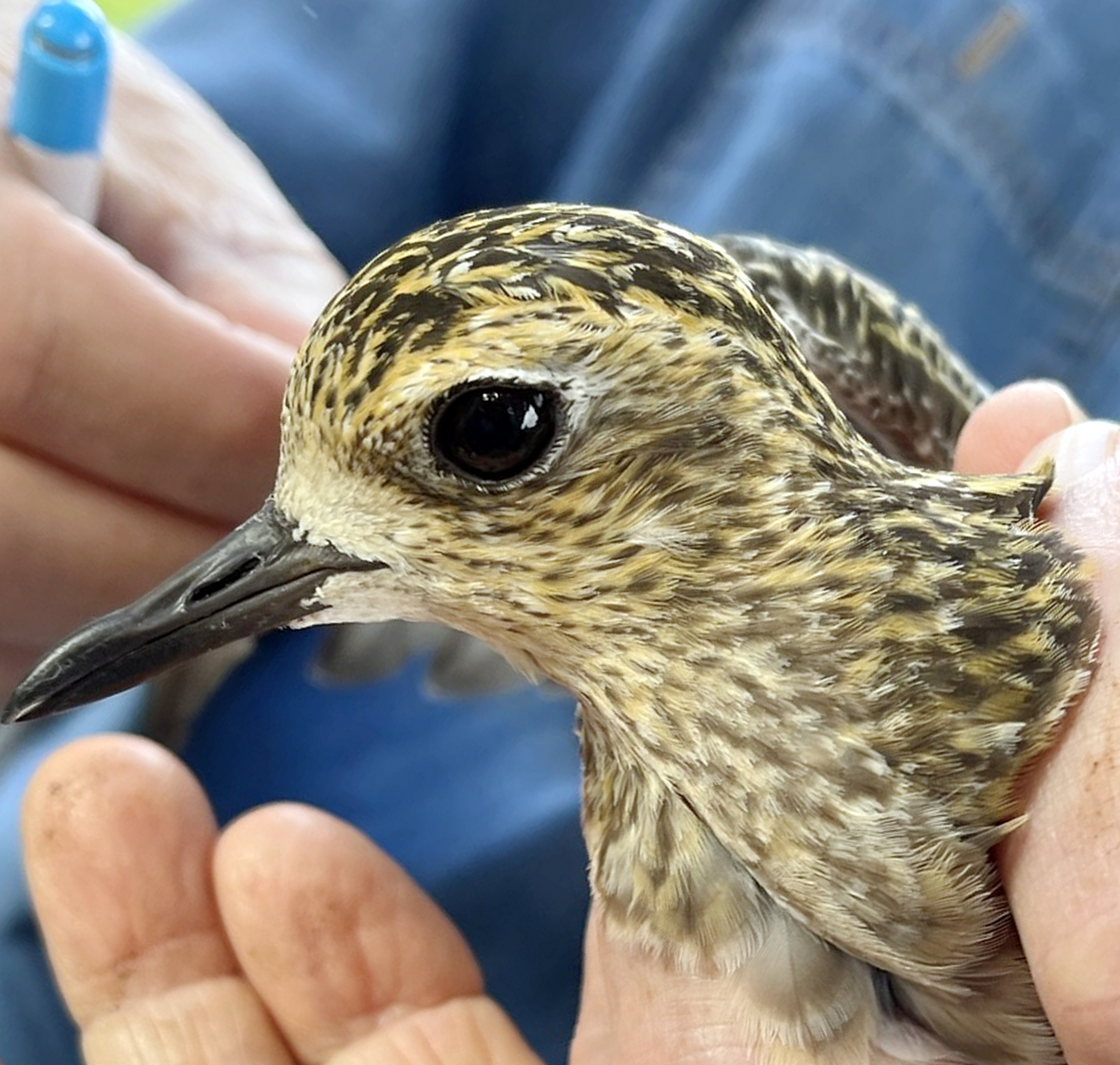
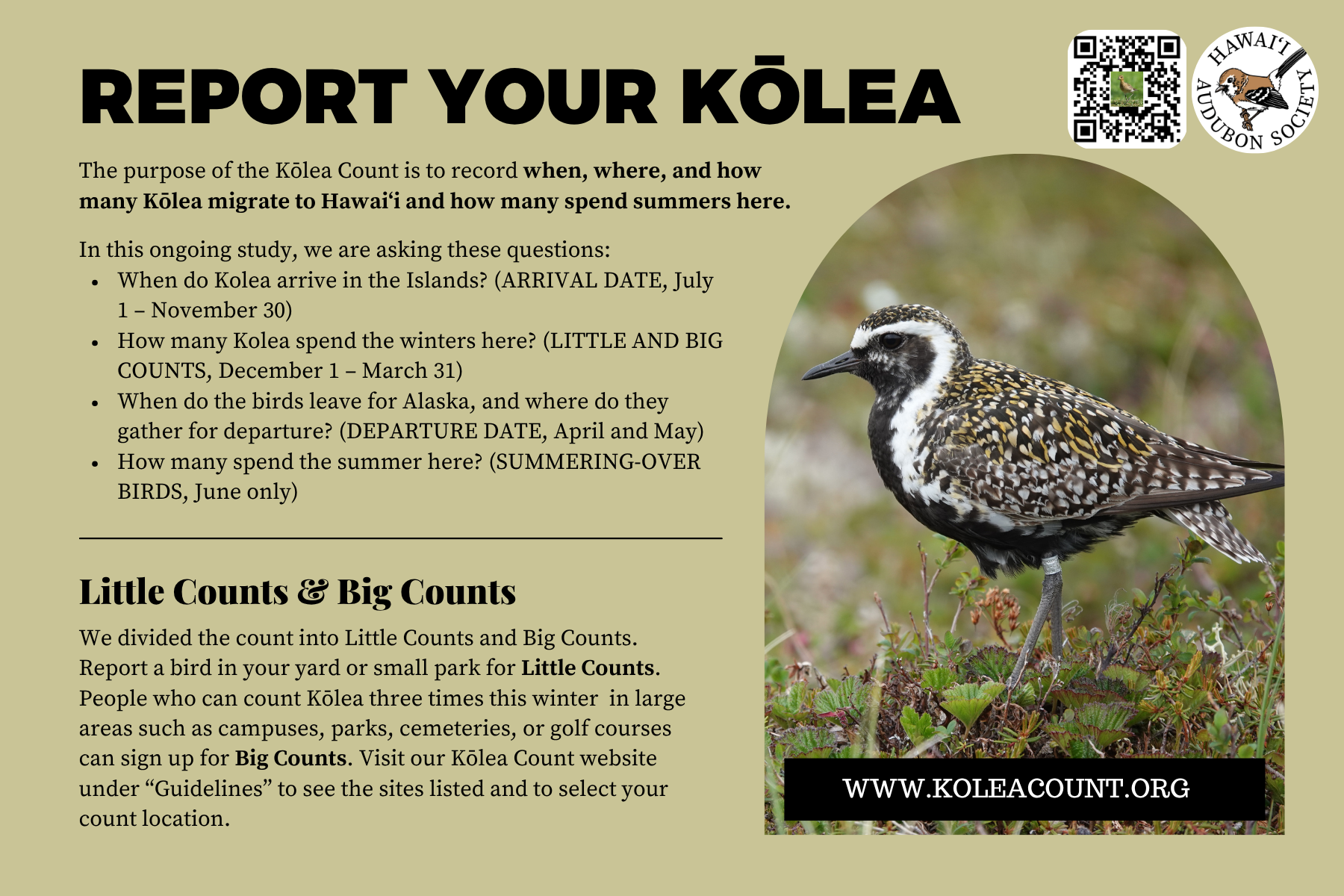 Hawaiʻi Audubon Society’s outreach manager, Elena Arinaga, made these cards to explain our citizen science project Kōlea Count. Get one at Saturday’s kōlea festival (see below.)
 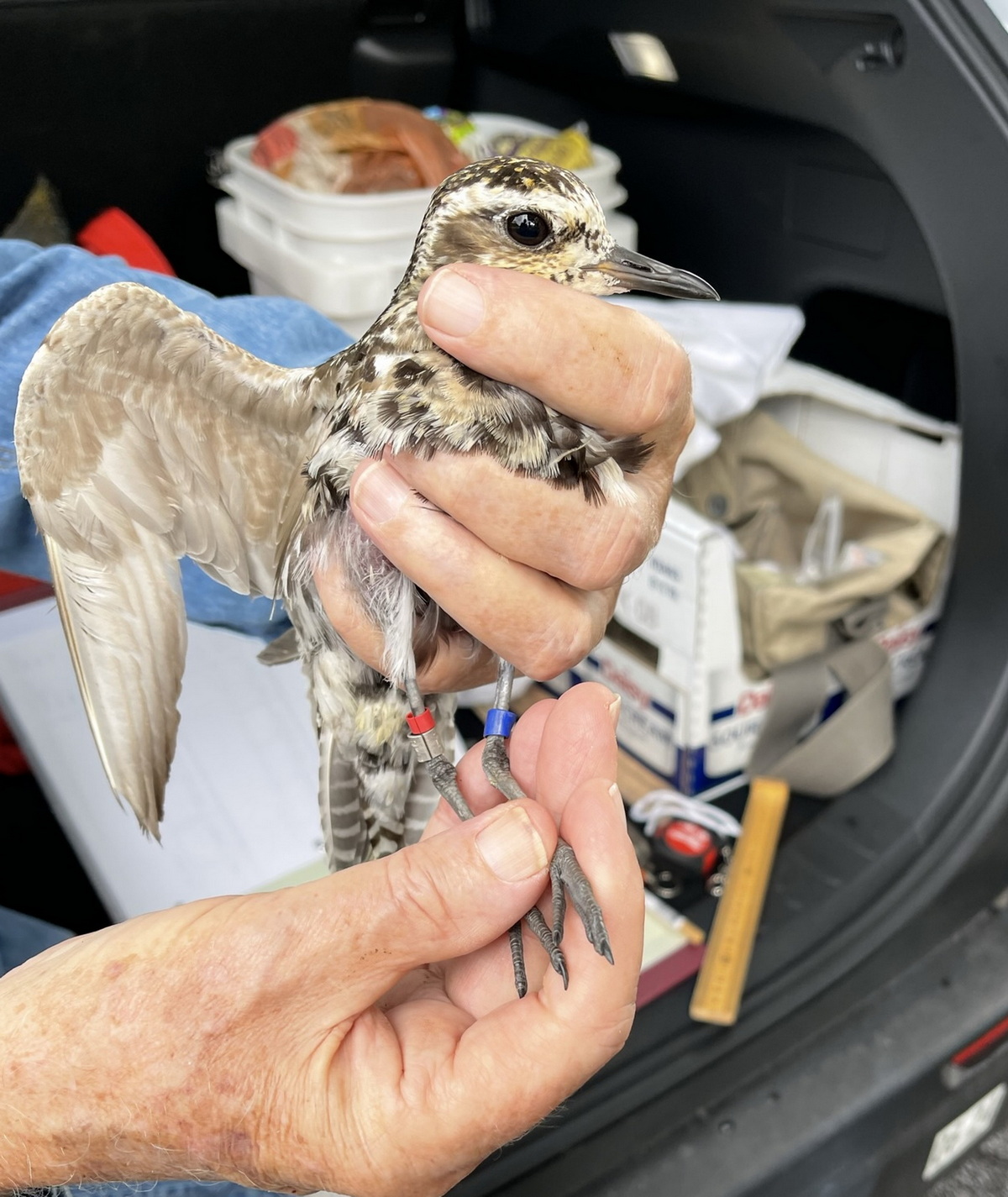 Mr. Necker in Wally Johnson’s loving hands, October 22, 2022. ©Susan Scott
 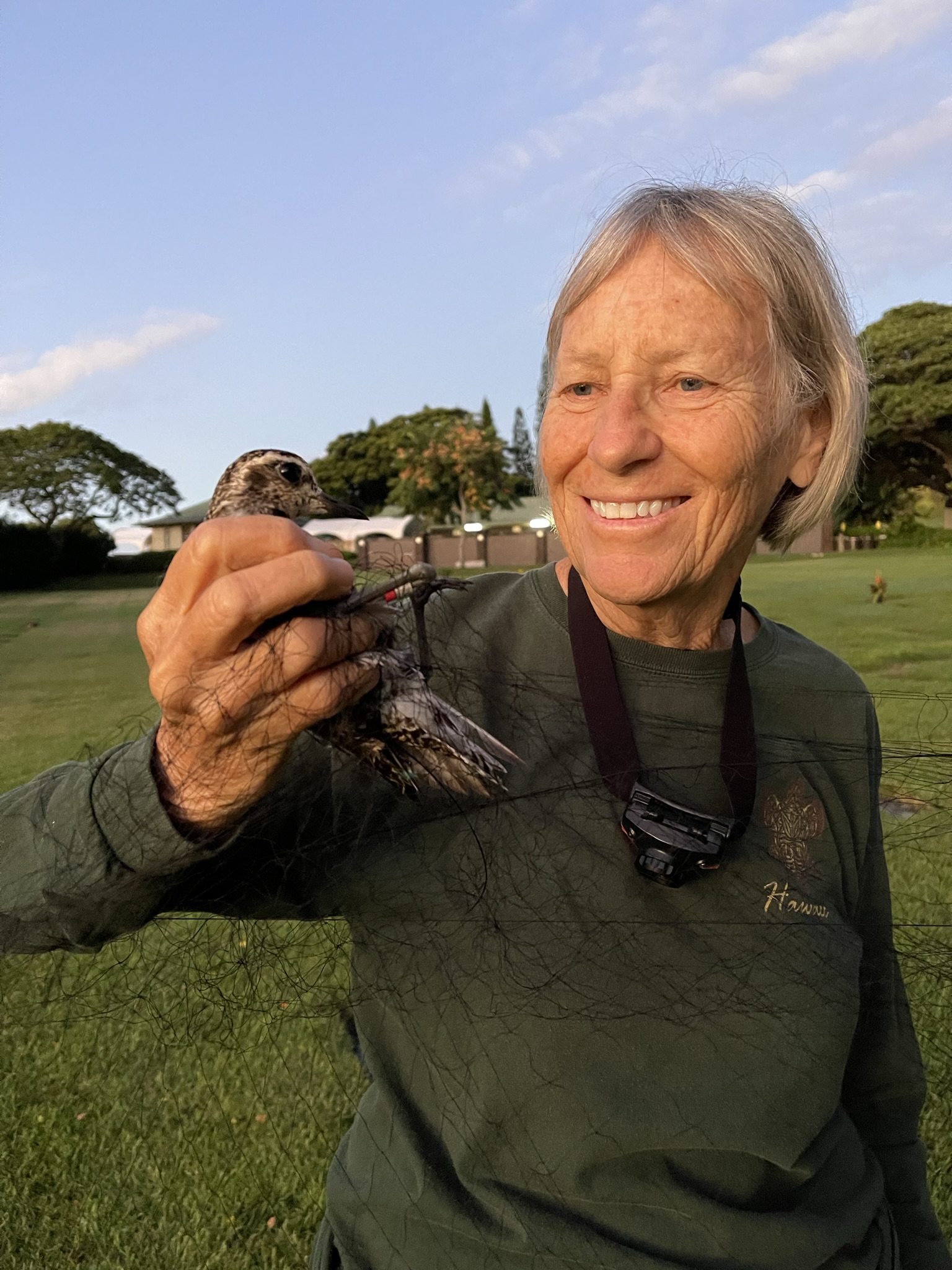 Mr. Necker gave me the honor of flying into the mist net I was monitoring at Punchbowl Cemetery. We Hawaiʻi Audubon volunteers were there to recapture the study birds and relieve them of their satellite-tag backpacks. I was so excited that Mr. Necker had made it back, I asked another volunteer to take this picture with my phone.
 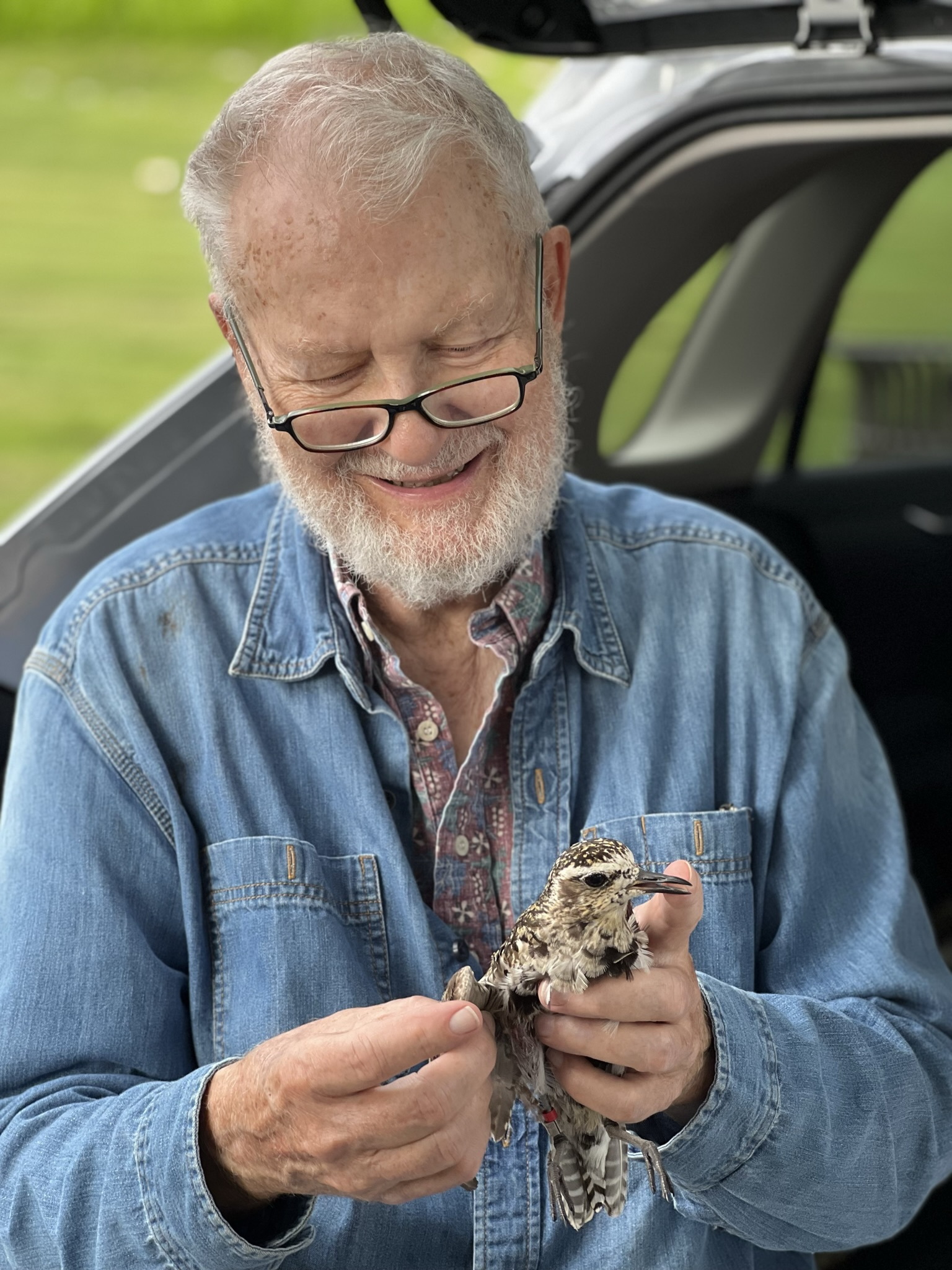 A happy Wally Johnson checking on Mr. Necker’s feathers. The bird’s tiny backpack did not show any ill affects on the bird’s back or legs. ©Susan Scott
 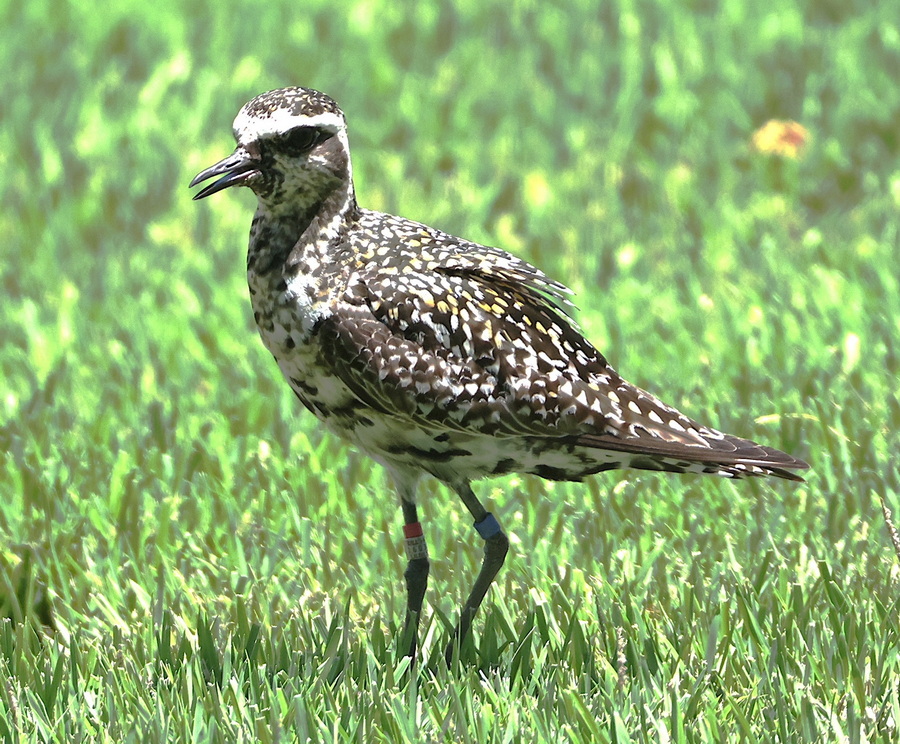 Mr. Necker looking good last week, August 21, 2025. Note that the bird has already shed most of its breeding-colored feathers. If we didn’t know the identity of this bird, we would not be able to tell whether it’s male or female. ©Tom Fake
 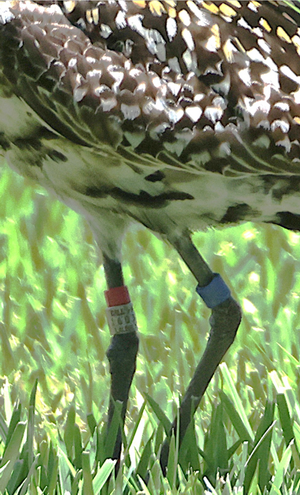 Close-up of Mr. Necker’s leg bands. ©Tom Fake.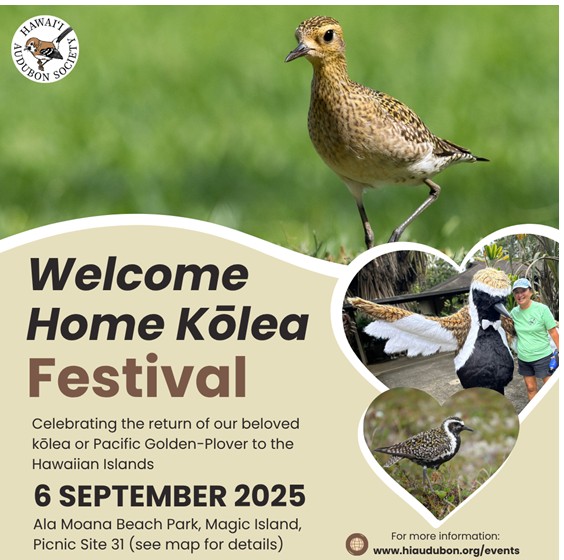
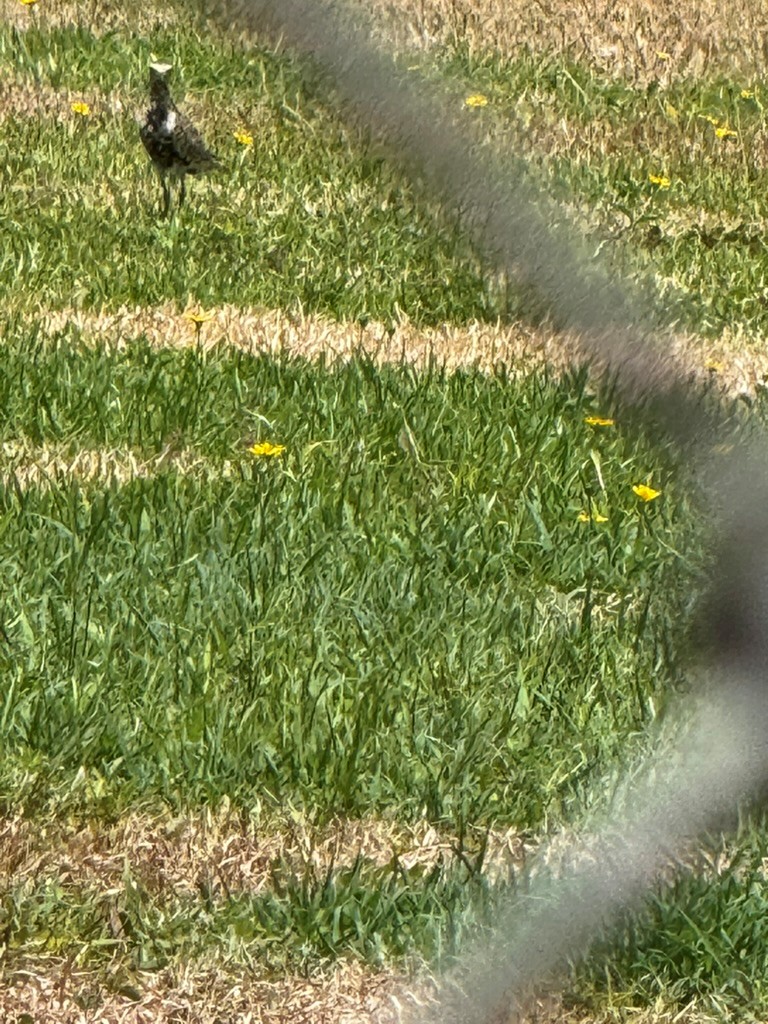 Carolyn calls this bird Jill.
 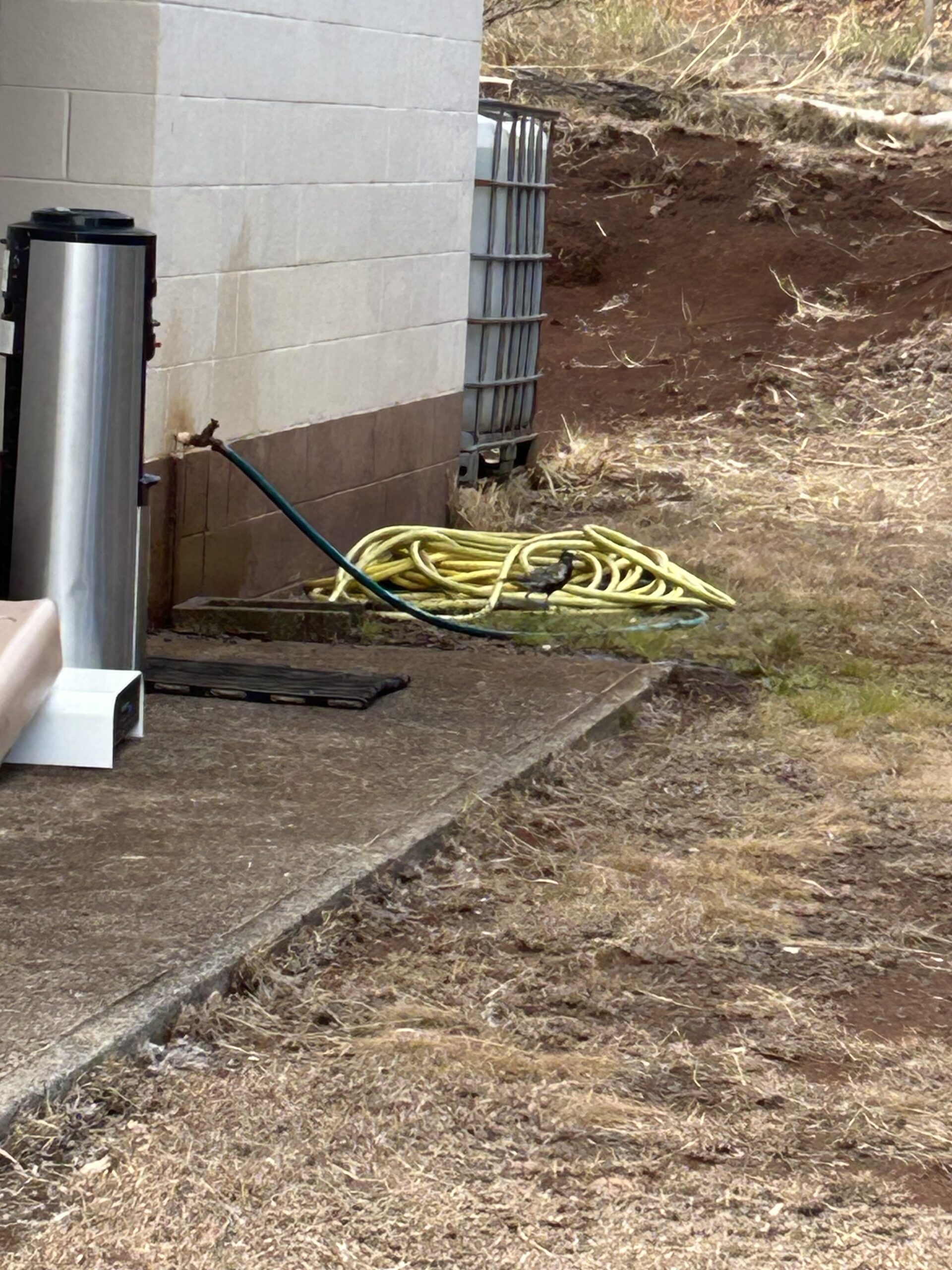 Another photo of a returnee that Suzan Harada sent to Sigrid Southworth who sent it to me. Suzan works at the Palehua baseyard on Tuesdays and photographed this bird on the hose August 5, 2025.
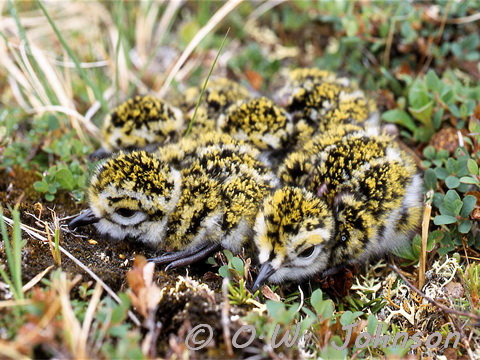
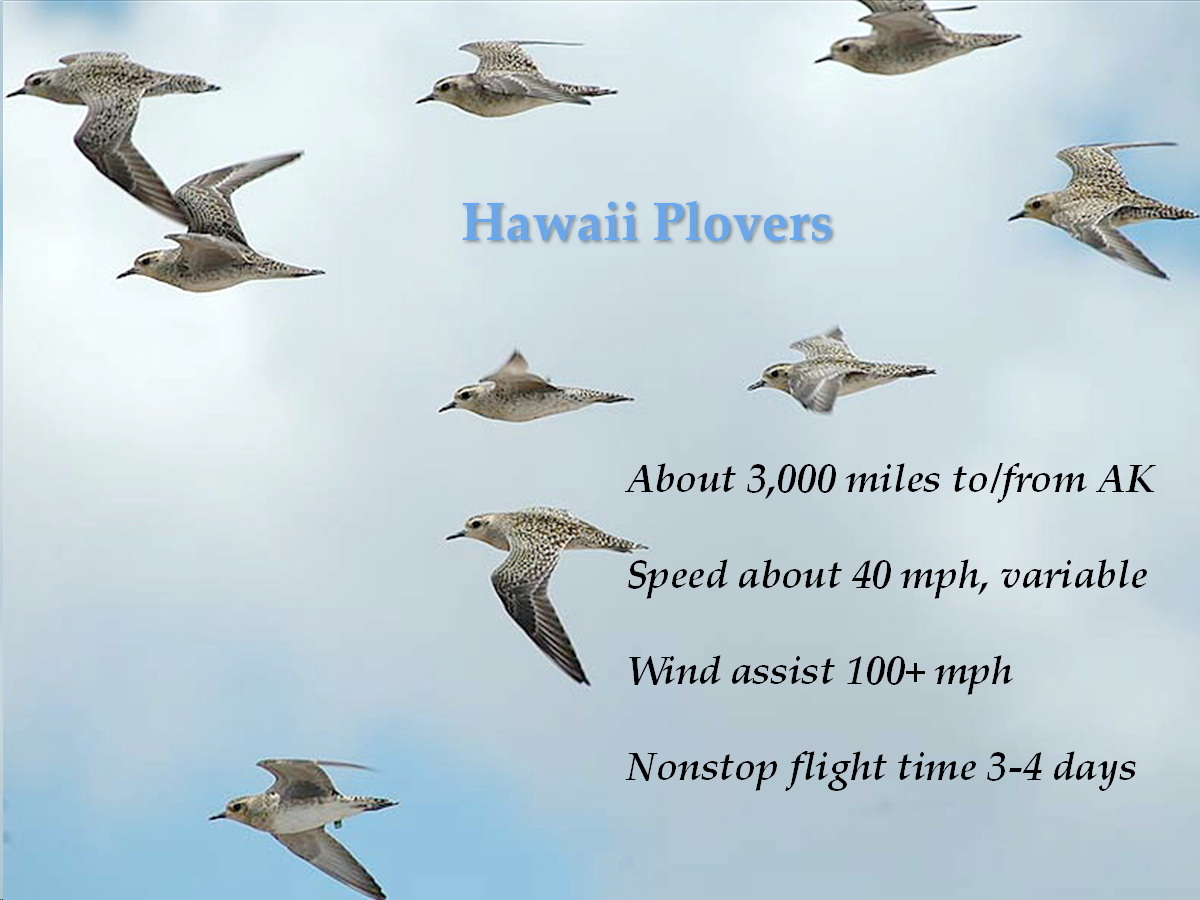 © Graphic by O.W. Johnson
 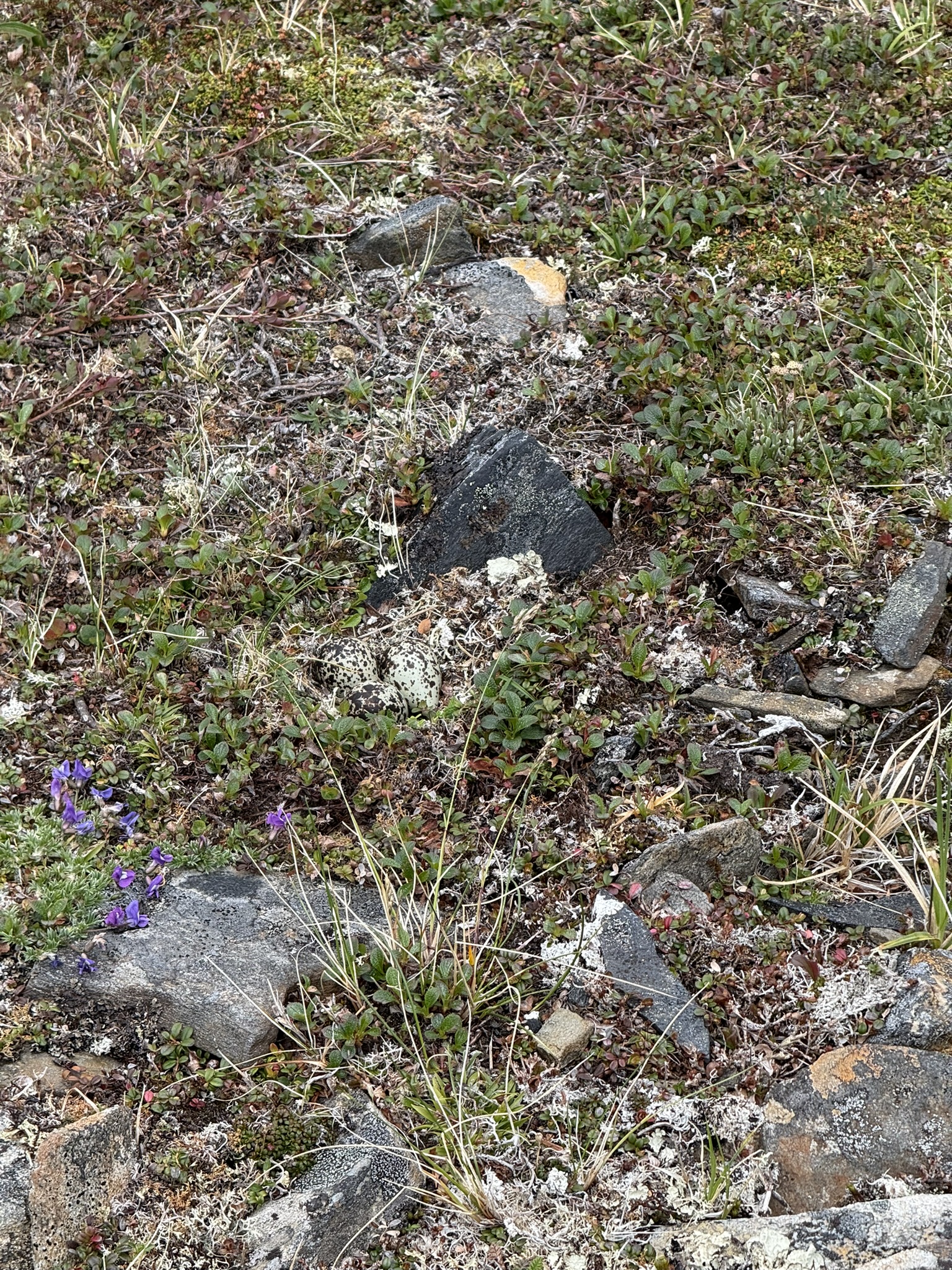 Three kōlea eggs in a Nome tundra nest June , 2025. Kōlea usually lay four. (Don’t see them? Look below.) ©Susan Scott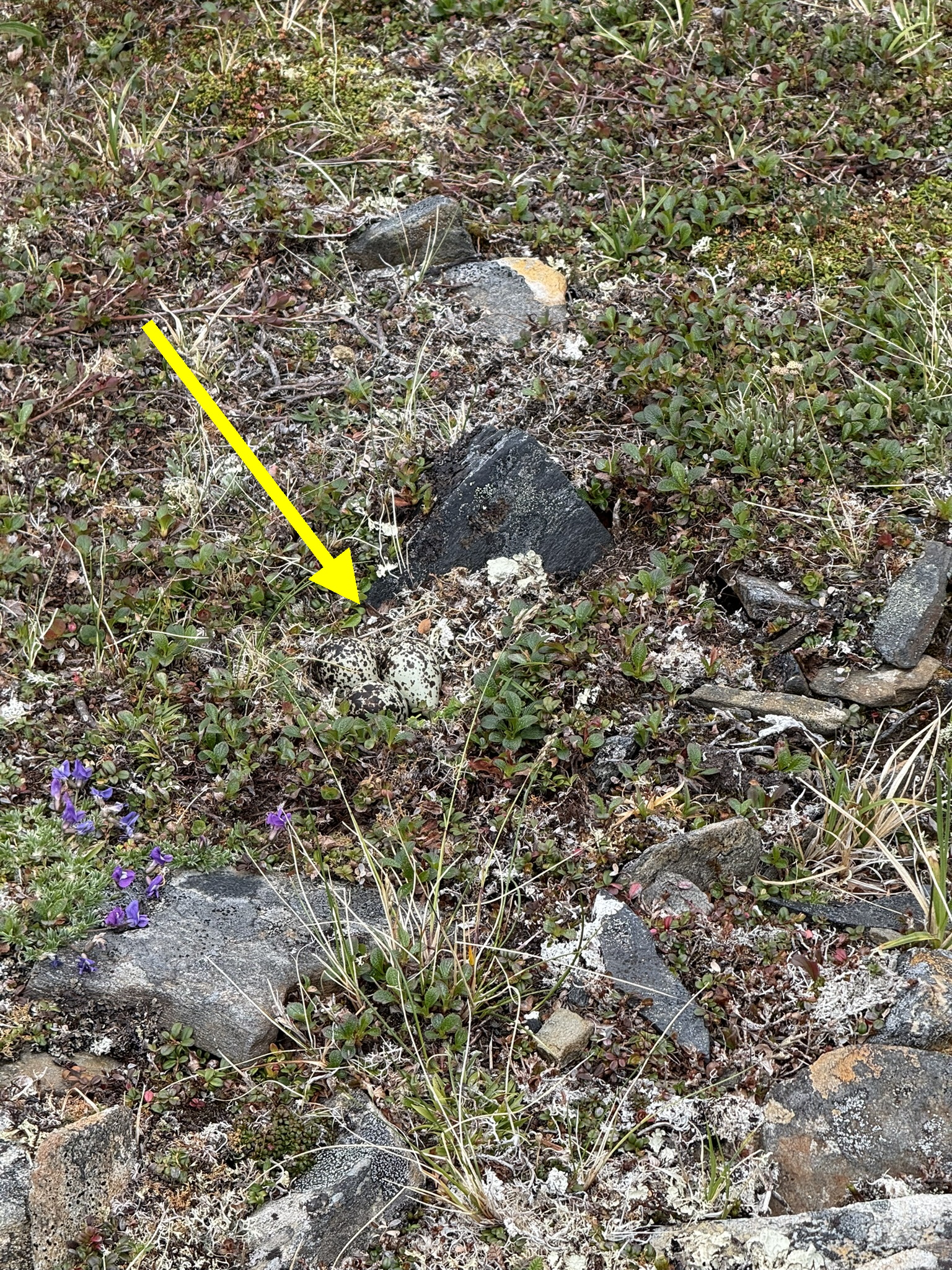
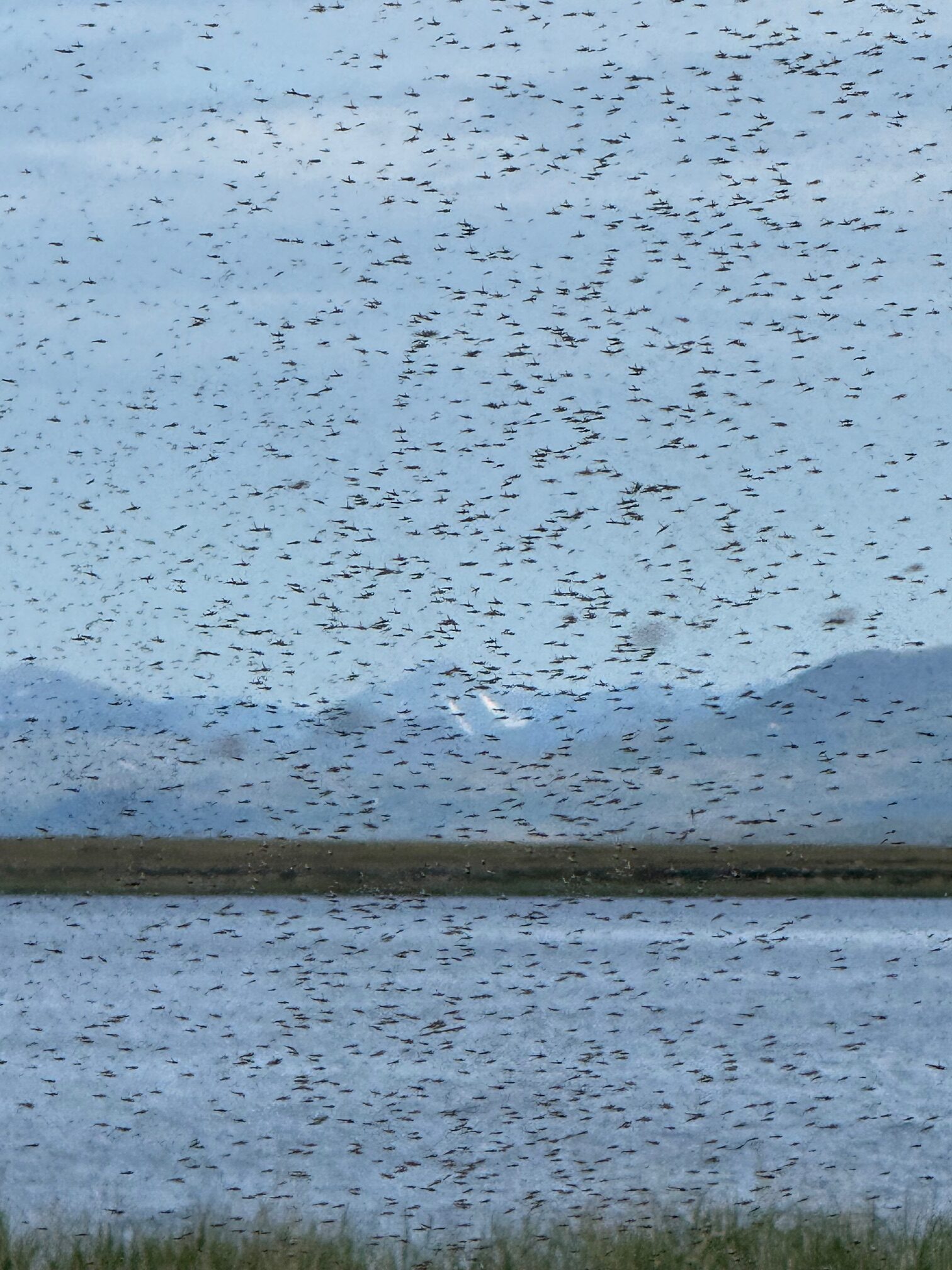 Nome residents call these nonbiting insects midges but some of us know them as gnats. Tundra insects provide chicks with ample food for fast growth. ©Susan Scott
 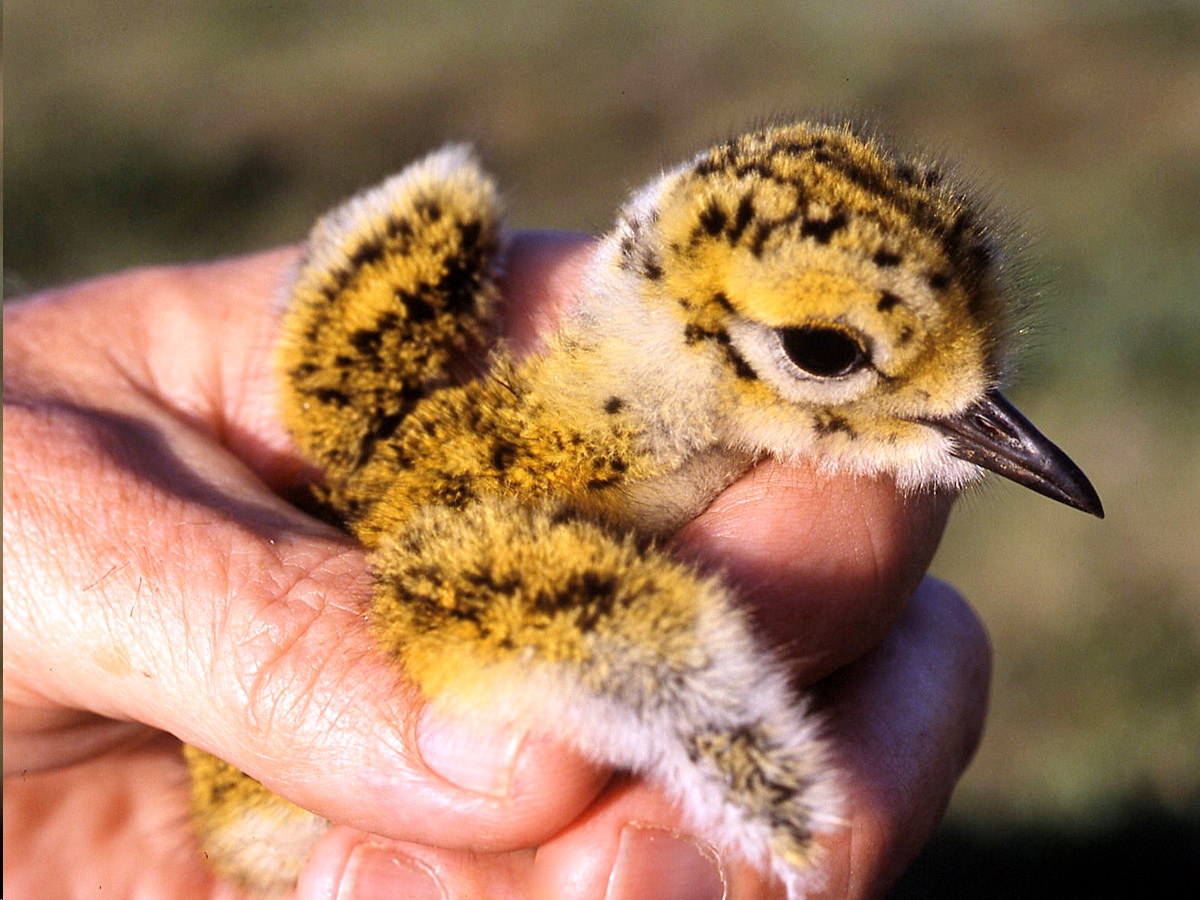 If all goes well, this kōlea chick’s little wings will be flying in about one month. © O.W. Johnson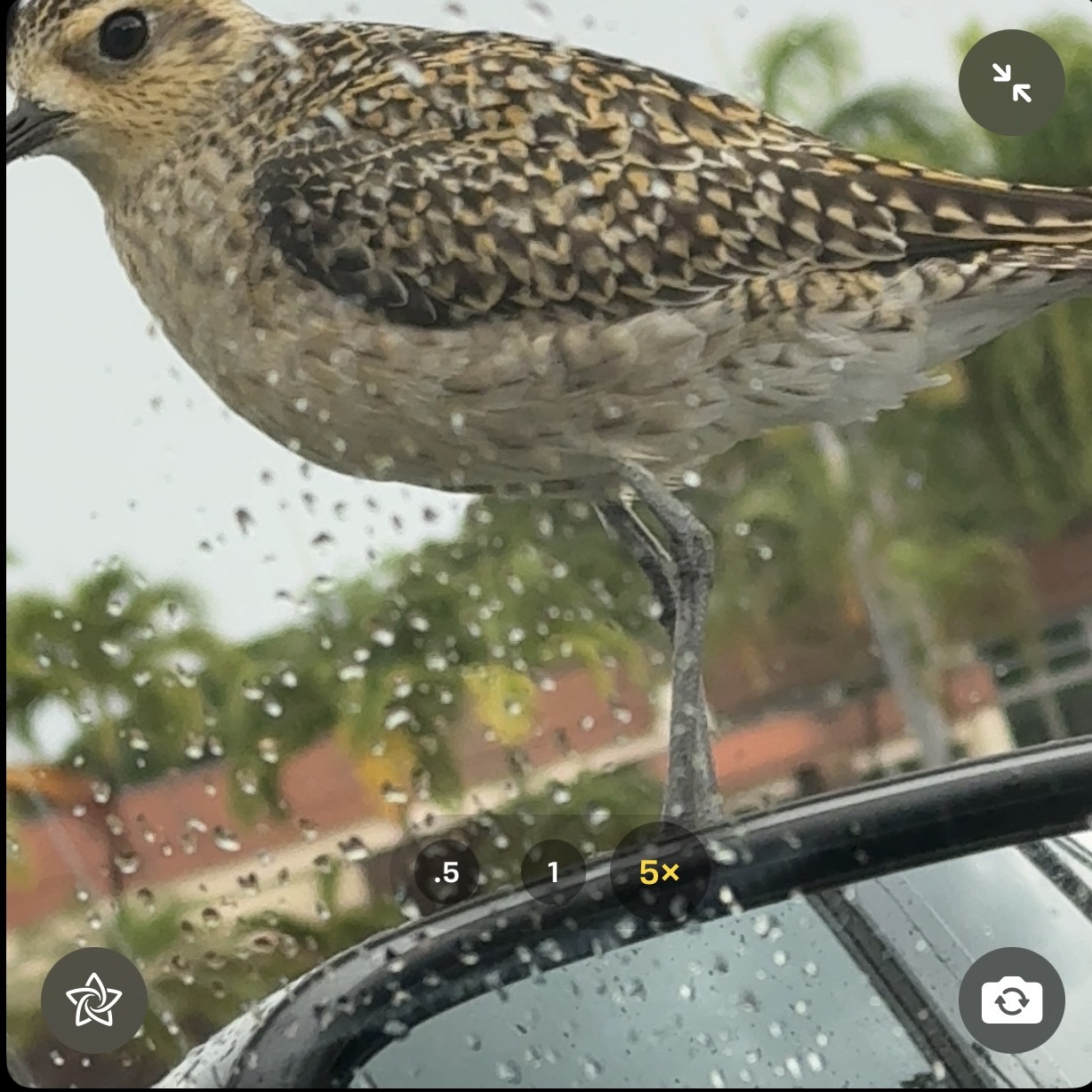
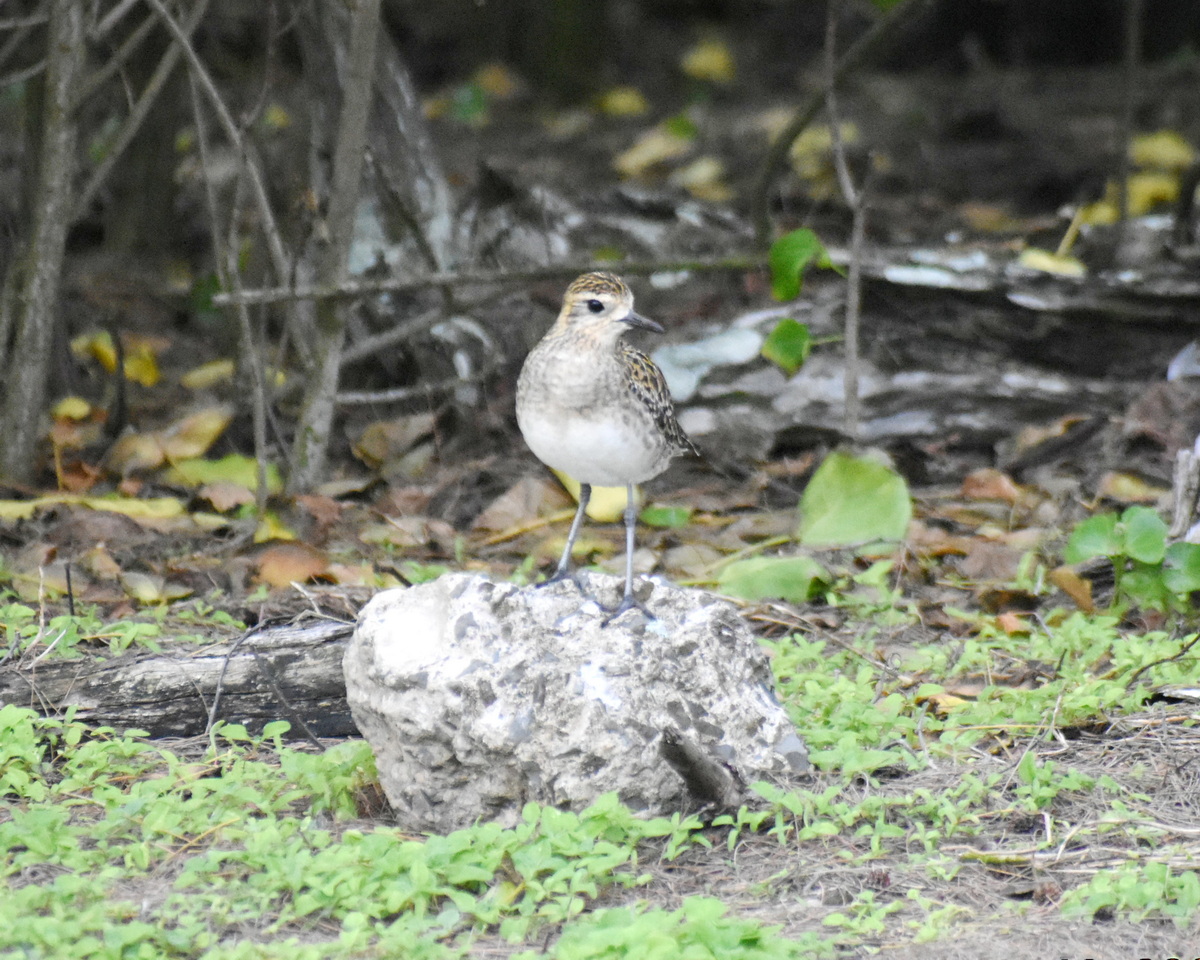 A September arrival, Oahu North Shore. Because kōlea begin dropping their breeding feathers (molting) while still sitting on eggs in Alaska, it’s impossible to tell males from females when the birds arrive in Hawaiʻi. Some are mottled. This one is already wearing its winter outfit. ©Laura Zoller
 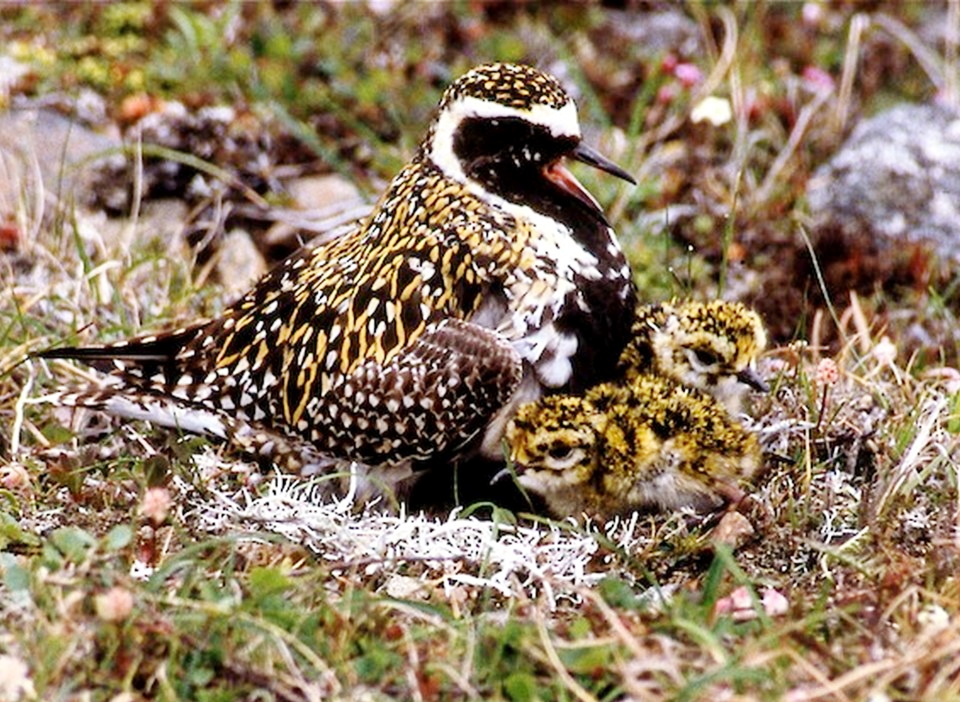 This parent is guarding its newly-hatched chicks. Migratory shorebirds have so many obstacles to overcome it’s a miracle of nature that any survive at all. ©Wally Johnson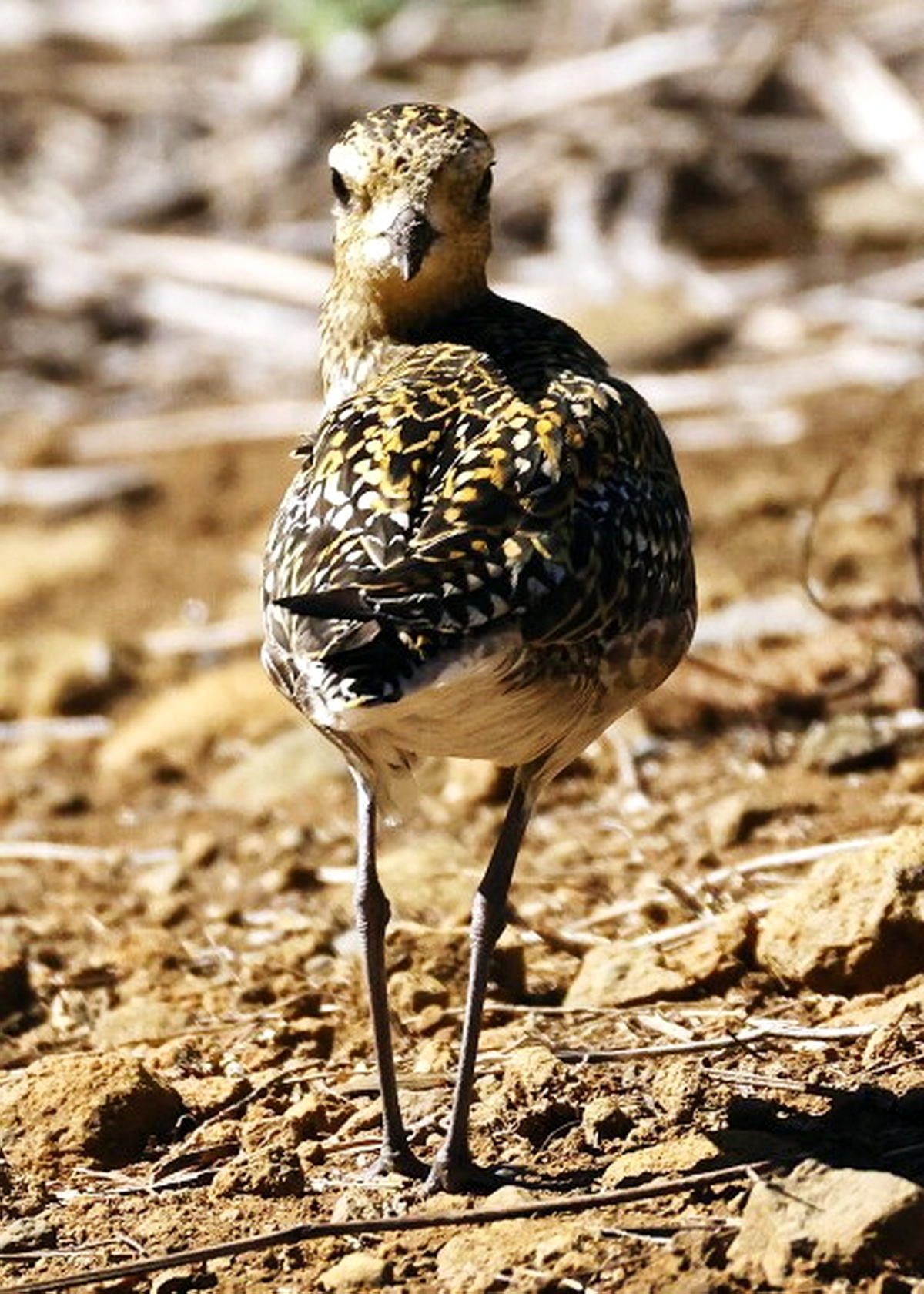
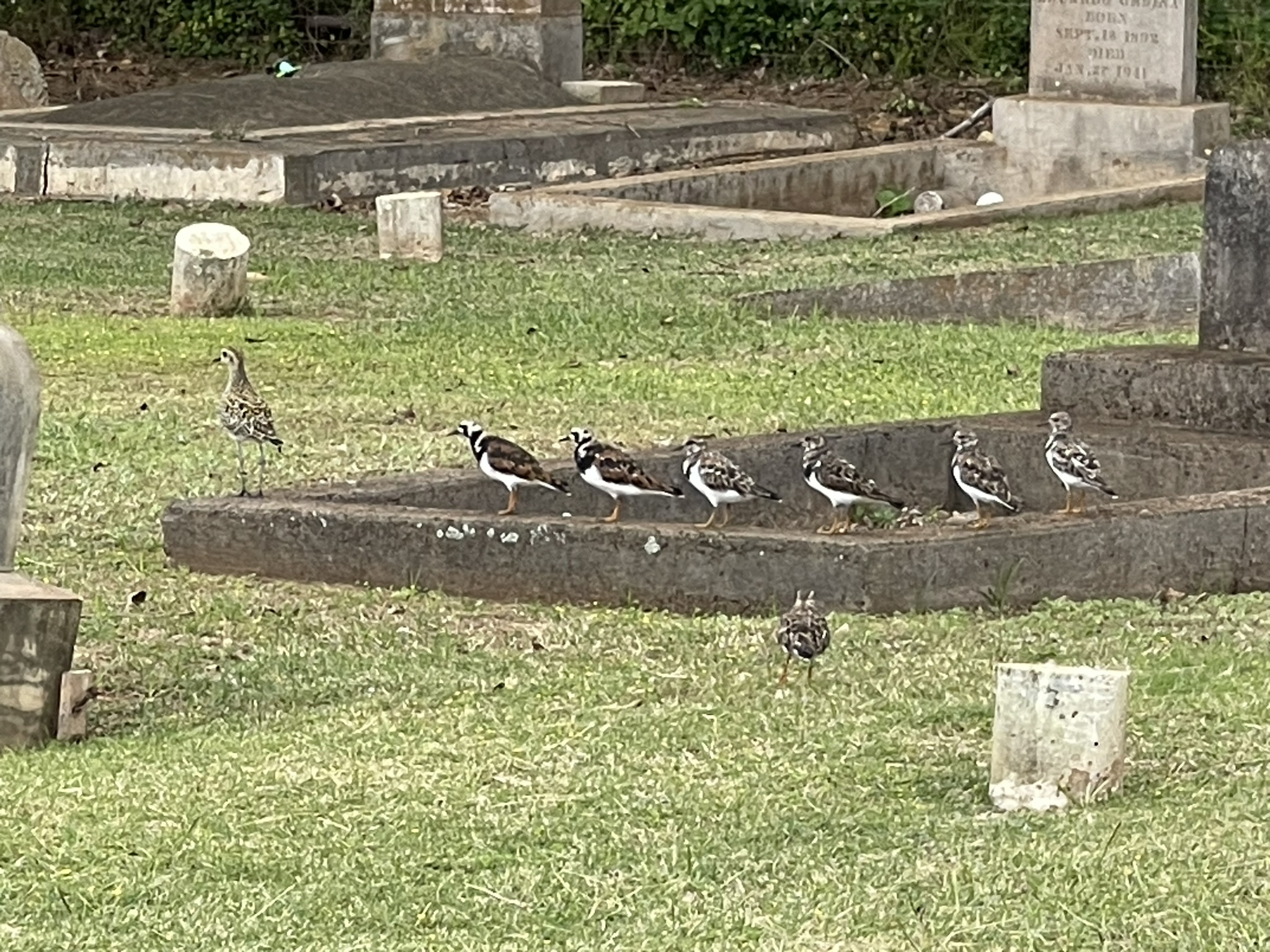 This kōlea seems to be leading a parade of ʻakekeke, or ruddy turnstones. The species often forage together. Puʻuiki Cemetery in Waialua is one of the places I count. ©Susan Scott
 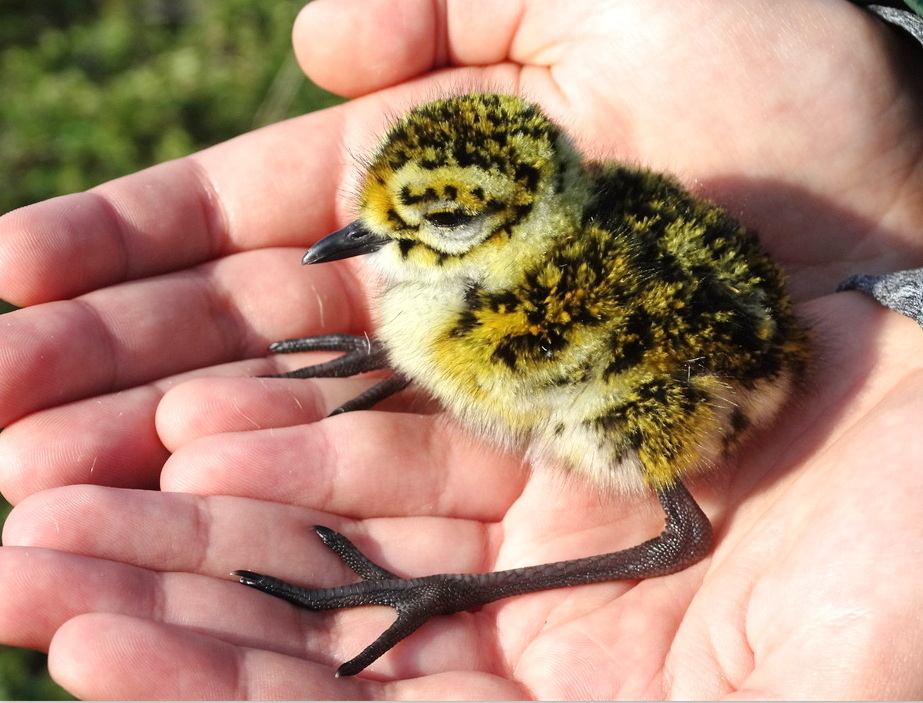 A newly hatched kōlea chick in Alaska. Legs are adult-sized at hatching. ©Wally Johnson
  Shorebird parents don’t feed their chicks but follow the youngsters as they forage. Parents sit on their chicks to warm them when weather turns stormy. ©Wally Johnson
 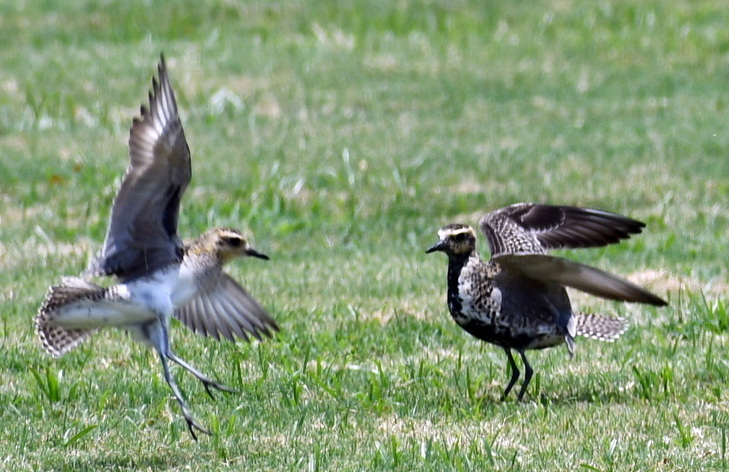 When this young plover (left) trespassed on another’s patch, the established owner put up a fight. The squabble occurred in Punchbowl Cemetery. The newcomer moved on. (First year birds have no breeding colors.) ©Susan Scott
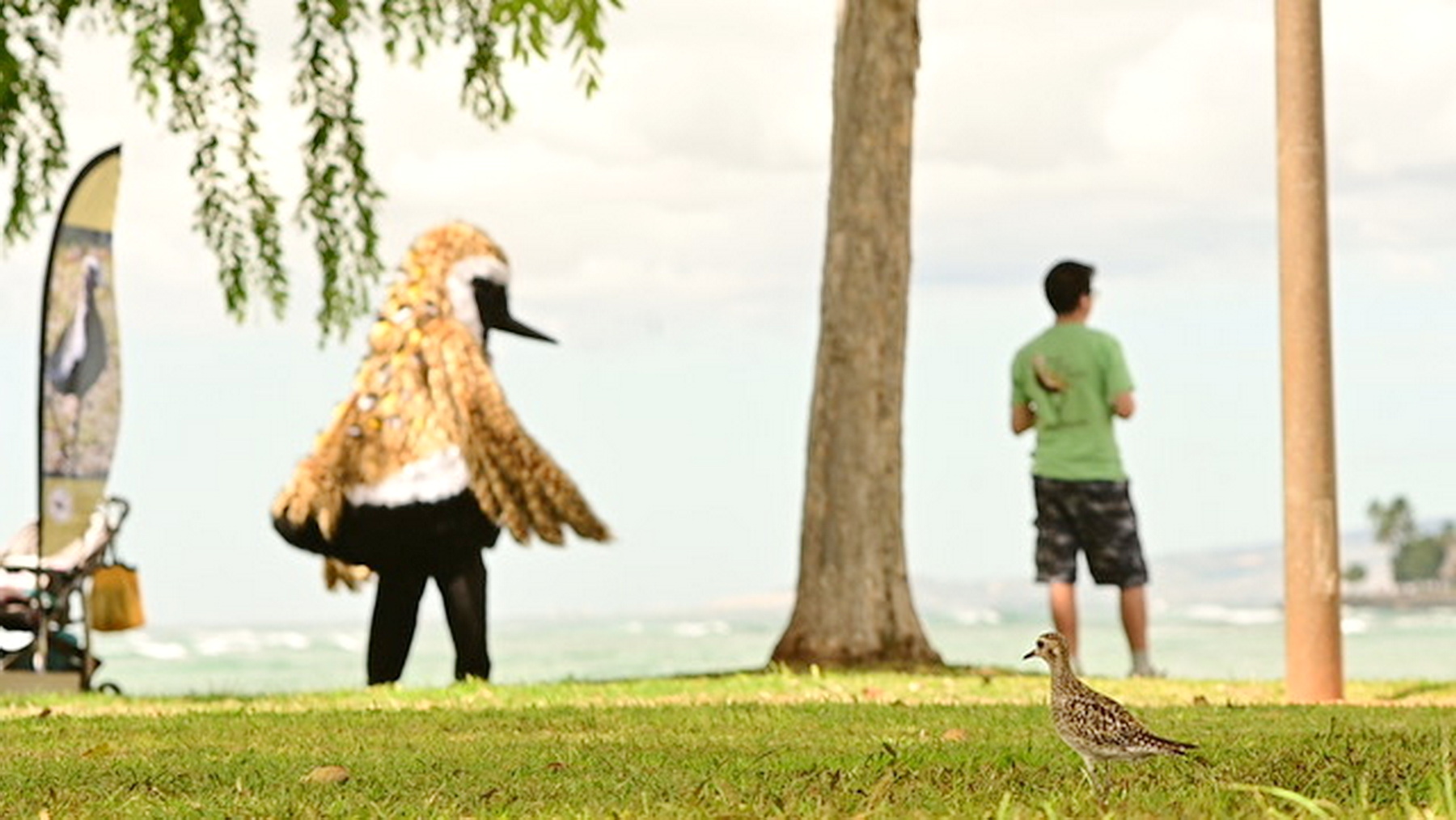 Four kōlea: From left, the new kōlea-in-tuxedo flag, mascot Kōlea Nui, volunteer Andres Jojoa Ortega in his EVERY KŌLEA COUNTS T-shirt, and lower right, a curious resident kōlea checking out its namesakes. © Christiaan Phleger
 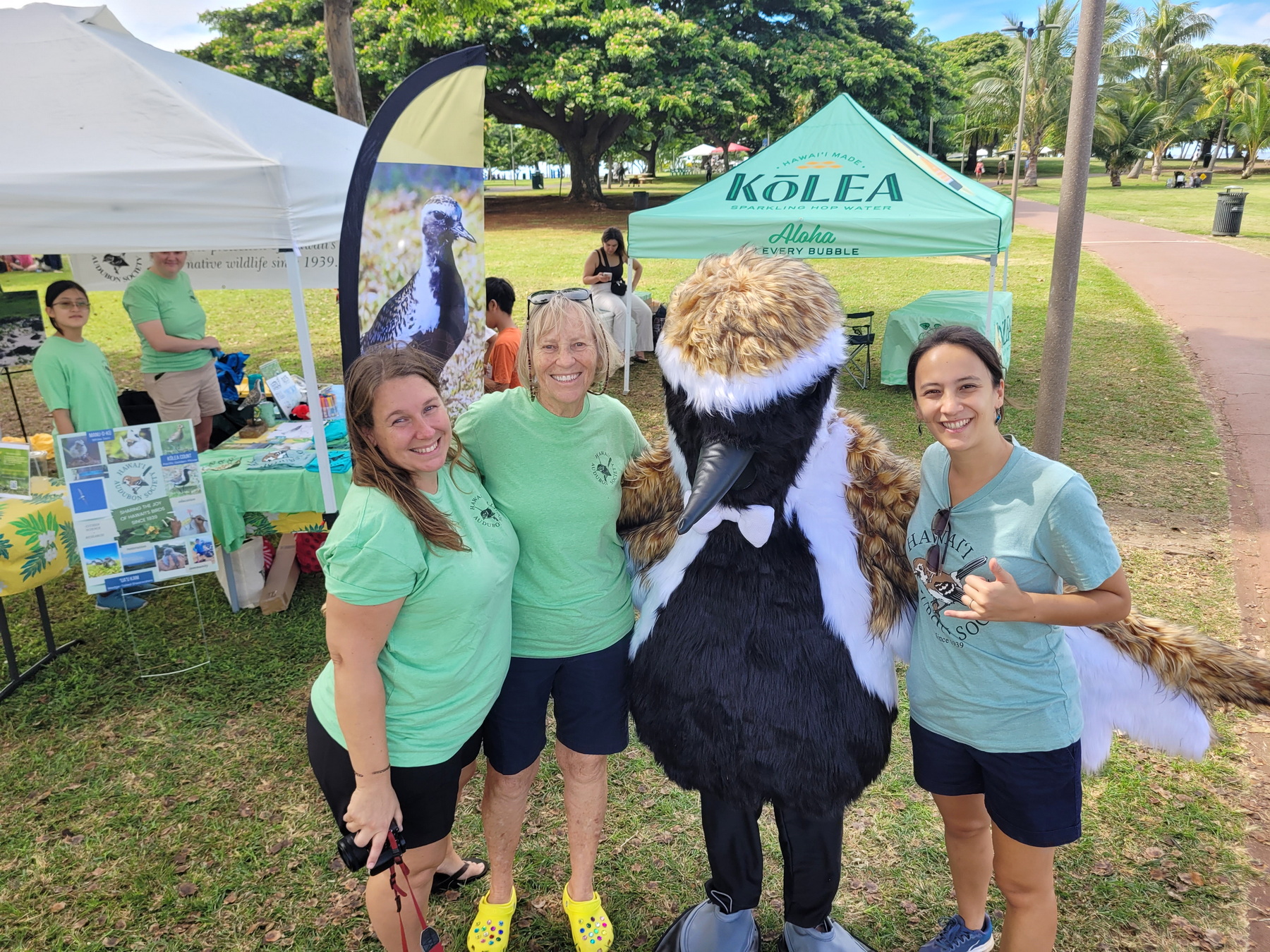 Hawaiʻi Audubon’s Team Kōlea: Foreground from left, Operations Manager Laura Doucette, me, mascot Kōlea Nui, and Education Manager, Elena Arinaga. Left background are Taylor Kim and Charlotte Bender, two of four Kapiolani Community College students who helped with the festival.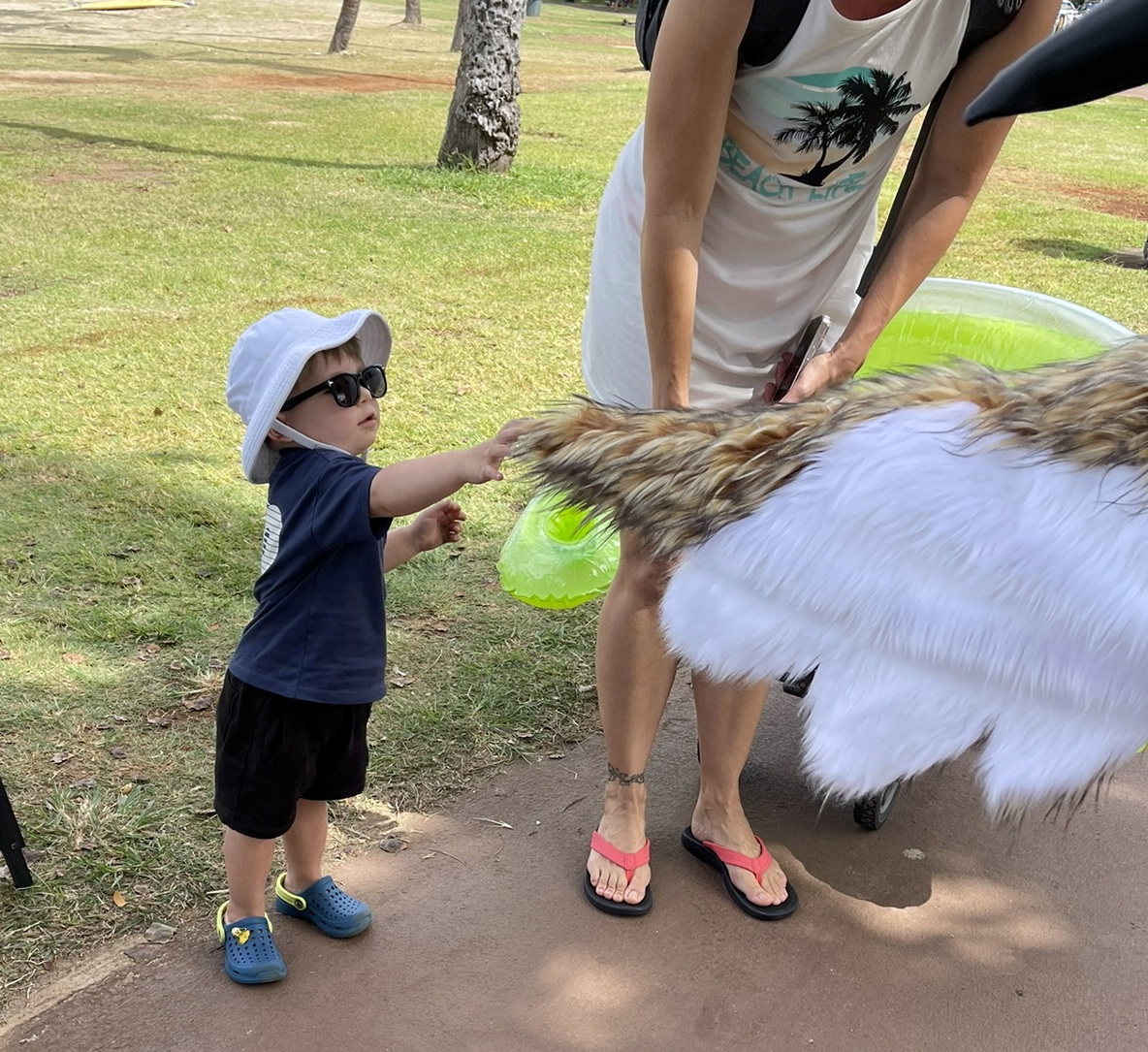
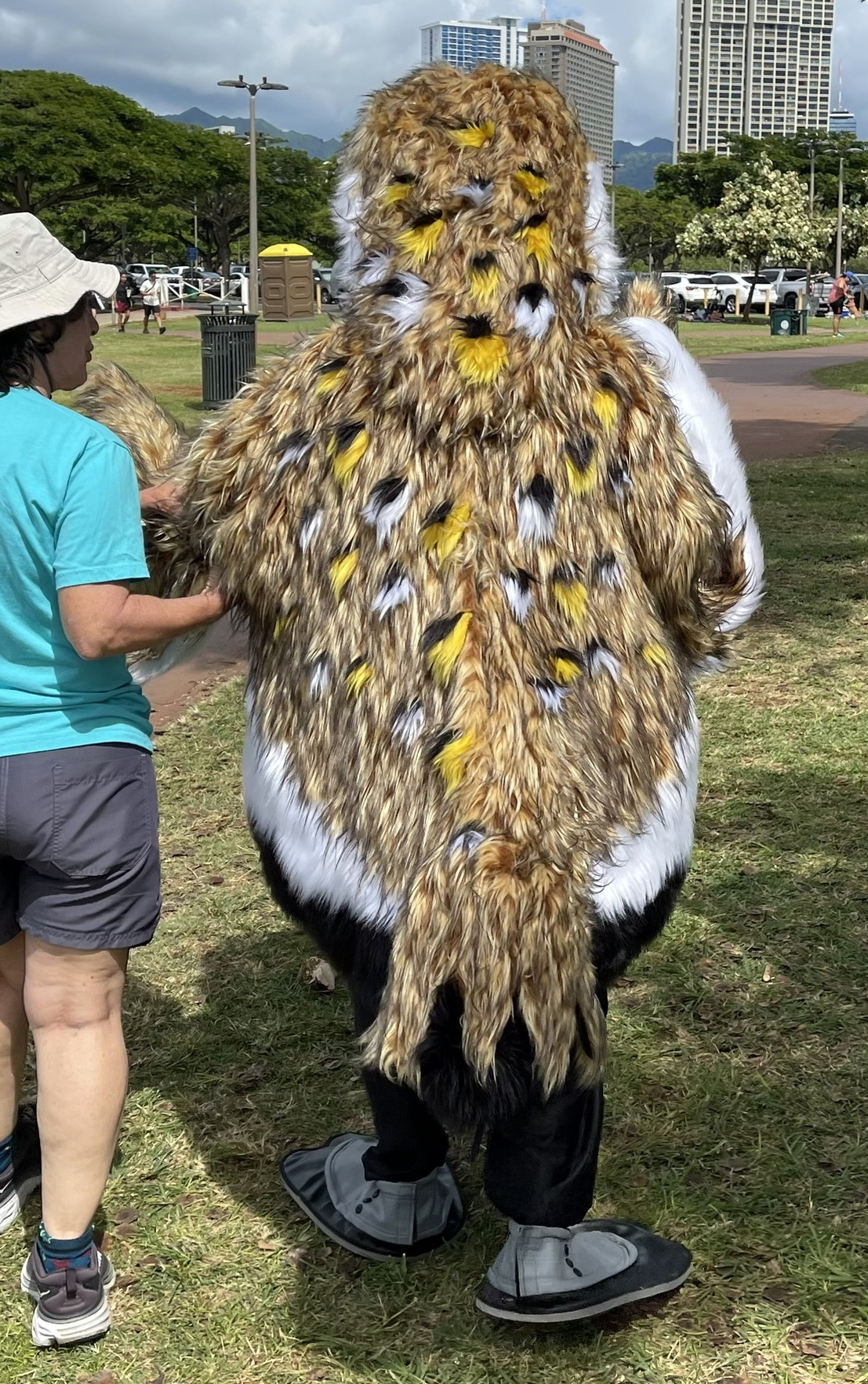
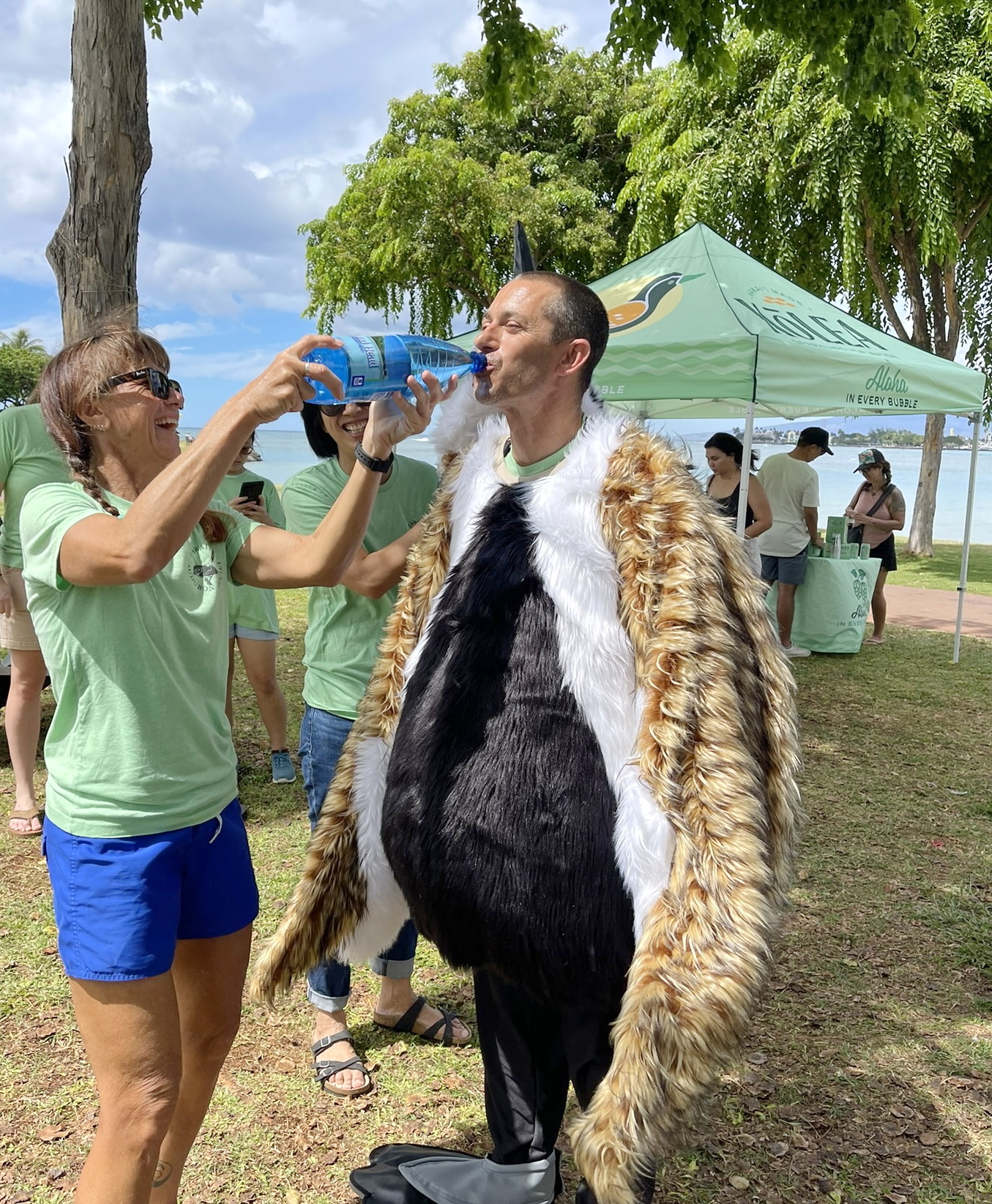 MJ Mazurek gives Kōlea Nui (AKA Josh Fisher) a cold drink of water. Even with an ice-pack vest and a head fan, hugging and dancing with children is hot work. Volunteers took turns wearing the costume. ©Susan Scott
 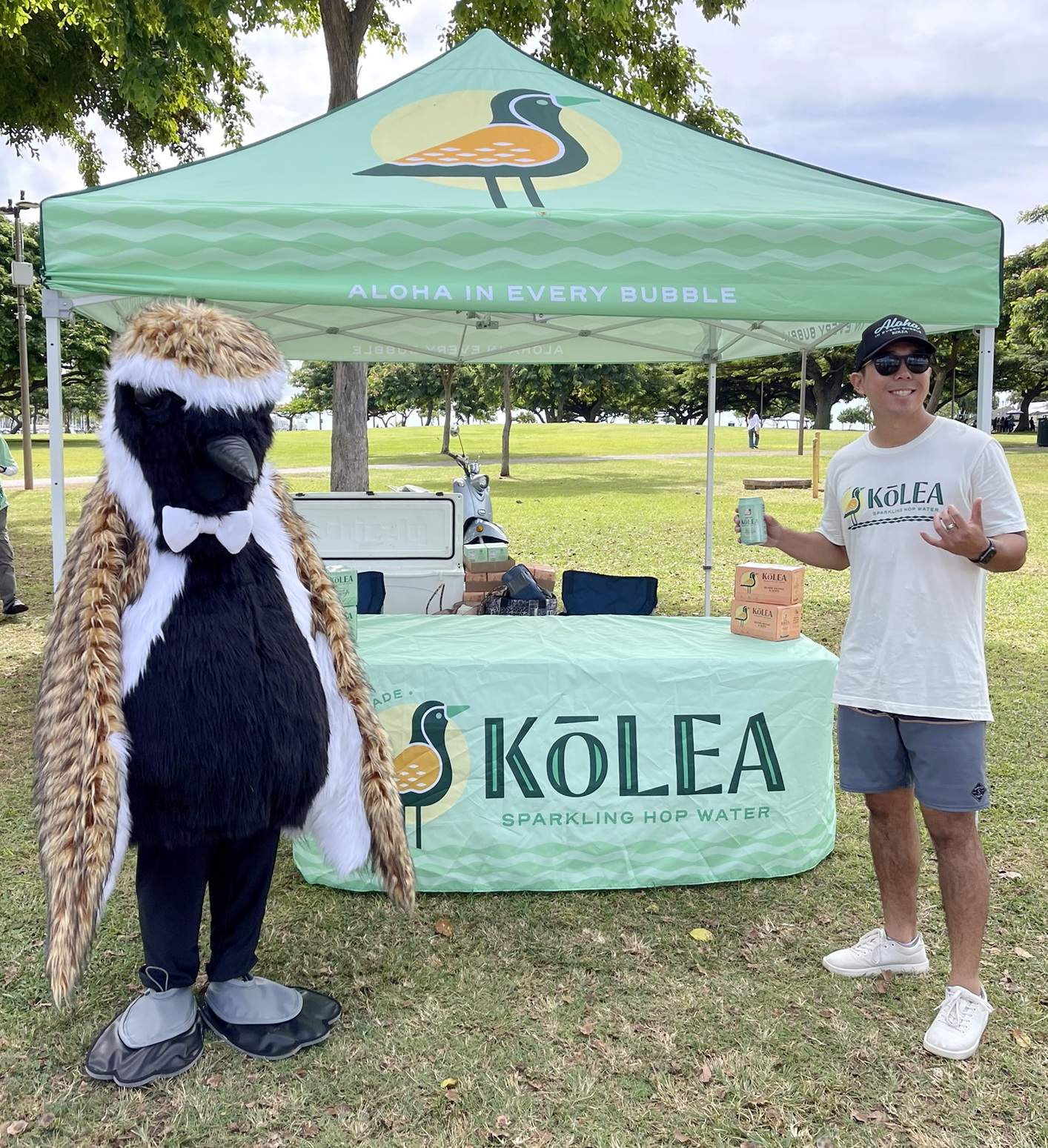 Representatives of the new drink, Kōlea Sparkling Hop Water, (zero alcohol, zero calories) shared the Kōlea Festival with us. Everyone enjoyed the free samples, as well as the company’s logo. ©Susan Scott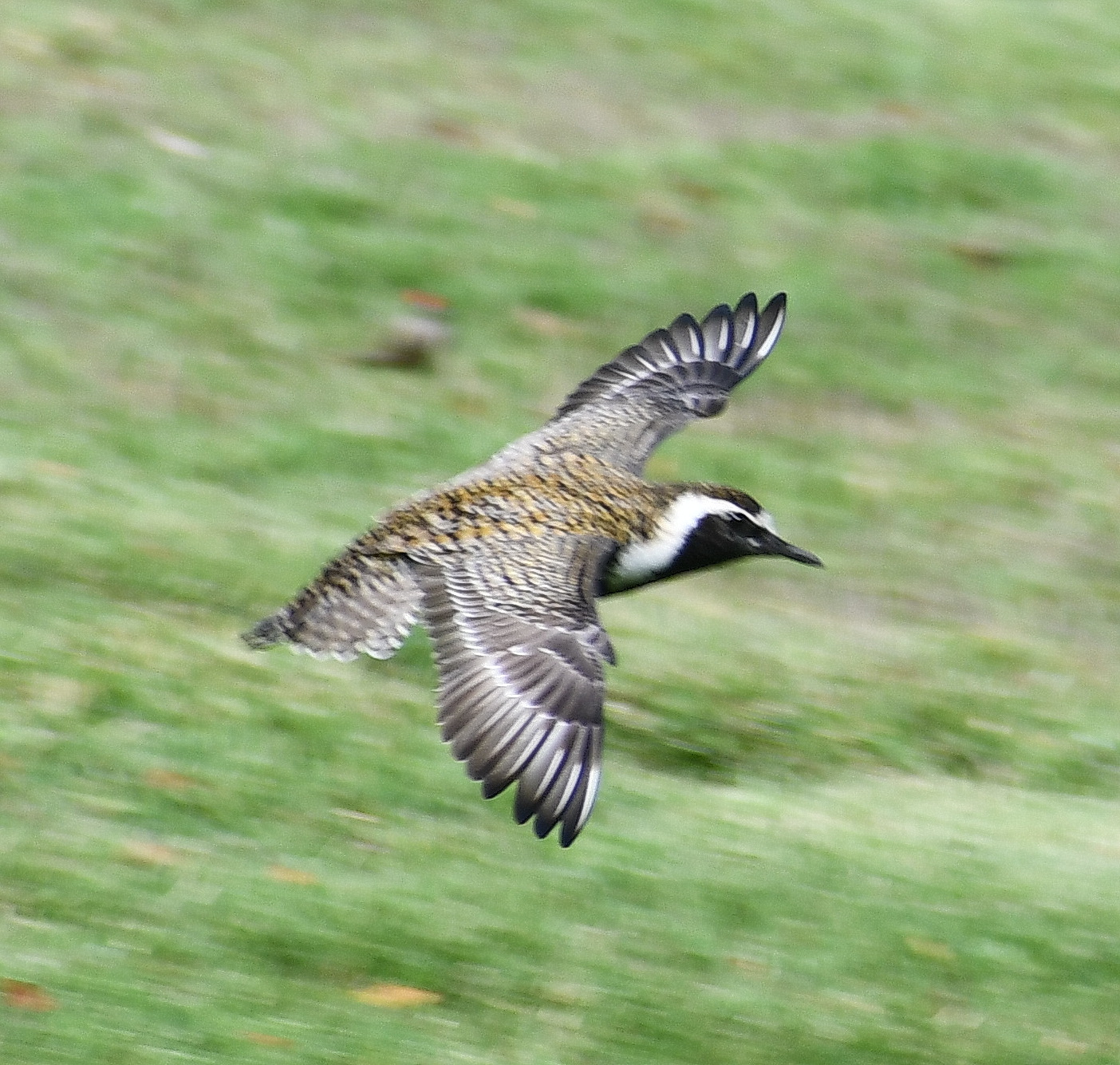
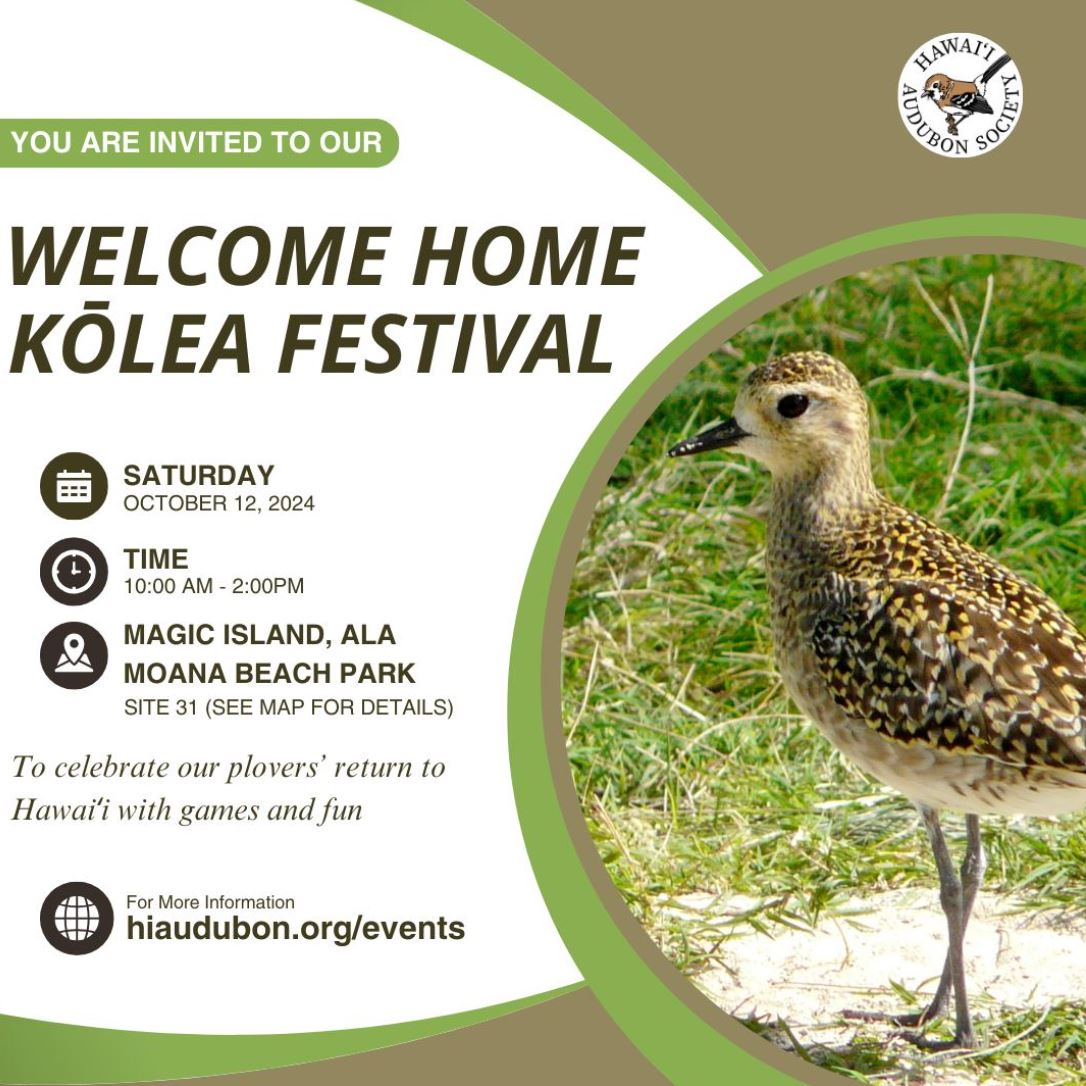

 Puuiki Cemetery, Waialua September 2, 2024. ©Susan Scott
 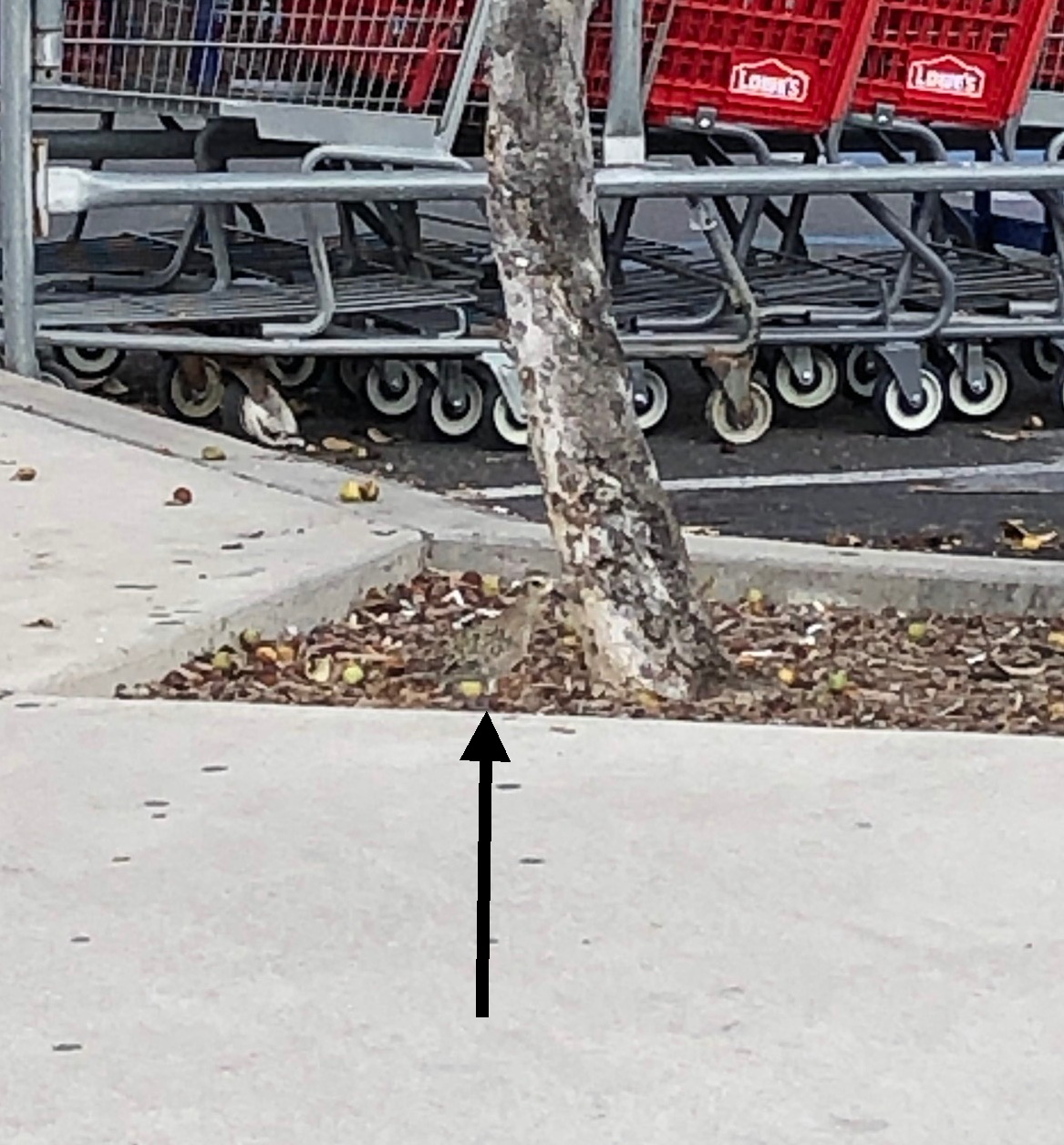 A Lowe’s parking lot kōlea. Elton Miyagawa photo.
 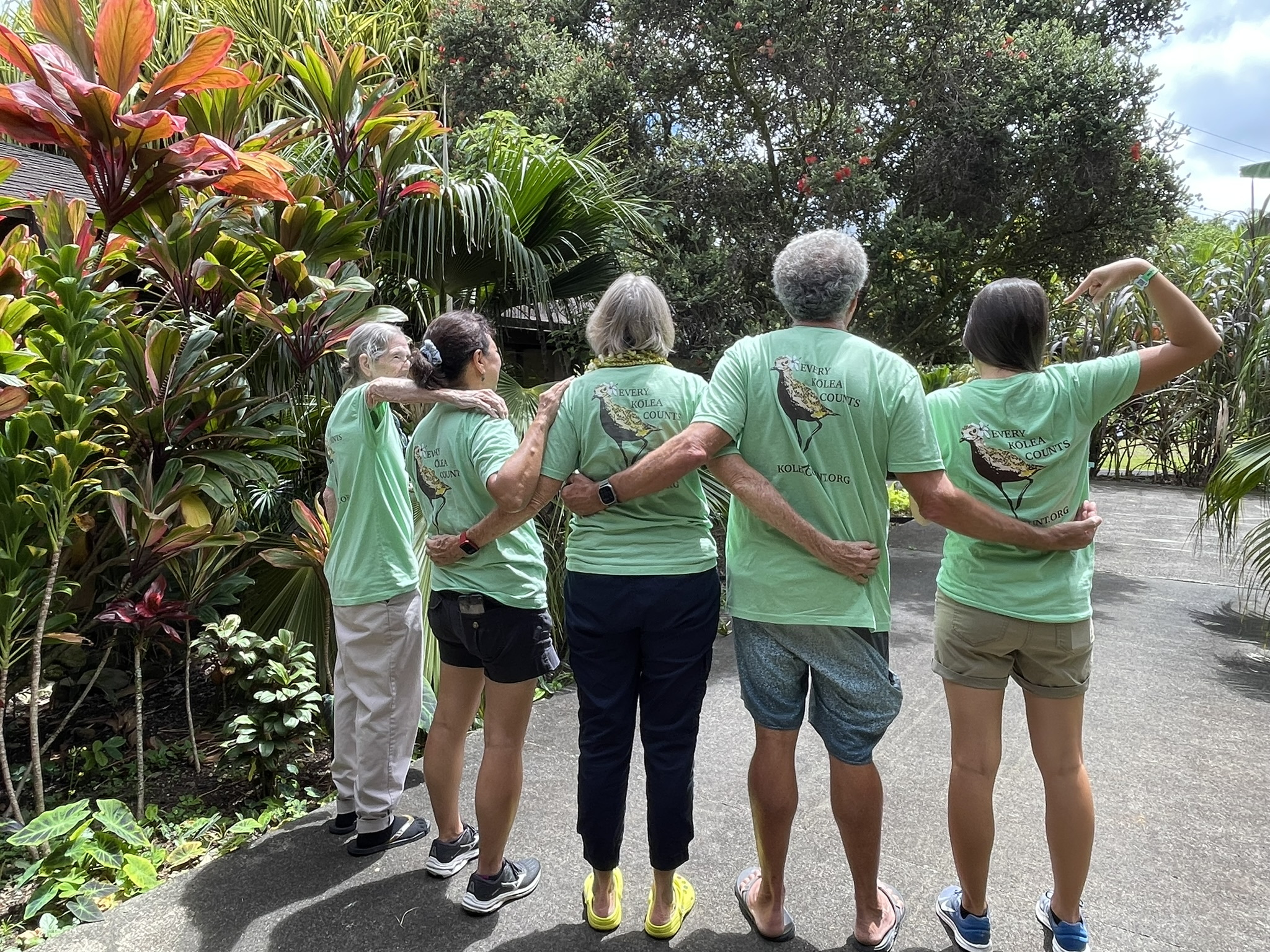 Hawaii Audubon Society members show off their kōlea fandom at Hoʻomaluhia Botanical Garden on September 6. Memberships and Ts, available at Hawaii Audubon.org, help support research and education.
 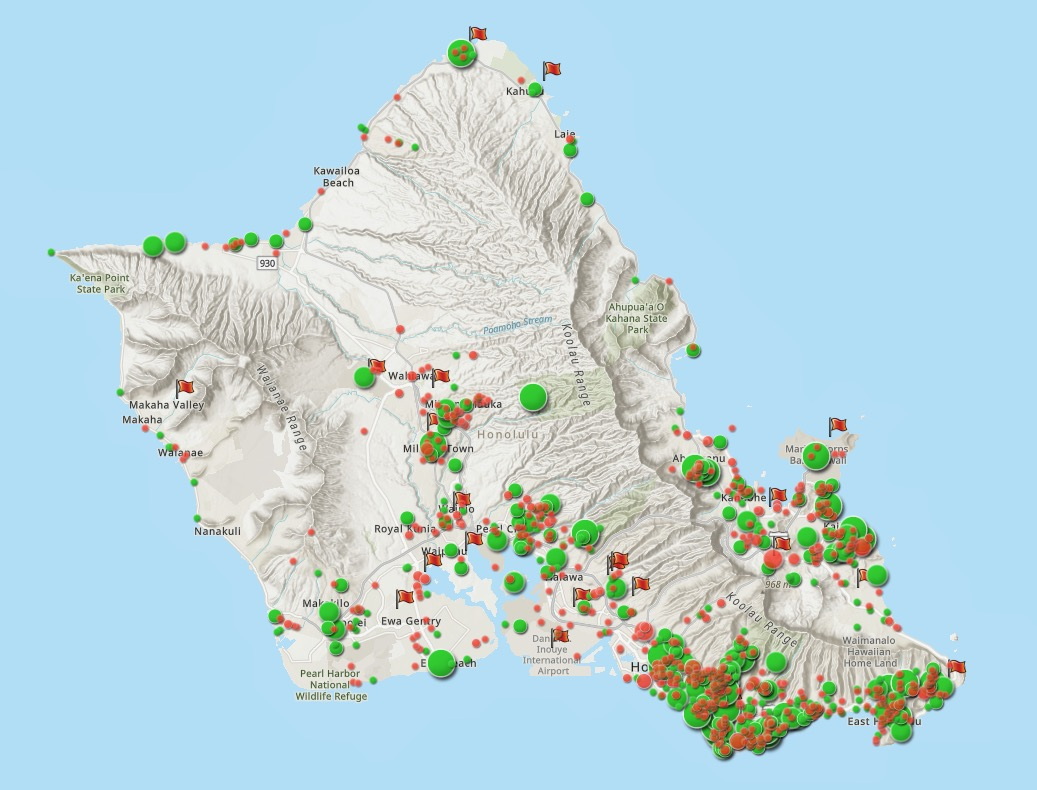 Flags show golf courses, ideal habitat for our kōlea but currently far under-counted. Green dots are kōlea locations reported in 2023-2024 season. Orange dots are plovers reported in previous years but not 2023-2024. Dot sizes reflect number of years reported. Rich Downs image.
  Kōlea Count and eBird data layered over a Hawaii Land Cover map. Rich Downs image.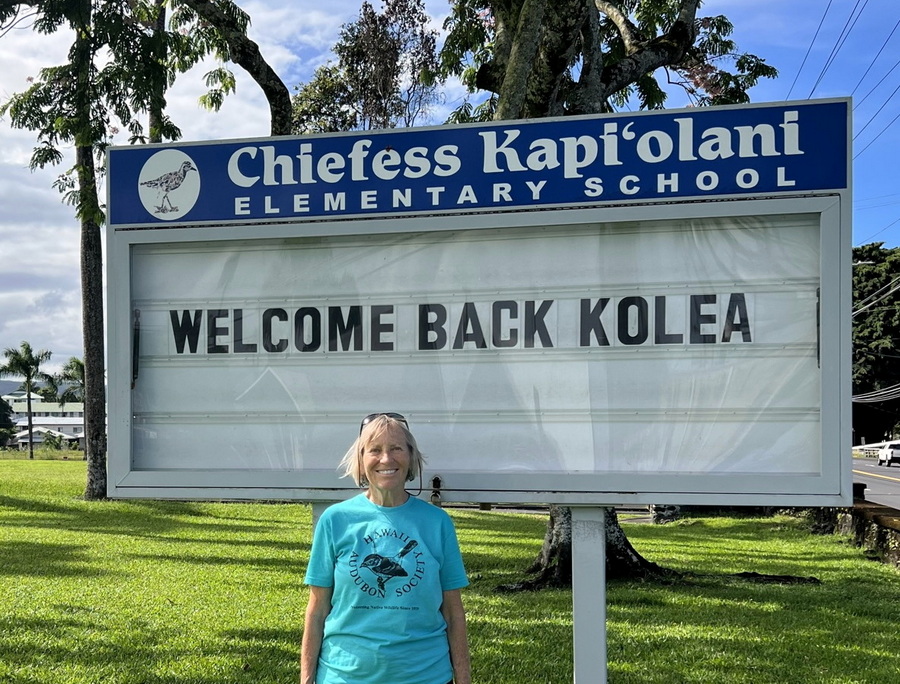
 This sign demanded a photo stop during a Hilo visit last year. The kōlea (upper left image on sign) is apparently the Chiefess Kapiʻolani Elementary School’s mascot. ©Wendy Kuntz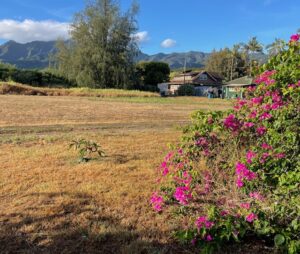
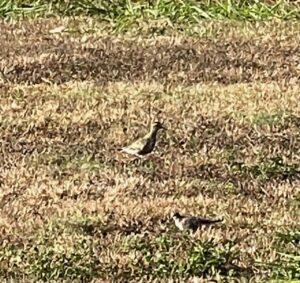 Bougie has returned to this space off Crozier Drive in Waialua for at least five years. (Zebra dove in foreground.) Our phone cameras may not take the best distance photos, but they’re in our pockets to capture the moment.
 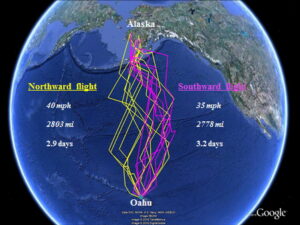 From Wally Johnson’s tracking studies. © O.W. Johnson
 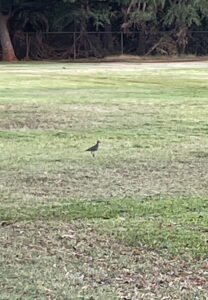 July 25, 2024, Oahu, undisclosed location) © Ann Egleston
 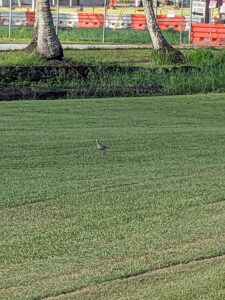 August 9, 2024, Kamehameha soccer field, Hilo ©Jo-Ann Garrigan
 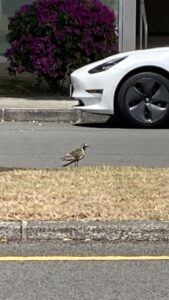 July 25, Niu Valley, © Patricia Johnson
 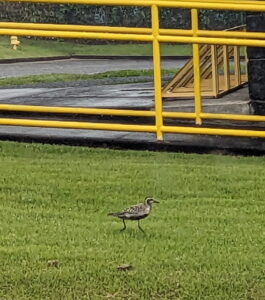 August 2, Hilo Public Library, © Jo-Ann Garrigan
 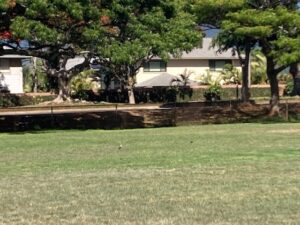 August 6, Kuahelani Park, Mililani © Tempe Kapela
  July 30, Waiau district Park, © Evelyn Nakanishi