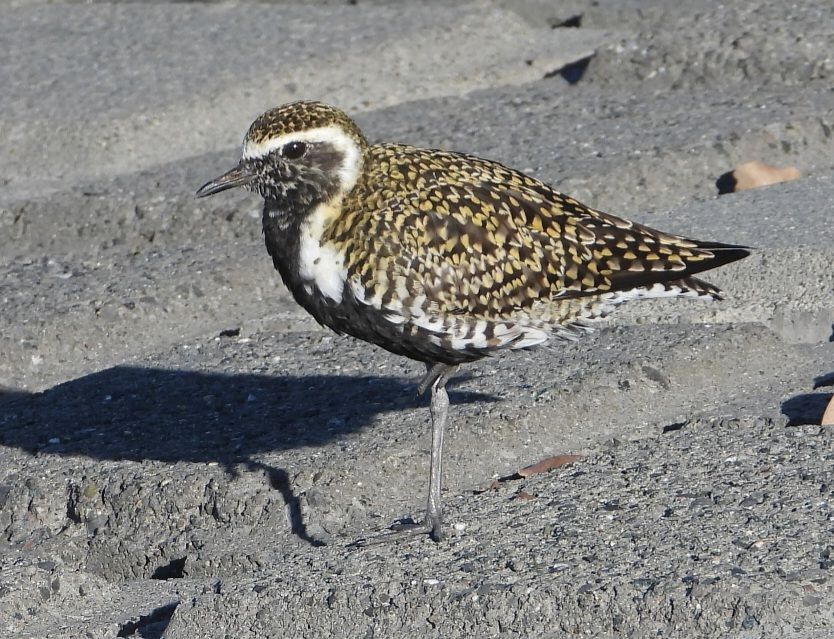
A kolea on one leg, a typical resting position. ©Matthew Olson, Queen’s Beach, February 25, 2026. From a shared Facebook post.
March 5, 2026
A newcomer to Hawaii once told me that a friendly bird had been in her backyard all winter but come spring another bird took its place. She wondered if the new bird had chased the former one away. After she described the behaviors and colors of the individuals, I was sure it was the same bird. The woman’s visitor was a male kolea changing into his spring breeding colors.
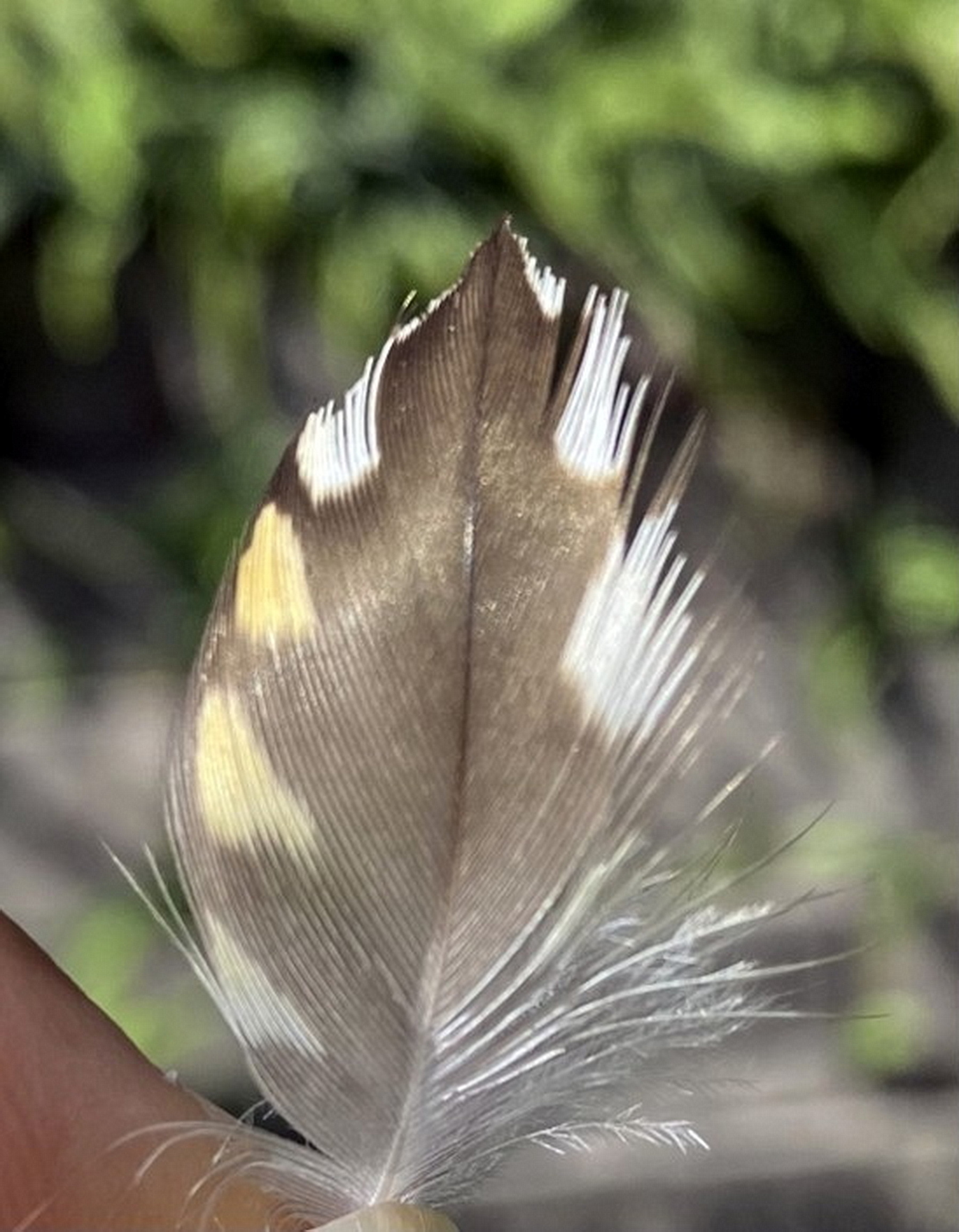
That’s happening all over the state right now. The increasing length of daylight at winter’s end causes hormone changes in the birds, triggering molting. New feathers begin growing in late January and appearing in February (photos above and below).
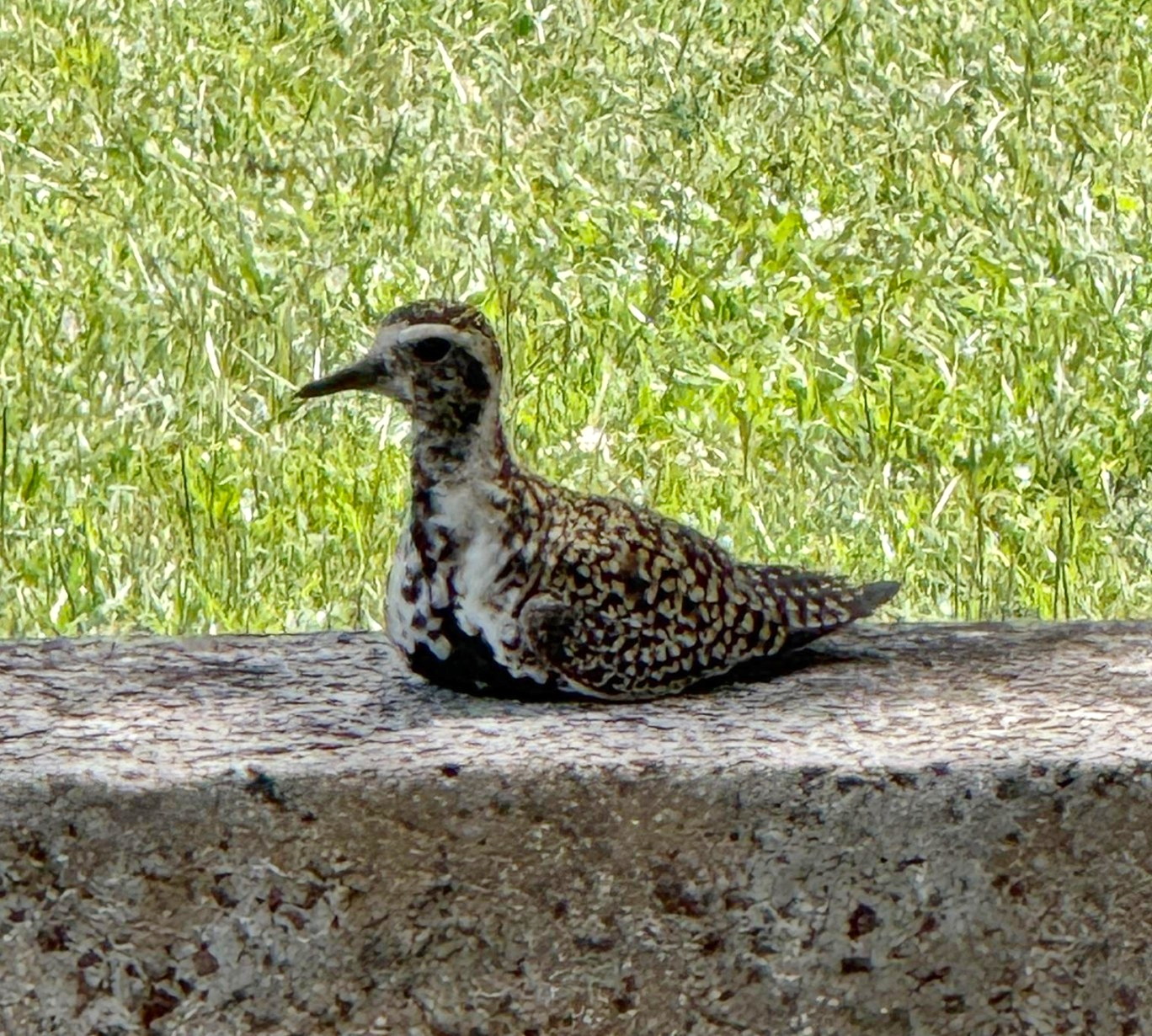
This molting bird is resting, taking a break from foraging. February 28, 2026 ©Diane Trenhaile (also from a Facebook post.)
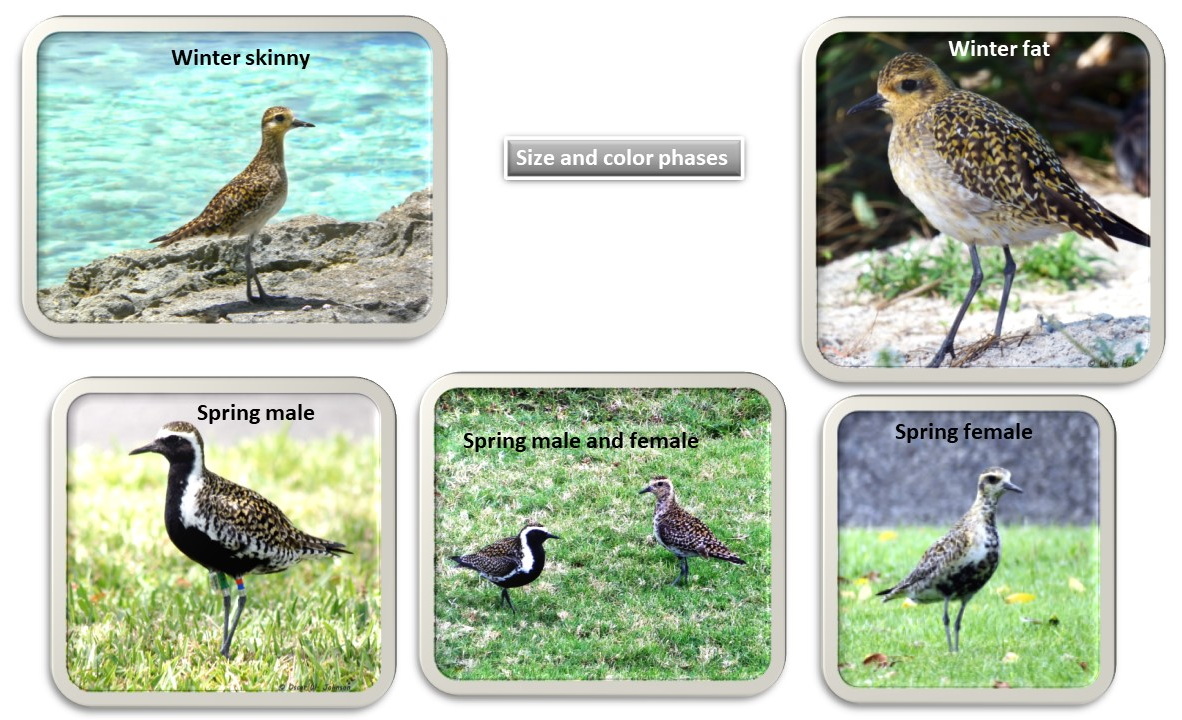
Kolea makeovers continue throughout March and April. The change in feather colors is dramatic, but so too is the birds’ shape. Our thinnest kōlea only about 4 ounces. At their heaviest, the birds are nearly double that or about 7 ounces, the extra fat essential in sustaining the birds during the upcoming migration.
Our yard kolea, Jake, grows so fat by April, that I imagine him even taller. His legs don’t lengthen, of course, but when Jake’s all decked out in his spring tuxedo and he’s strutting around the lawn, he looks like Wonder Bird.
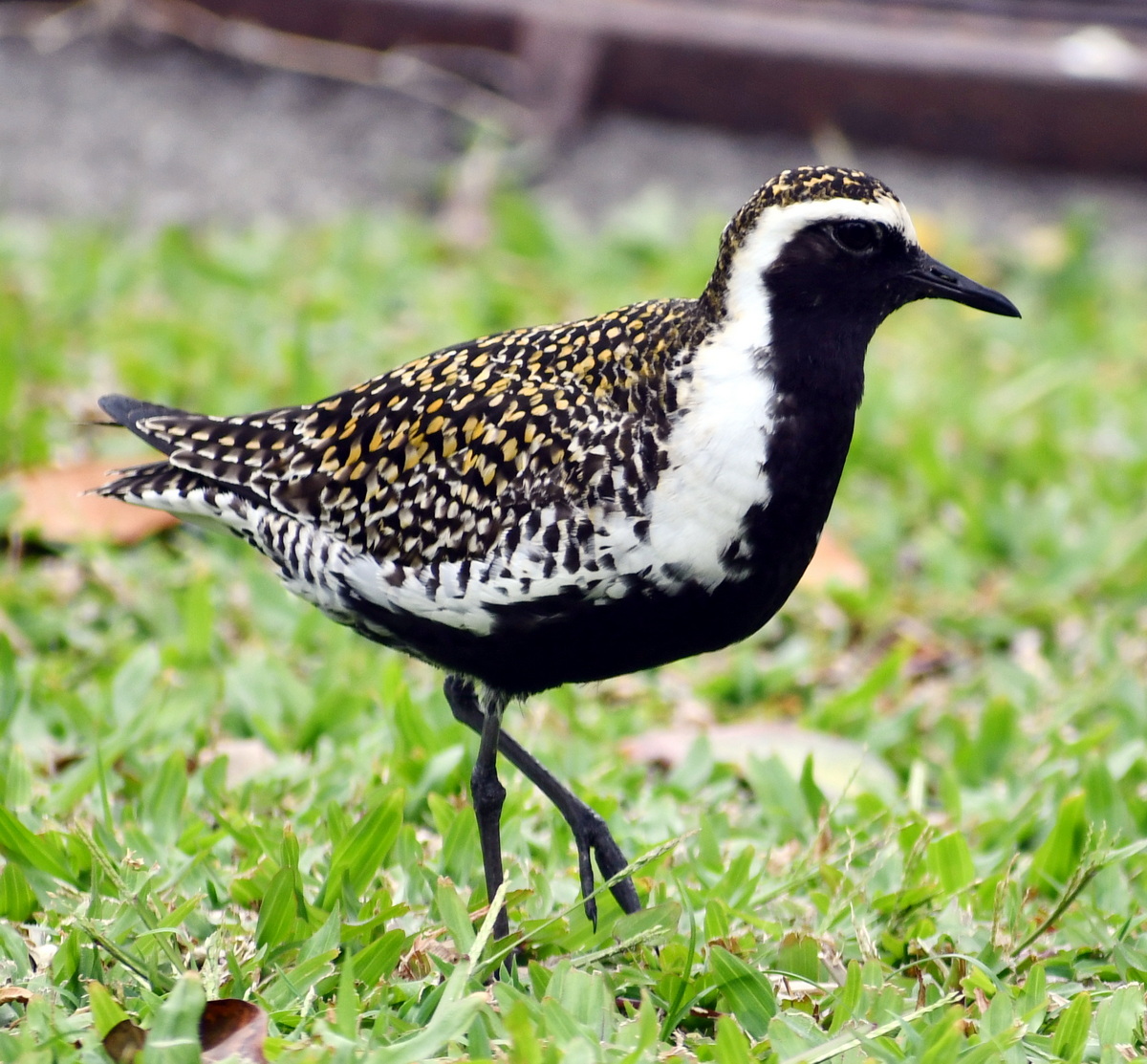
Jake Wonder Bird (at least 9 years old.) April 12, 2025 ©Susan Scott
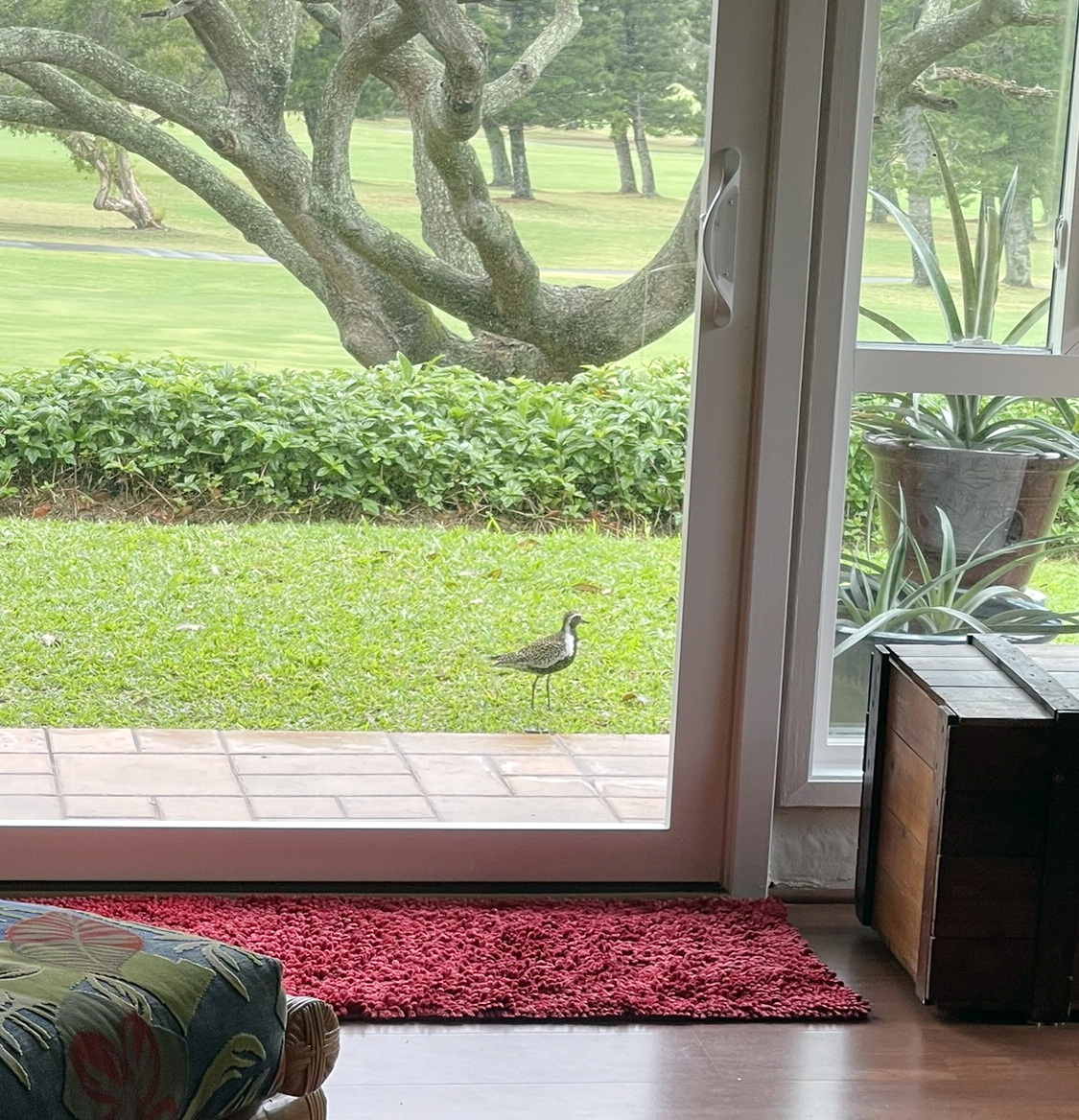
Jake from our living room. ©Susan Scott
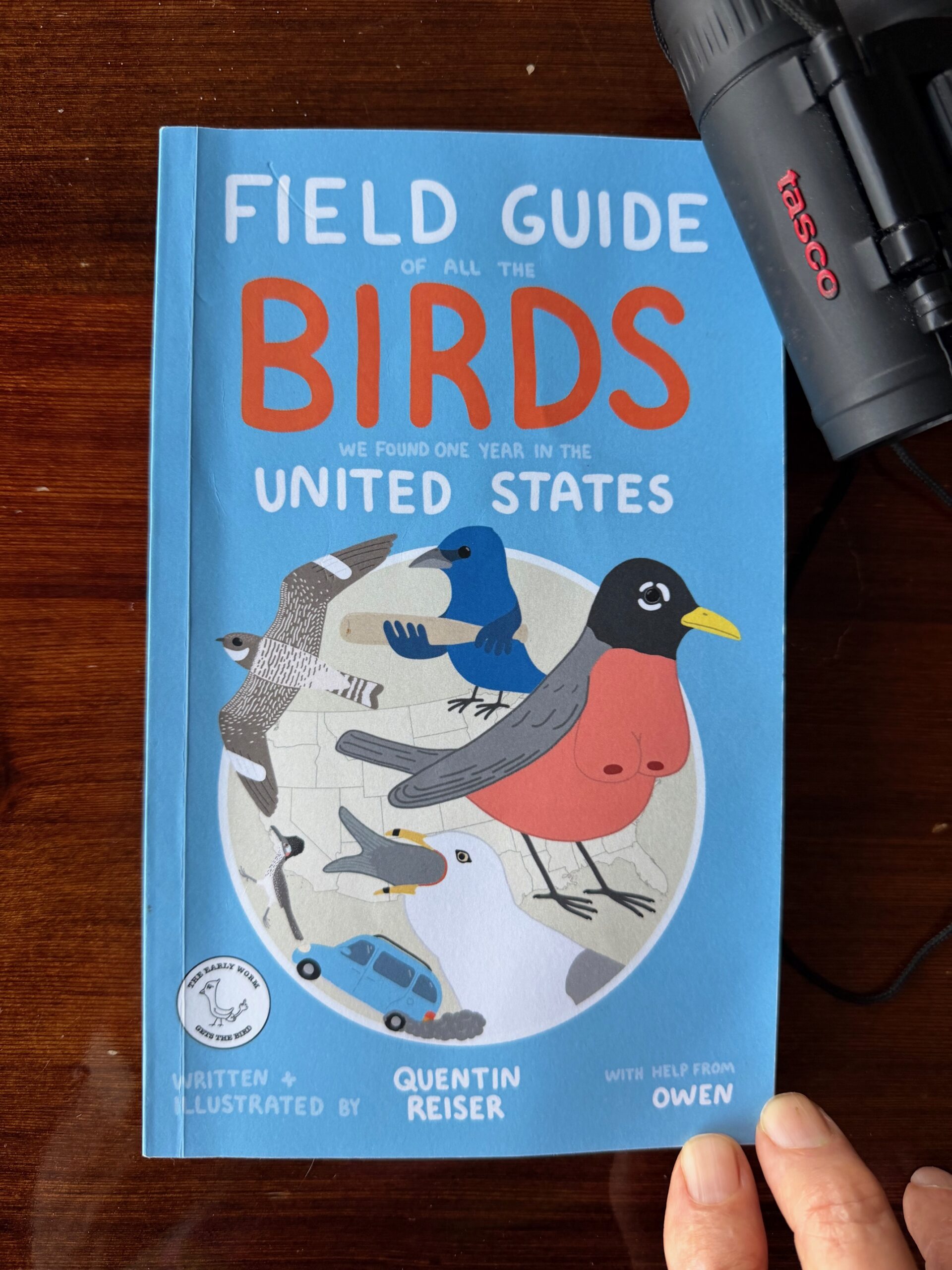
Speaking of strutting, here’s a hilarious (and spot-on) plover observation that I will remember forever when I’m watching a kolea forage: “Based on our field observations, plovers may be stuck in some kind of mentally handicapped purgatory. They seem to run for a second, then stop and look around. While paused, they go into an existential spiral. What is this?…. Where am I?….Who am I?… What is?… And just as they start to get somewhere, they snap out of it and start running again.”
The quote is from Field Guide of All the Birds We Found in One Year in the United States , the book resulting from the YouTube phenomenon Listers, A Glimpse into Extreme Birdwatching by Quentin and Owen Reiser. The brothers’ “early onset birdwatching” experiences in the film and book are fun, funny, and impressive works of art.
Thank you all for counting, caring, and keeping a sense of humor about the marvelous little dinosaur descendants we call birds.